Scientists May Have Finally Solved Darwin's 170-Year-Old Evolutionary Puzzle!
Brilliant researchers have developed an exciting new theory that could resolve one of evolution's greatest mysteries—why complex animals suddenly appear in the fossil record. This breakthrough brings us closer to understanding the fascinating story of life on Earth.
Sometimes the most wonderful scientific breakthroughs come from looking at old problems in entirely new ways. After nearly 170 years, scientists may have finally cracked one of Charles Darwin's most perplexing puzzles, and the solution is as elegant as it is exciting.
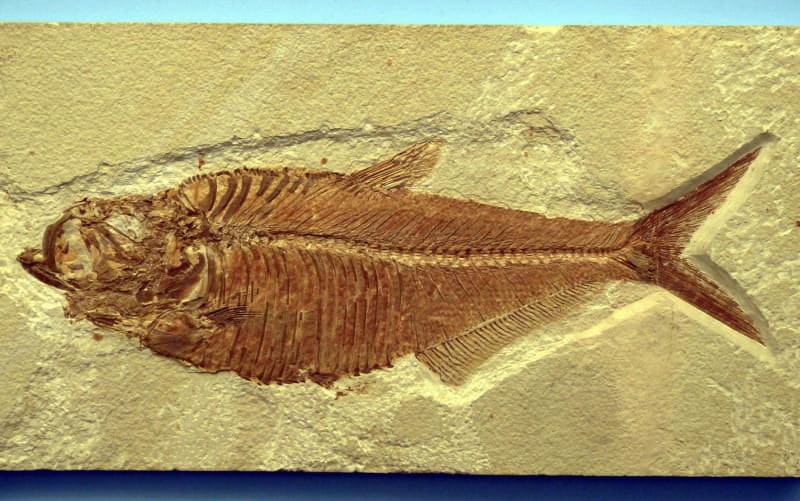
The mystery has captivated researchers since Darwin himself pondered it in 1859. When we look at ancient rocks that are 538 million years old, complex animal fossils suddenly appear as if by magic—worm-like creatures, early arthropods resembling crabs, shelled mollusks, and the ancestors of starfish. But in slightly older rocks, there's nothing. Darwin worried this contradicted his theory of gradual evolution, and scientists have been scratching their heads ever since.
Enter the molecular clock, a brilliant innovation from the late 20th century. This clever technique counts genetic differences between species to estimate when they diverged, much like a biological stopwatch measuring the passage of evolutionary time. When scientists first applied this method to animals, they calculated that the common ancestor of all complex animals lived around 570 million years ago—about 30 million years before the first fossils appear.
This created a fascinating conundrum. Did countless animals really live for 30 million years without leaving a single trace? It seemed impossible, yet the math suggested it was true.
Now, paleontologist Graham Budd and mathematician Richard Mann have proposed an ingenious solution that's generating excitement throughout the scientific community. What if the molecular clock doesn't tick at a perfectly steady rate? What if, during periods of major evolutionary innovation, evolution actually speeds up?
This beautifully simple idea could resolve everything. Imagine evolution pressing the fast-forward button right when major animal groups first emerged. Genes would change more rapidly, making it look like more time had passed than actually did. This would push back the apparent age of the animal ancestor while simultaneously explaining how different animal groups—fish, crabs, snails, and starfish—could become so distinct from each other so quickly.
The breakthrough brings the molecular clock's predictions much closer to what we actually see in the fossil record. It's like watching puzzle pieces finally click into place after decades of not quite fitting.
What makes this discovery even more thrilling is its potential to solve other evolutionary mysteries. Could early flowering plants have existed briefly before leaving fossils? Did early primates, carnivores, and rodents really coexist with the last dinosaurs? The speeding clock theory might help answer these questions too.
This research beautifully demonstrates how science progresses—not always in straight lines, but through creative thinking and collaboration across disciplines. A paleontologist and mathematician working together have potentially unlocked secrets that have mystified researchers for generations.
As we stand on the brink of solving one of biology's greatest puzzles, we're reminded that the natural world still holds countless wonders waiting to be discovered. Darwin would undoubtedly be delighted to know that scientists continue building upon his revolutionary ideas, bringing us ever closer to understanding the magnificent story of life on our planet.
Based on reporting by Phys.org
This story was written by BrightWire based on verified news reports.
Spread the positivity! 🌟
Share this good news with someone who needs it
More Good News
 🚀 Innovation
Astronomers Discover Cloud-9: A Cosmic Fossil That Unlocks Universe's Secrets
 🚀 Innovation
Breakthrough Battery Technology Promises Safer, Longer-Lasting Energy Storage
 🚀 Innovation
Record-Breaking Discovery! New Observatory Finds Fastest-Spinning Asteroid Yet
Joke of the Day
Why did the dog apply for a job at the bank?
Explore Categories
Quote of the Day
"The greatest thing you'll ever learn is just to love and be loved in return."
— Moulin Rouge (from the film, popularized by Ewan McGregor)