Scientists May Have Spotted First Moon Beyond Our Solar System
After discovering 6,000 planets outside our solar system, astronomers have found what could be the very first moon orbiting beyond our cosmic neighborhood. The Jupiter-sized object is rewriting what we thought we knew about moons.
Imagine searching through 6,000 houses and never finding a single pet, then suddenly discovering what might be the world's biggest dog.
That's essentially what happened to astronomers who just spotted the first potential moon outside our solar system. Since finding the first exoplanet in 1992, researchers have discovered roughly 6,000 distant worlds but never once spotted a moon circling any of them.
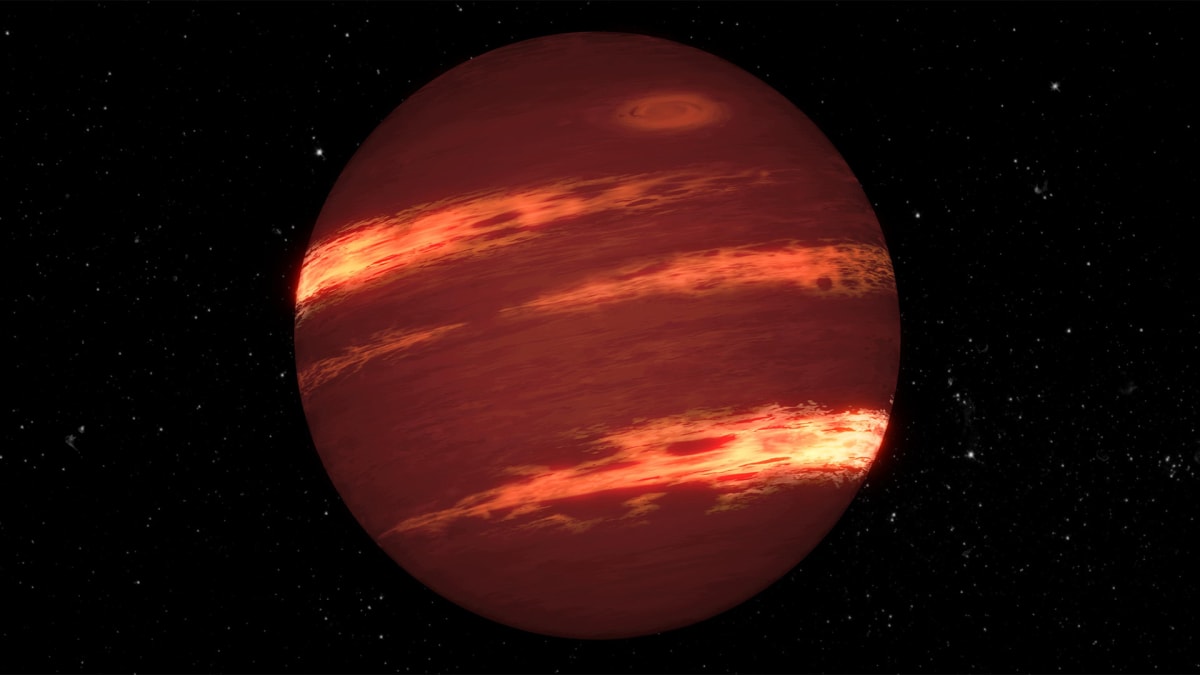
Kevin Hoy, a PhD student at the Instituto de Estudios Astrofísicos, led the team that found this mysterious object called CD-35 2722 B. It's not your typical moon by any stretch. This cosmic giant is about 90% the size of Jupiter and larger than Saturn, making it bigger than almost every planet in our own solar system.
The object orbits a brown dwarf, which sits in a strange middle ground between planets and stars. Brown dwarfs are sometimes called "failed stars" because they're too big to be planets but never ignited the nuclear fusion needed to become stars. CD-35 2722 B takes 170 days to complete one orbit around its host.
Hoy's team used the same technique that discovered the first exoplanet three decades ago. Radial velocity analysis detects tiny wobbles in celestial objects, revealing when something is orbiting them. It's like watching a figure skater's movements change when they grab their partner's hand.
Why This Inspires
This discovery opens up an entirely new frontier in space exploration. For 30 years, we've been finding thousands of distant planets but the universe kept its moons hidden from us. Now that barrier has finally broken.
The find also raises fascinating questions about what makes a moon a moon. No official definition exists yet from the International Astronomical Union, the group that decides these classifications. Most people think of moons as smaller objects orbiting larger ones, like our moon circles Earth. But CD-35 2722 B challenges that simple understanding.
Because brown dwarfs exist between planets and stars, scientists aren't sure whether objects orbiting them should be called moons or planets. CD-35 2722 B acts like a moon but has the size of a planet. It might be both or neither until astronomers write new rules.
"Maybe when a definition for exomoons is written, objects like this will meet both definitions," Hoy explained. The universe just reminded us that our categories might be too small for its creativity.
This discovery proves that even after finding thousands of distant worlds, space still has surprises waiting for us. Every answer reveals new questions, and every breakthrough opens doors we didn't know existed.
More Images


Based on reporting by Google News - Researchers Find
This story was written by BrightWire based on verified news reports.
Spread the positivity!
Share this good news with someone who needs it