Scientist's Plan Could Keep Earth Habitable 9 Quadrillion Years
While Earth has about a billion years left before the Sun destroys it, one researcher has mapped out an audacious plan to extend our planet's livable future by trillions of years. The megaengineering proposal tackles everything from blocking deadly solar radiation to creating an artificial sun.
What if humanity could outsmart the death of the Sun itself? Independent researcher Gabriel Harry believes we can, and his plan is as ambitious as it gets.
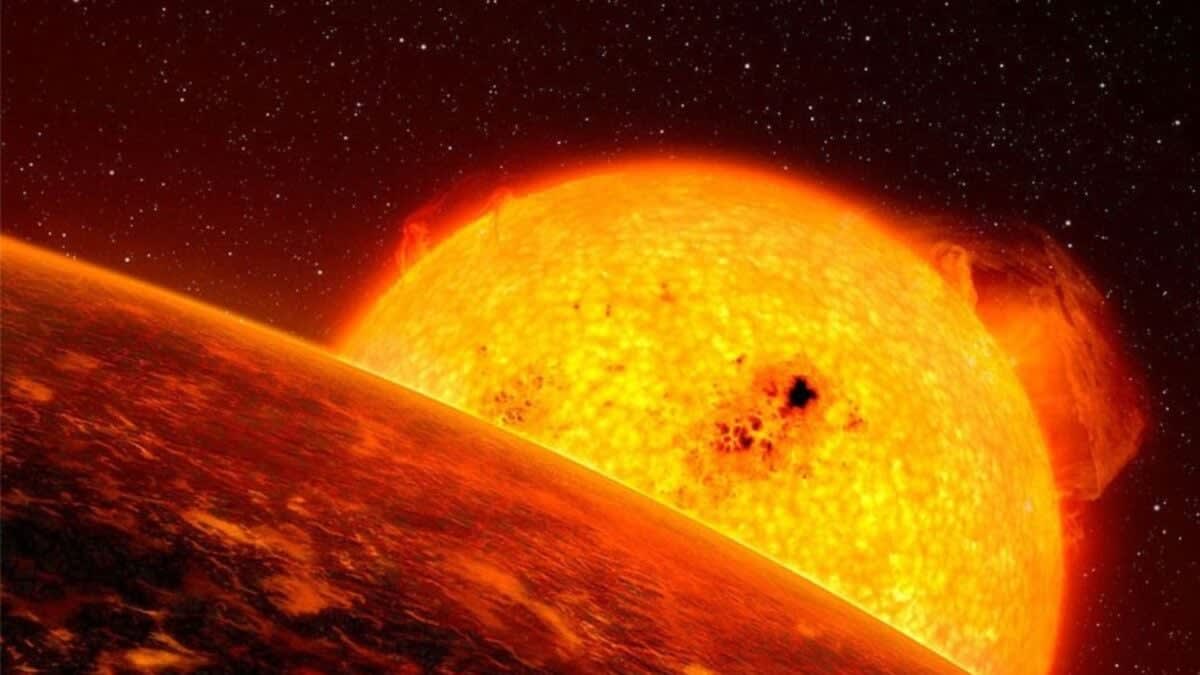
Earth has roughly one billion years before our expanding Sun renders the planet uninhabitable. The star that gave us life will eventually take it away, scorching our world as it runs out of fuel and swells into a red giant. But Harry's new study, set to appear in the Journal of the British Interplanetary Society, outlines a series of megaengineering projects that could keep Earth livable for 9.1 quadrillion years.
The first challenge is surviving the Sun's expansion. Harry proposes building a massive sunshade, 435,000 miles wide, positioned just beyond the Moon's orbit. Made primarily of aluminum mined from just 0.01% of the Moon's mass, this shield would effectively block out the Sun's deadly radiation. A carbon tether stretching 1.2 million miles, mined from 40% of the dwarf planet Ceres, would anchor it in place.
Of course, blocking the Sun creates another problem. Without sunlight, Earth would freeze and all life would die. Harry's solution involves turning Jupiter into a giant fuel source for fusion reactors that would orbit deep in the gas giant's atmosphere. These reactors would beam energy back to Earth via laser, creating an artificial sun to warm and illuminate our planet.
The plan also addresses how to move Earth away from the Sun before it engulfs our orbit. By mining oxygen from Jupiter and firing a particle beam past Earth, the planet could gradually be pushed outward to a safer distance. The mass of this beam would equal roughly half the Amazon River's outflow.
Harry's proposal doesn't stop there. His paper also tackles other long-term threats like the eventual loss of plate tectonics, water depletion, changes in Earth's tilt and spin, asteroid collisions, and dangers from beyond our solar system.
The Bright Side
While these solutions sound like pure science fiction, they represent something profoundly hopeful about human nature. We're already thinking about problems billions of years in the future, imagining ways to protect life itself from cosmic inevitability. This kind of forward thinking drives innovation today, pushing us to develop technologies that could solve immediate challenges like clean energy and climate change.
The same fusion reactor concepts Harry describes could help us transition away from fossil fuels. The materials science needed for his sunshade could improve solar panels and spacecraft. Even if we never build a 435,000-mile-wide shield, the act of dreaming this big expands what we believe is possible.
A civilization capable of moving planets and harnessing gas giants would need centuries of cooperation, innovation, and determination to protect future generations it will never meet.
More Images


Based on reporting by Google News - Science
This story was written by BrightWire based on verified news reports.
Spread the positivity!
Share this good news with someone who needs it
%2Fhttps%3A%2F%2Ftf-cmsv2-smithsonianmag-media.s3.amazonaws.com%2Ffiler_public%2F2c%2F65%2F2c6578ec-9446-445d-a687-13c11766fd9b%2F20aeb8493decd864fed61c47c4df237c-l.webp)