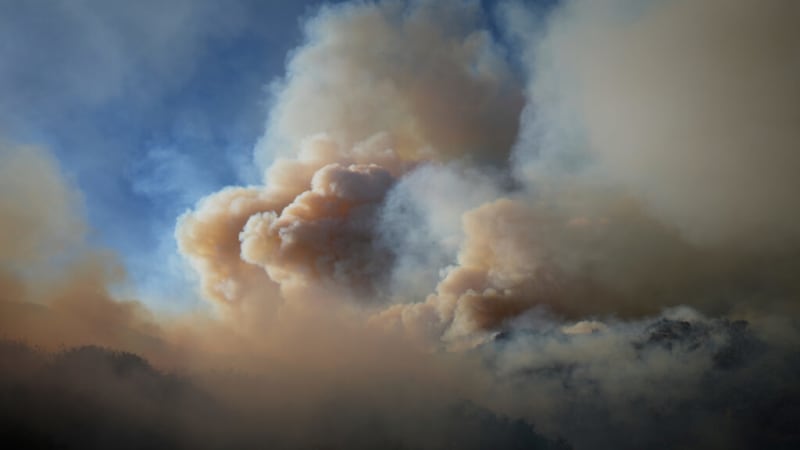
Scientists Push for Wildfire Smoke Rules to Save Lives
New research shows better air quality monitoring and climate policies could prevent thousands of deaths from wildfire smoke each year. Scientists say the threat is growing, but solutions are within reach.
Scientists have identified a growing health threat and are calling for practical solutions that could save thousands of lives every year.
A major study published in Science Advances found that long-term exposure to wildfire smoke contributed to about 24,100 deaths annually in the United States between 2006 and 2020. Researchers at Mount Sinai's Icahn School of Medicine analyzed data across 3,068 counties, looking at how tiny particles from wildfire smoke affect human health over time.
"Wildfire smoke is very dangerous. It is an increasing threat to human health," said Dr. Yaguang Wei, who led the research team. The particles, called PM2.5, are so small they lodge deep in lungs and enter the bloodstream, contributing to heart disease, respiratory illness, and neurological problems.
The study revealed some surprising patterns. Deaths from neurological diseases showed the biggest increase with smoke exposure. Rural communities and younger populations appeared more vulnerable than expected.
Other environmental health experts called the findings reasonable and important. "These are real lives that are being lost," said Michael Jerrett, a UCLA professor not involved in the study. "This is not some arbitrary abstract statistical concept."
Why This Inspires
The research team didn't just document the problem. They highlighted clear paths forward that could protect millions of Americans.
Scientists are calling for expanded EPA monitoring of wildfire smoke, better air quality regulations, and stronger climate policies to reduce wildfire frequency. Currently, the EPA doesn't regulate PM2.5 from wildfires because they're considered natural disasters, even though their intensity is worsening due to climate change and forest management practices.
The study showed that even small improvements matter. For every tiny decrease in smoke particles in the air, thousands of lives could be saved each year.
Kai Chen, a Yale environmental health professor, praised the research for examining both wildfire smoke and pollution from other sources like car emissions. Understanding the difference helps target the most effective solutions.
Researchers used a clever method to ensure their findings were accurate. They looked at deaths from falls and traffic accidents, which shouldn't be affected by air pollution, and found no connection. This confirmed their other observations were real.
The growing threat comes from multiple factors working together: climate change creating hotter, drier conditions; decades of forest mismanagement; and more homes built in fire-prone areas. But identifying the scope of the problem gives communities and policymakers the information they need to act.
Scientists say quantifying the deadly impact of wildfire smoke shows exactly why we need urgent mitigation strategies backed by proper monitoring and regulation.
More Images



Based on reporting by STAT News
This story was written by BrightWire based on verified news reports.
Spread the positivity!
Share this good news with someone who needs it