%2Fhttps%3A%2F%2Ftf-cmsv2-smithsonianmag-media.s3.amazonaws.com%2Ffiler_public%2F60%2F87%2F60878321-be88-4c5a-bdab-b192228e13a6%2Fdsc5700.jpg)
Scientists Race Climate Change to Save Arctic Heritage
Researchers studying 17th-century whaler graves in the Arctic made a surprising discovery that's spurring urgent action to preserve history. Their work reveals how climate change is threatening to erase centuries of cultural heritage before it can be documented.
Scientists excavating ancient whaler graves near the North Pole are racing against time to save history from disappearing forever. Their urgent mission highlights an unexpected consequence of climate change: the destruction of irreplaceable archaeological sites across the Arctic.
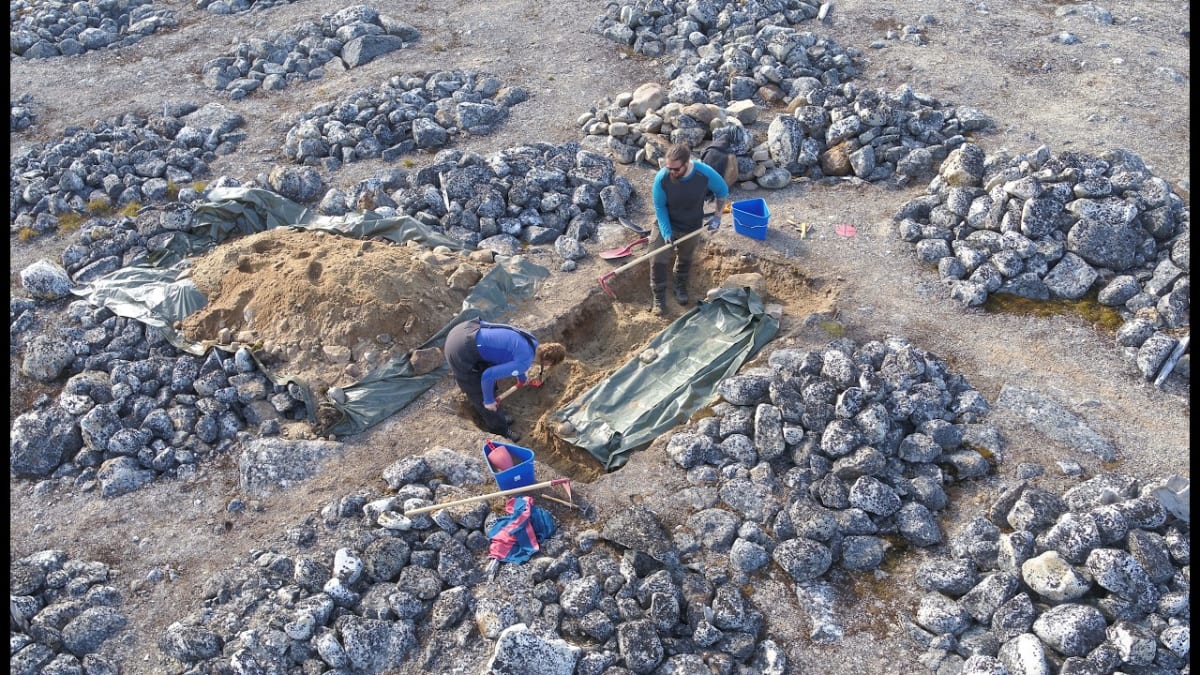
Researchers studying burial sites on Svalbard, a Norwegian archipelago close to the North Pole, discovered that graves excavated decades ago are now deteriorating rapidly. The culprit is melting permafrost, the frozen ground that has preserved these sites for centuries.
The team examined graves at Likneset, also known as "Corpse Point," where hundreds of 17th and 18th-century whalers were buried in shallow graves marked with stone cairns. When they compared sites excavated in the 1980s with those studied in 2016 and 2019, they found troubling signs of decay.
"Coffins collapse, stone grave structures shift and burial layers lose their original integrity," says lead archaeologist Lise Loktu. In some cases, entire graves wash into the sea as coastal erosion accelerates.
The findings are prompting a major shift in how Arctic nations approach cultural preservation. Svalbard has long followed a "managed decay" approach, allowing most historical sites to deteriorate naturally with minimal human intervention.
That hands-off strategy made sense when permafrost kept everything frozen in place. But as Arctic temperatures rise, that frozen ground is becoming increasingly unstable, forcing scientists and policymakers to reconsider their approach.
The research team is now calling for archaeological sites to be integrated into strategic planning frameworks. The key question: which information must be documented and analyzed before it's lost forever?
Why This Inspires
This story shows scientists adapting quickly to protect our shared human history. Rather than watching helplessly as climate change erases the past, researchers are developing new strategies to document and preserve what matters most.
Their work also demonstrates how climate challenges can spark innovative solutions. Teams across the Arctic are now collaborating to identify priority sites, develop rapid documentation techniques, and share knowledge across borders.
The International Whaling Commission's 1986 moratorium on commercial whaling saved numerous whale species from extinction. Now, scientists are working to ensure the stories of the people who once hunted those whales aren't lost to time.
Scientists worldwide are racing to document vulnerable sites before warming temperatures erase them forever.
More Images
%2Fhttps%3A%2F%2Ftf-cmsv2-smithsonianmag-media.s3.amazonaws.com%2Ffiler_public%2F60%2F87%2F60878321-be88-4c5a-bdab-b192228e13a6%2Fdsc5700.jpg)
%3Afocal(1024x692%3A1025x693)%2Fhttps%3A%2F%2Ftf-cmsv2-smithsonianmag-media.s3.amazonaws.com%2Ffiler_public%2F60%2F87%2F60878321-be88-4c5a-bdab-b192228e13a6%2Fdsc5700.jpg)
%2Fhttps%3A%2F%2Ftf-cmsv2-smithsonianmag-media.s3.amazonaws.com%2Ffiler_public%2F94%2Fc9%2F94c9a243-d383-433d-99d9-e982efcf3937%2Fdji_0331-scaled.jpg)
Based on reporting by Smithsonian
This story was written by BrightWire based on verified news reports.
Spread the positivity!
Share this good news with someone who needs it

%2Fhttps%3A%2F%2Ftf-cmsv2-smithsonianmag-media.s3.amazonaws.com%2Ffiler_public%2F2f%2F14%2F2f144ae8-a0a5-447e-bcee-bad89e257cf7%2Fgold-bands.jpg)