Scientists Race to Save World's Rarest Turtle
Only two Yangtze giant softshell turtles may remain alive after the last confirmed female died in 2023. Conservationists are using cutting-edge DNA technology to search for hidden survivors in Asia's rivers.
The Yangtze giant softshell turtle is one breath away from disappearing forever, but scientists refuse to give up hope.
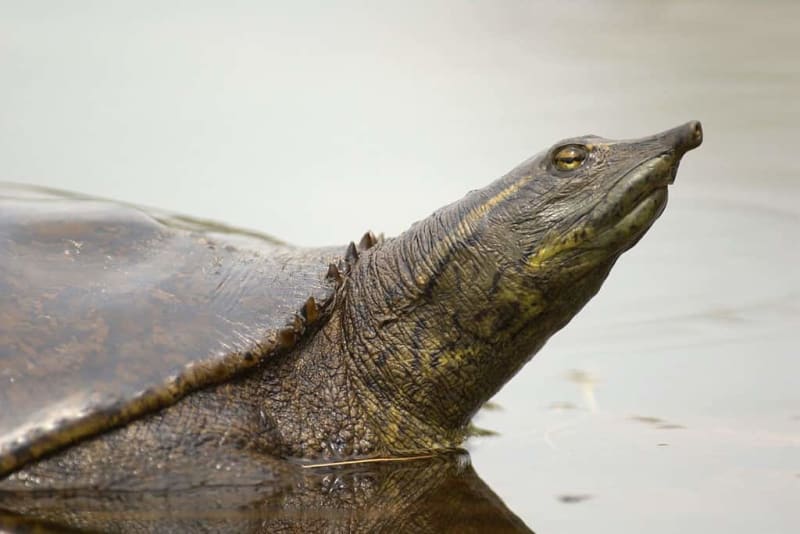
After the last confirmed female died in Vietnam's Dong Mo Lake in April 2023, conservationists faced a devastating reality. Only one confirmed male remains in captivity in China, and possibly one wild turtle of unknown sex lives somewhere in Vietnam's waterways. For a species that once thrived across northern Vietnam and China's vast river systems, these numbers represent an almost unimaginable collapse.
The turtle itself is a freshwater giant, reaching up to 61 inches long and weighing over 200 pounds. These ancient creatures need large, connected river systems to survive, moving freely between rivers, wetlands, and lakes throughout their long lives.
But human development transformed their world into something unrecognizable. Dams fragmented the Yangtze and Red River networks, blocking the turtles' natural movements and destroying nesting sites. Pollution degraded the water quality these creatures depend on. Hunting and illegal trade removed breeding adults faster than the slow-reproducing species could replace them.
The Bright Side
Even with the odds stacked impossibly high, conservation teams are deploying innovative technology that offers a glimmer of possibility. Environmental DNA testing, implemented in portable form in 2025, allows researchers to detect traces of the turtle in water samples without needing to spot the notoriously elusive animals. This breakthrough means scientists can survey vast waterways more effectively than ever before.
The Asian Turtle Program's Rafetus project continues methodical searches across potential habitats. Every water sample, every survey, every careful analysis keeps the possibility alive that more turtles survive in hidden refuges. The technology represents conservation's evolution, using 21st-century science to protect ancient species.
Beyond this single species, the effort highlights something larger. The fight to save the Yangtze giant softshell turtle draws attention to the health of Asia's entire freshwater ecosystem. These massive river systems support countless species and millions of people who depend on clean, connected waterways.
The turtle's decline tells a story of habitat fragmentation and pollution that affects far more than one rare reptile. By protecting the conditions this giant needs, conservationists work to restore river health that benefits entire ecological communities.
Research teams know the challenges. With a population in single digits, every individual matters beyond measure. Reduced fertility, vulnerability to disease, and the risks inherent in any intervention mean conservationists must proceed with extreme care. There's no room for mistakes when the entire species depends on two or three individuals.
Yet the work continues because extinction doesn't have to be inevitable, even at this late hour.
The search goes on, one water sample at a time, in Asia's great rivers.
More Images



Based on reporting by Google: species saved endangered
This story was written by BrightWire based on verified news reports.
Spread the positivity!
Share this good news with someone who needs it