Scientists Rappel Down Cliff to Save Last Wild Tree
A team rappelled down a dangerous Chilean ravine to collect seeds from the last wild tree of its species, and all eight seedlings are thriving in England. This daring rescue mission could bring an entire species back from the brink of extinction.
On a remote cliff in Chile, one aging tree held the fate of an entire species in its branches, and scientists weren't about to let it disappear.
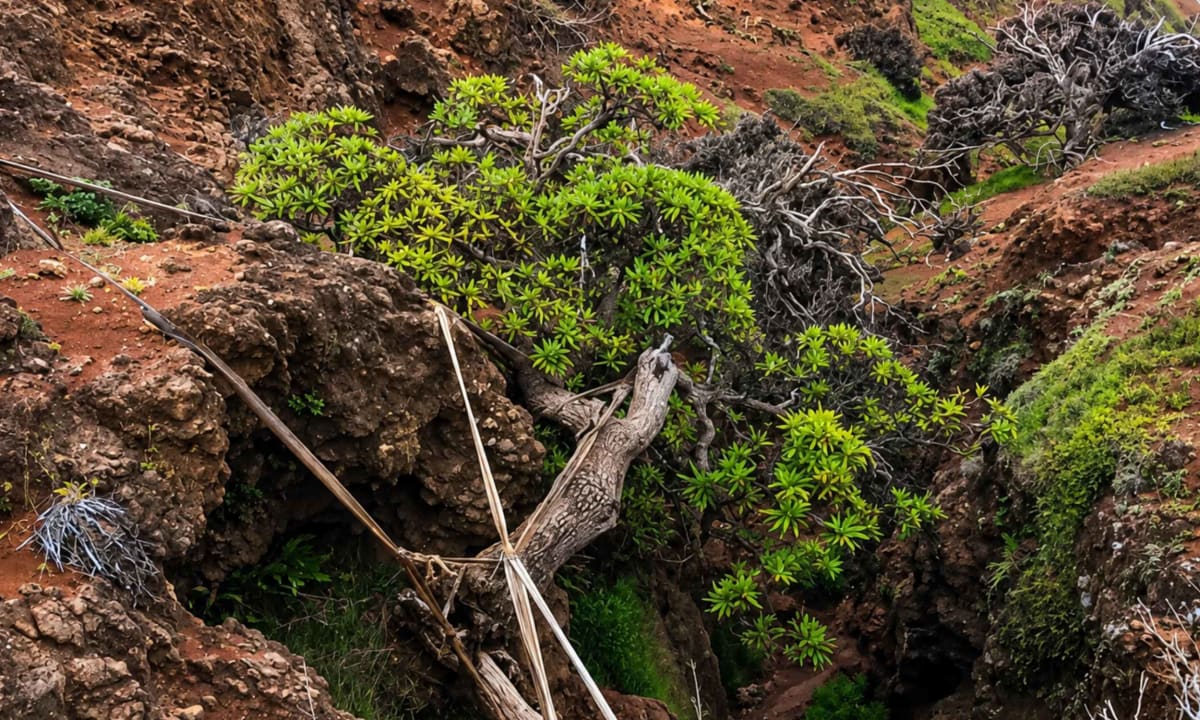
The last known wild Dendroseris neriifolia grows on the side of a ravine on Robinson Crusoe Island, clinging to life at nearly 150 years old. In March 2026, a team rappelled down the dangerous cliff face, carefully collecting 400 seeds while suspended by ropes to avoid damaging the precious tree.
The mission worked. Twenty-nine seeds made it to the Millennium Seed Bank in England, and eight were planted in controlled greenhouses. Every single one germinated.
Three seedlings will move to Logan Botanic Garden in Scotland, where botanists will learn exactly what these rare plants need to thrive. The remaining seeds are stored underground as a biological backup, protecting the species for future generations.
This tree daisy, which grows up to 13 feet tall, was once common across the island's ravines. By 1980, only eight wild trees remained. Invasive plants, grazing animals, forest clearing, and fires destroyed their habitat, leaving just this one survivor on an inaccessible cliff.
The challenge goes beyond growing new plants. About 90 percent of the seeds are naturally nonviable, and some cultivated trees have accidentally hybridized with related species, making their seeds unsuitable for rescue work. The team is working with an incredibly small genetic pool.
The Ripple Effect
Saving this tree means saving more than just one species. The critically endangered Juan Fernández firecrown hummingbird feeds from Dendroseris flowers, creating a fragile partnership between plant and pollinator that exists nowhere else on Earth.
The Juan Fernández Archipelago holds 285 native plant species, and 144 are found only on these islands. All 11 species in the Dendroseris family are unique to this ecosystem, making each one irreplaceable.
Paulina Hechenleitner from Royal Botanic Garden Edinburgh says the successful germination shows what international cooperation can achieve. Botanist Diego Penneckamp puts it more simply: this is a race against time.
The seedlings represent the first living bridge between one old tree on a cliff and a possible future in the wild. Before descendants can return home, the island needs years of habitat repair, invasive species control, and protection from the same pressures that nearly eliminated the species.
Chile's National Forest Corporation plans another seed collection in 2027, building on this fragile success one careful climb at a time.
Based on reporting by Google: species saved endangered
This story was written by BrightWire based on verified news reports.
Spread the positivity!
Share this good news with someone who needs it