Scientists Read Moon's Magnetic History in Single Dust Grain
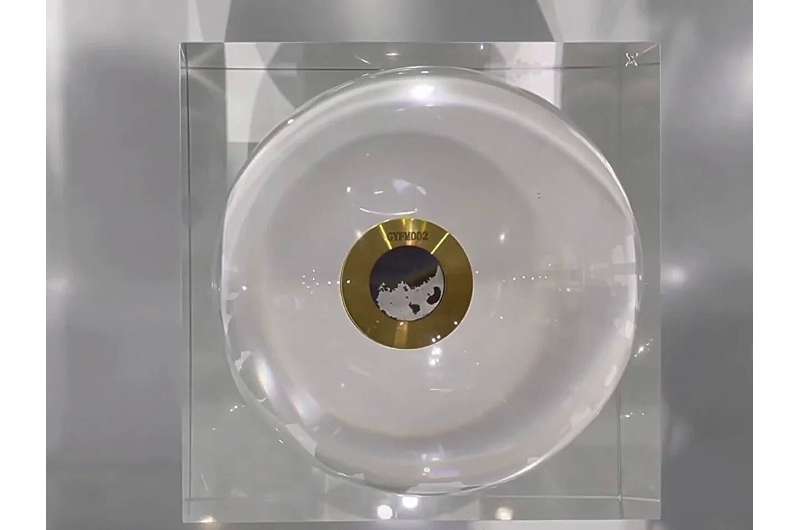
Chinese researchers used quantum sensors to analyze a single speck of lunar dust, revealing the moon once had its own magnetic field until 2 billion years ago. The breakthrough shows how tiny particles can unlock massive secrets about our cosmic neighbor's past.
📺 Watch the full story above
A single grain of moon dust just rewrote what we know about lunar history, proving that even the smallest samples can tell the biggest stories.
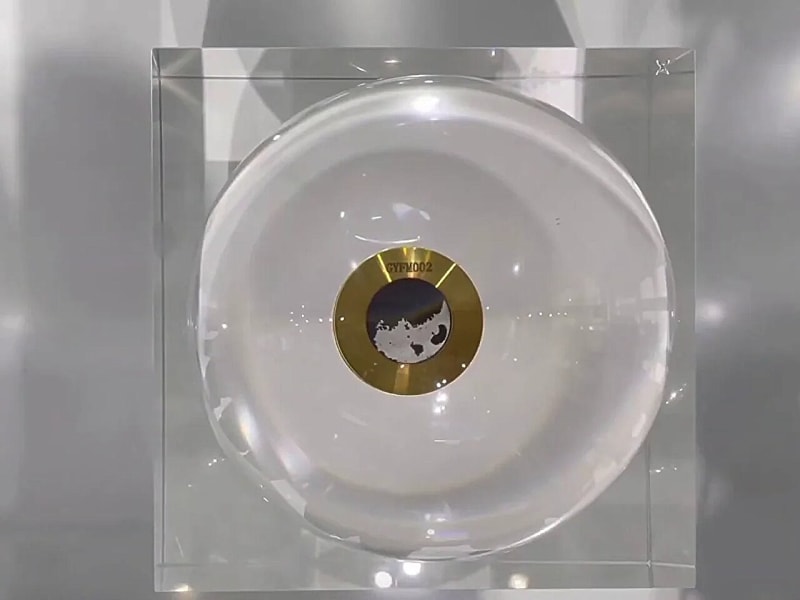
Scientists from Zhejiang University and the Chinese Academy of Sciences developed an incredibly powerful quantum sensor to study dust grains returned by China's Chang'e 5 mission. Using diamonds with special nitrogen centers and laser technology, they could see magnetic patterns invisible to previous instruments.
What they discovered was like reading two different chapters from the moon's past. Basalt grains, formed from cooled lava, showed weak but perfectly aligned magnetic signatures pointing in the same direction. This uniform pattern could only mean one thing: the moon once had its own magnetic field, similar to Earth's protective shield, active as recently as 2 billion years ago.
The second type of dust told a more violent story. Breccia grains, created when asteroid impacts fused rock fragments together, displayed much stronger magnetism scattered in random directions. These chaotic patterns came from the extreme forces of meteorite strikes, not from an internal magnetic field.
The researchers even spotted magnetic stripes in tiny cracks within the grains. These marks likely formed from solar wind or micrometeoroid impacts that altered the rock's chemistry long after it originally formed, providing direct evidence of space weathering at work.
Why This Inspires
This breakthrough shows how far our technology has come since the Apollo missions. What once required analyzing hundreds of mixed rock samples can now be discovered in particles smaller than a grain of sand. The quantum sensors used in this study are becoming more accessible to scientists worldwide, meaning more discoveries await in existing moon samples sitting in labs.
Chang'e 5 brought back the youngest lunar samples ever collected, making this analysis particularly valuable. These grains formed relatively recently in lunar history, filling in crucial gaps about when the moon's magnetic field finally disappeared.
The implications reach beyond understanding our nearest neighbor. Magnetic fields protect planets from harmful radiation and help retain atmospheres, making them crucial for habitability. Learning how and why the moon lost its field helps scientists understand what makes worlds like Earth so special.
Future missions will return even more samples from different lunar regions. With these advanced sensors ready to examine every speck, each grain becomes a time capsule waiting to share its secrets.
The moon kept a detailed diary of its 4.5 billion year history, and we're finally learning to read it one particle at a time.
More Images
Based on reporting by Phys.org
This story was written by BrightWire based on verified news reports.
Spread the positivity!
Share this good news with someone who needs it