Scientists Recover 2,000-Year-Old Star Map With X-Rays
Researchers just uncovered the world's oldest star catalog, hidden for centuries under six layers of religious text. Using X-ray technology, they revealed how an ancient astronomer mapped the heavens with nothing but his eyes.
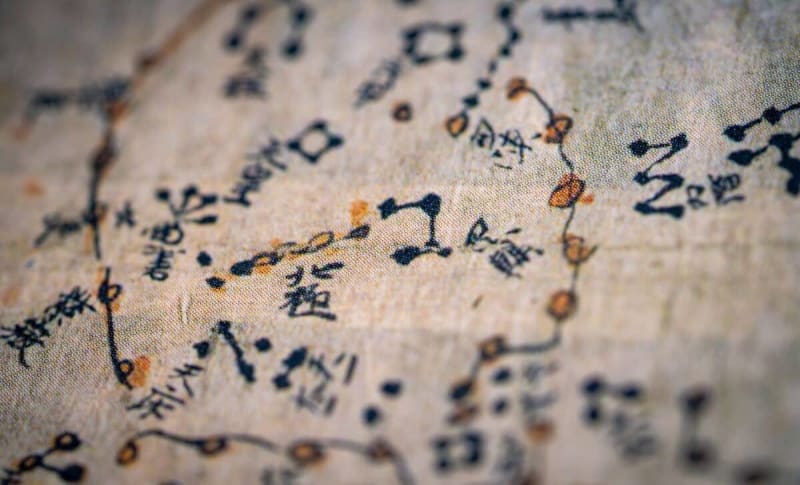
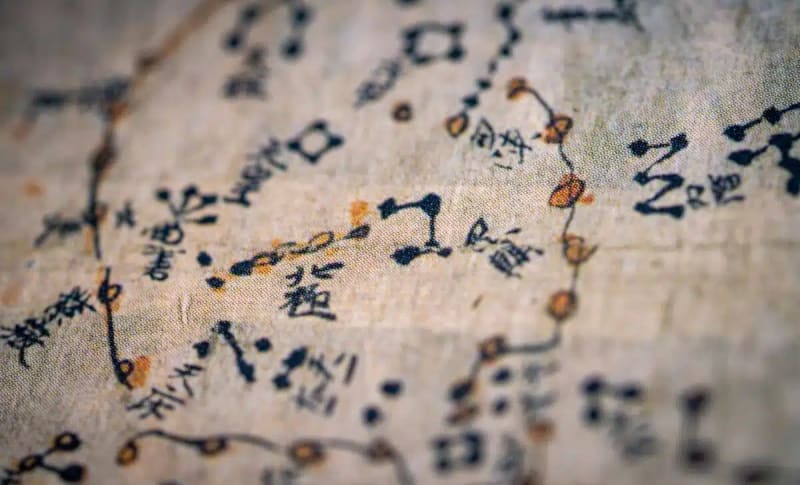
A star map drawn over 2,000 years ago has finally emerged from beneath layers of medieval religious writing, and it's shockingly accurate for something created without telescopes.
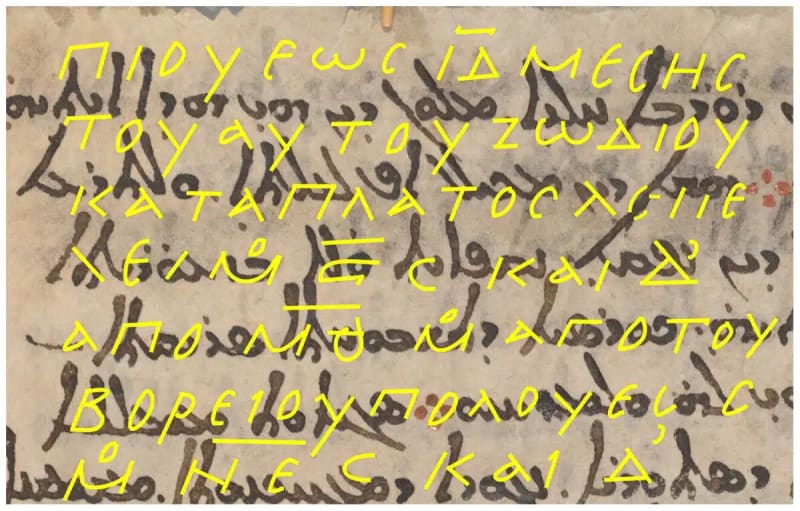
Hipparchus, known as the father of astronomy, charted the night sky around 130 BCE using only his vision. His groundbreaking work vanished for centuries, mentioned only in secondhand accounts and hints carved into Roman statues. Now scientists have recovered actual star coordinates from his lost catalog, proving just how precise ancient astronomers could be.
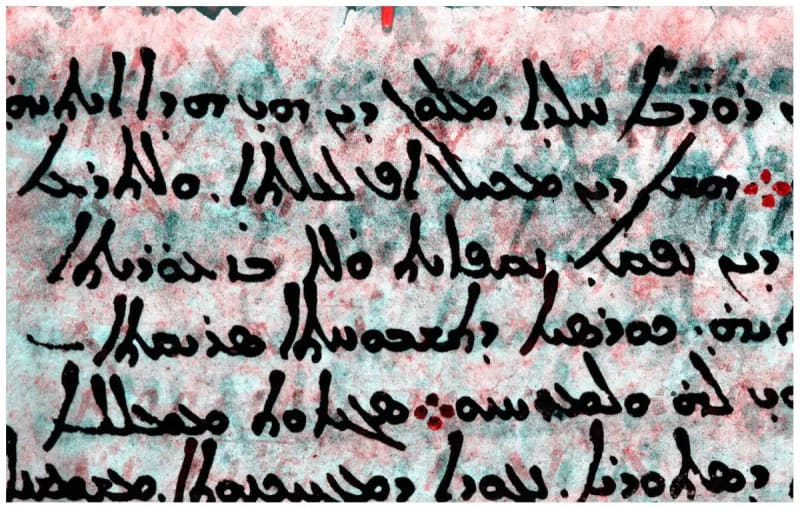
The discovery happened almost by accident. Researchers led by Victor Gysembergh from Sorbonne University noticed faint Greek writing on an old manuscript at the Museum of the Bible in Washington, D.C. The parchment was a palimpsest, meaning monks had scraped off the original text and reused it for religious writings about 1,500 years ago.
To read what lay beneath, the team transported the fragile manuscript in climate-controlled boxes to the SLAC National Accelerator Laboratory. They used a particle accelerator to fire extremely short X-ray pulses at the pages, each beam focused to the width of a human hair. The scans revealed something remarkable: Hipparchus' original ink contained different chemicals than the later text, making it pop out under X-ray imaging.
The recovered coordinates show Hipparchus mapped star positions with incredible precision. He worked without any magnification, relying entirely on careful observation and mathematical genius. He also created the first brightness scale for stars, figured out how Earth's axis shifts over time, and tracked how planets move across the sky.
Why This Inspires
This discovery reminds us that human curiosity and brilliance aren't new inventions. More than two millennia ago, someone looked up at an impossibly vast sky and decided to map it, star by star, using nothing but patience and vision. That same drive to understand our universe still powers science today.
Gysembergh and his team hope to recover more coordinates from other pages of the manuscript. Each new fragment brings us closer to understanding how ancient people made sense of their world and laid the foundation for modern astronomy.
A 2,000-year-old map is finally teaching us its secrets.
More Images
Based on reporting by Google News - Science
This story was written by BrightWire based on verified news reports.
Spread the positivity!
Share this good news with someone who needs it