Scientists Recover 95% of Battery Metals With Green Method
Australian researchers developed a breakthrough recycling process that safely recovers over 95% of critical metals from old batteries using mild, sustainable solvents. The innovation could transform how we handle 500,000 metric tons of battery waste already piling up globally.
Your old phone battery could become someone's new electric car, thanks to a breakthrough recycling method that's safer for the planet and surprisingly effective.
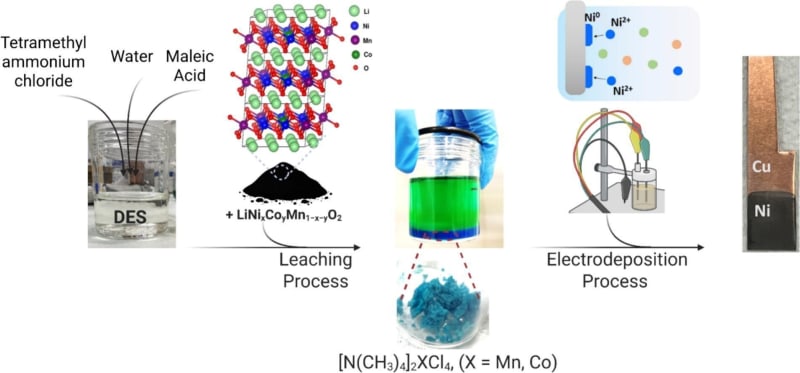
Researchers at Monash University in Australia have cracked the code on recovering valuable metals from spent lithium-ion batteries without the toxic chemicals or extreme heat typically required. Their new process pulls more than 95% of nickel, cobalt, manganese, and lithium from dead batteries using a mild solvent called a deep eutectic solvent.
The timing couldn't be better. Around 500,000 metric tons of spent lithium-ion batteries have already accumulated worldwide, yet only about 10% get fully recycled in Australia. The rest often ends up in landfills, where toxic substances leak into soil and water, eventually entering our food chain.
Dr. Parama Chakraborty Banerjee, who led the research team, explains this is the first method to selectively recover high-purity metals from battery waste using such gentle chemistry. The process works even on "black mass," the messy industrial-grade mix of different battery types contaminated with graphite, aluminum, and copper that's notoriously difficult to recycle.
Traditional recycling methods rely on dangerous chemicals or furnace-level temperatures to extract metals, often recovering only some elements while losing others. This integrated chemical and electrochemical approach changes that equation entirely, making industrial-scale recycling both safer and more efficient.
The Ripple Effect
The breakthrough extends far beyond just batteries. The research team believes their process could recover valuable metals from other electronic waste and even mine tailings, opening new pathways toward a circular economy for critical materials.
Ph.D. student Parisa Biniaz notes the method's high selectivity means we can efficiently separate specific metals we need while minimizing environmental harm. As electric vehicles and renewable energy storage continue growing, securing sustainable sources of these strategic metals becomes increasingly crucial for our clean energy future.
The process published in Sustainable Materials and Technologies represents a major step toward treating battery waste not as a problem but as a resource. Instead of mining new metals and dumping old batteries, we could create a closed loop where yesterday's devices power tomorrow's innovations.
Every battery you've ever owned contains metals that took millions of years to form and significant energy to extract, but now they might get a second life without the environmental cost.
More Images
Based on reporting by Phys.org - Technology
This story was written by BrightWire based on verified news reports.
Spread the positivity!
Share this good news with someone who needs it