Scientists Recreate Chirps From 165-Million-Year-Old Bugs
Scientists brought the Jurassic Period to life by recreating the chirps of ancient cricket-like insects from 165-million-year-old fossils. Some of these prehistoric bugs produced sounds so high-pitched that humans couldn't even hear them.
Imagine walking through a Jurassic forest and hearing the chirps of insects that lived alongside dinosaurs. Thanks to fossilized wings from Inner Mongolia, scientists have now made that possible.
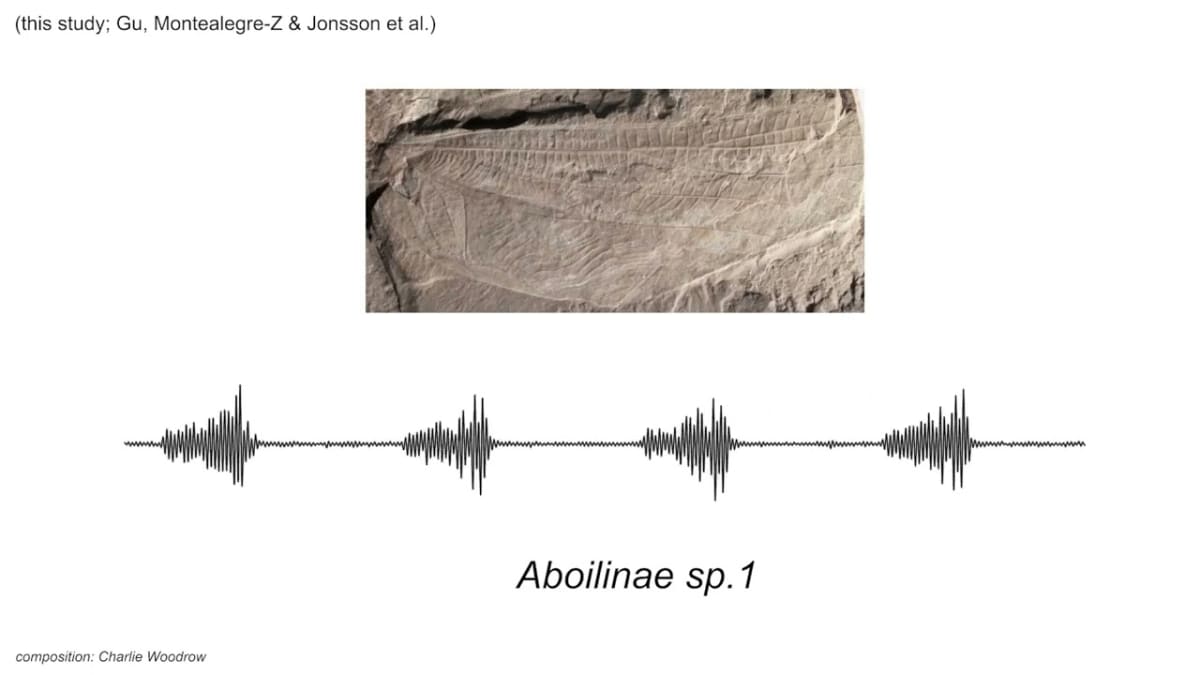
Researchers discovered 20 incredibly preserved insect fossils in China, all with their wings intact. These ancient relatives of crickets and katydids lived 165 million years ago, and their wings held the secret to the sounds they made.
Unlike mammals that use vocal cords, insects create sound by rubbing body parts together in a process called stridulation. Crickets rub their wings together, while grasshoppers and katydids drag a leg across a wing. Since these tough external parts fossilize beautifully, scientists could study exactly how these prehistoric instruments worked.
The research team counted the ridges on the fossilized wings and measured the spacing between them. They used lasers to study how modern insects produce sound, then fed all this data into computer models and artificial intelligence to recreate what the ancient chirps would have sounded like.
Most of the insects produced clear, high-pitched chirps around five kilohertz, similar to today's crickets. But one species, Sigmaboilus peregrinus, stunned researchers by producing ultrasonic calls between 20 and 22 kilohertz, just above what humans can hear.
This discovery rewrites what scientists thought they knew about insect evolution. Experts had assumed that bats drove insects to develop ultrasonic calls as a way to avoid being detected. But these insects lived millions of years before the first bats even existed.
The team now believes that other predators, both mammals and non-mammals, pushed early insects to evolve higher-pitched sounds. These quieter calls could attract mates without alerting hungry hunters to their location. Alternatively, ultrasonic chirps might have helped certain species stand out in a crowded chorus of competing insect songs.
Why This Inspires
This breakthrough shows how technology can unlock secrets from deep in Earth's past. By combining fossil analysis with artificial intelligence, scientists opened a window into a world we'll never visit but can now hear. The research proves that the Jurassic Period was far richer in sound and diversity than anyone imagined.
The study also paves the way for recreating other ancient soundscapes. Researchers are already eyeing beetle and ant fossils, hoping to build what one scientist calls a "paleo-orchestra" of prehistoric sounds.
We're learning to listen to a world that went silent 165 million years ago, one chirp at a time.
More Images
%2Fhttps%3A%2F%2Ftf-cmsv2-smithsonianmag-media.s3.amazonaws.com%2Ffiler_public%2F6b%2Fd4%2F6bd4da39-4ea4-4774-8dc0-1a0f4cf150ea%2Fpnas2615107123fig01.jpg)
Based on reporting by Smithsonian
This story was written by BrightWire based on verified news reports.
Spread the positivity!
Share this good news with someone who needs it


%2Fhttps%3A%2F%2Ftf-cmsv2-smithsonianmag-media.s3.amazonaws.com%2Faccounts%2Fheadshot%2FSarahKuta.png)