Scientists Release 665 New Cancer Models for Research
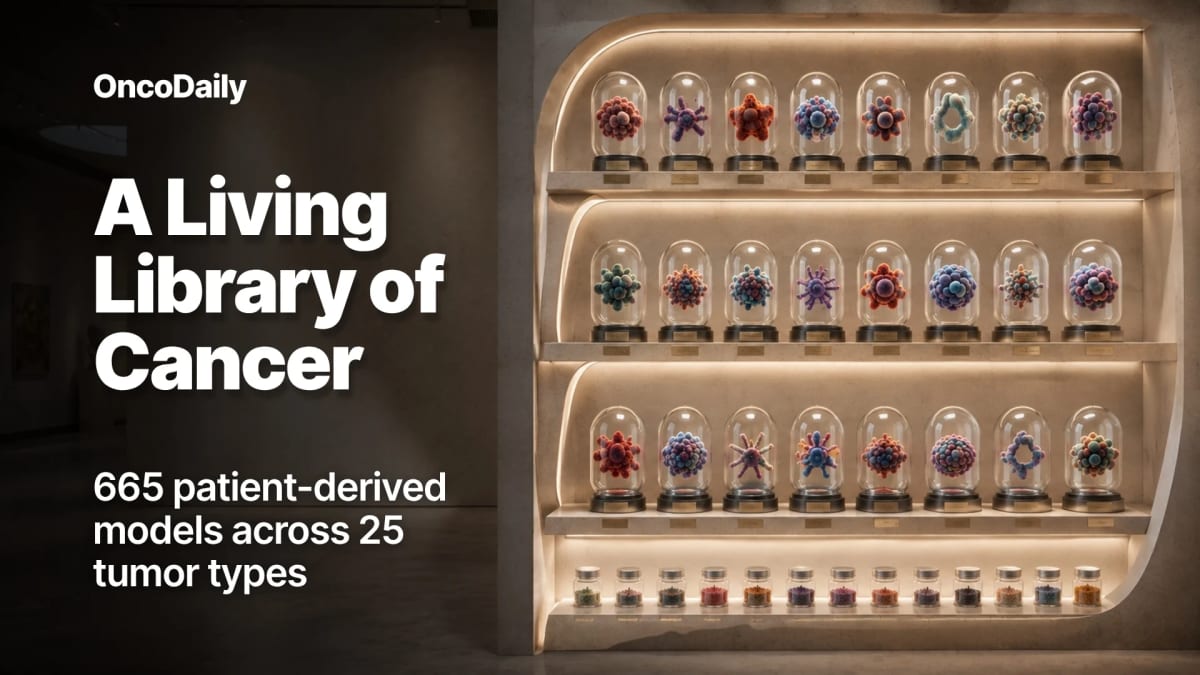
An international team just released a "living library" of 665 cancer models grown from real patient tumors, giving researchers worldwide a powerful new tool to find better treatments. The collection covers 25 cancer types and includes rare cancers that have been missing from research for decades.
Cancer researchers now have access to something that didn't exist before: a massive library of 665 living tumor models that actually reflect the real diversity of cancer in patients.
The collection comes from the Human Cancer Models Initiative, a decade-long international effort funded by the National Institutes of Health. Scientists grew these models from tumor tissue donated by 2,780 patients, creating what NIH Director Jay Bhattacharya calls "a major win for cancer research."
Here's why it matters. When scientists study cancer in the lab, they need living tumor tissue to work with. These models let them watch how tumors grow, test different drugs, and understand why some cancers resist treatment, all without experimenting on patients.
But most existing cancer model collections have a problem. They only represent a tiny slice of how diverse cancer really is. Two people can have the same diagnosis on paper and their tumors can behave completely differently based on genetics, cancer subtype, or treatment history.
This new library was built specifically to fix that gap. It includes 153 models of rare cancers, 71 models from patients of non-European ancestry, and brain tumor models that have historically been extremely hard to grow in labs. All of these groups have been underrepresented in cancer research for years.
The quality checks are impressive too. Researchers compared 421 of the lab models to their original tumors and found they matched almost perfectly: 97.8% agreement in genetic changes, 95% in epigenetic features, and 92% in gene expression patterns. Even after growing in lab dishes, these models still closely resemble the real tumors they came from.
Even better, 522 of the models come with detailed patient histories attached. Researchers can see how the original tumor responded to treatment, which helps them connect what they observe in the lab to what actually happens in real patients.
The Ripple Effect
Scientists worldwide can now search the entire collection online by cancer type, treatment history, and patient characteristics through a free searchable catalog. Teams are already using the models to study why glioblastoma, an aggressive brain cancer, resists chemotherapy.
This isn't a new drug or treatment that changes anyone's care today. But it's something potentially more powerful: a foundation that helps researchers understand why some tumors respond to treatment while others don't, identify new drug targets, and test therapies long before they reach human trials.
The library represents ten years of collaboration, thousands of generous patient donors, and a commitment to making sure cancer research reflects the real diversity of people facing this disease.
Every model in this collection is another chance for scientists to spot a pattern, test an idea, or find a weakness in a tumor that seemed untreatable before.
More Images



Based on reporting by Google News - Researchers Find
This story was written by BrightWire based on verified news reports.
Spread the positivity!
Share this good news with someone who needs it