Scientists Reverse Desert Spread in Europe's Drylands
European researchers have cracked the code on reversing desertification by rebuilding how desert ecosystems naturally manage water. Simple structures that restore rainfall distribution are bringing degraded drylands back to life across the Mediterranean.
Across Europe's drylands, scientists are proving that deserts don't have to keep spreading.
A new study from eLTER shows that restoring how desert ecosystems function can reverse decades of land degradation threatening Southern Europe and the Mediterranean Basin. Instead of trying to recreate historical plant life, researchers focused on fixing the basic plumbing that keeps drylands alive.
The breakthrough centers on a surprisingly simple insight from the Negev Desert. Healthy dryland ecosystems act like natural irrigation systems, with source and sink networks that concentrate scarce rainfall into enriched soil patches. These water-rich zones sustain vegetation and soil life, creating resilient landscapes that regulate themselves.
When overuse or climate stress breaks these networks, entire ecosystems spiral into decline. Water runs off instead of soaking in. Soil erodes. Vegetation dies. The land gets trapped in a degraded state that feeds on itself.
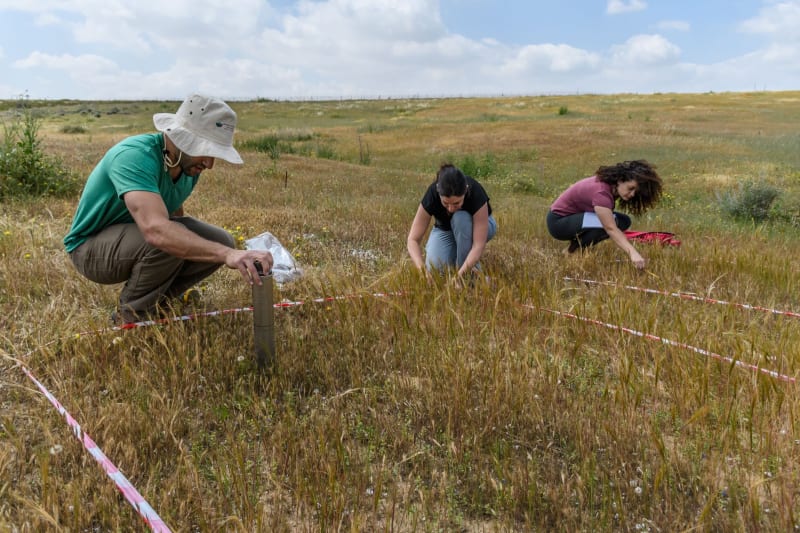
But the research shows degradation isn't permanent. Scientists demonstrated that building simple water-retaining structures can rebuild these natural networks and restart the recovery process. The structures mimic how healthy drylands naturally capture and distribute water, giving ecosystems the foundation they need to heal.
The approach works across different types of arid and semi-arid regions, making it scalable from local farms to entire landscapes. Long-term observations confirm that once the basic water functions restart, ecosystems begin recovering vital services like soil stability, carbon storage, and food production.
The Ripple Effect
The implications reach far beyond desert recovery. Desertification currently threatens food security and rural livelihoods across vast stretches of Southern Europe, where water scarcity and land degradation are accelerating under climate change.
Functional restoration directly supports major policy initiatives including the EU Green Deal, Nature Restoration Law, and UN Convention to Combat Desertification. The new policy brief calls for integrating these restoration techniques into European land management strategies and aligning restoration funding with agricultural programs and carbon farming schemes.
The research shows that building dryland resilience requires focusing on how ecosystems work, not just what species they contain. By restoring natural water regulation first, degraded lands can regain the capacity to support biodiversity, sequester carbon, and sustain human communities.
Europe's drylands are getting a second chance at life, one water-retaining structure at a time.
More Images


Based on reporting by Phys.org
This story was written by BrightWire based on verified news reports.
Spread the positivity!
Share this good news with someone who needs it