Scientists Reverse Gut Aging in Mice Using Young Bacteria
Researchers discovered that transplanting gut bacteria from young mice into old mice reversed aging in their intestinal stem cells and restored their ability to heal. The breakthrough suggests that age-related gut decline might be reversible in humans too.
Your gut might hold the secret to staying younger longer, and scientists just figured out how to turn back its biological clock.
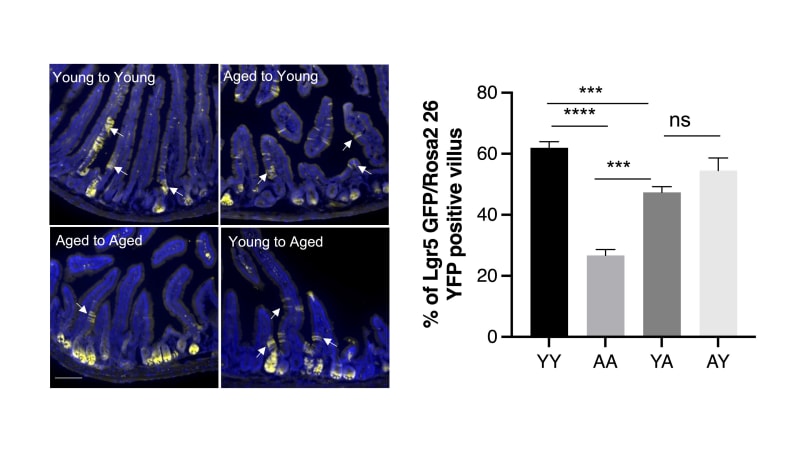
Researchers at the University of Ulm in Germany and Cincinnati Children's Hospital discovered that transplanting gut bacteria from young mice into older mice reversed aging in their intestinal stem cells. The old mice regained their ability to regenerate and heal damaged tissue, performing like their younger counterparts.
The intestinal lining constantly renews itself through stem cells that divide and create fresh tissue. This process keeps your gut absorbing nutrients, fighting inflammation, and healing from injury. But as we age, these stem cells slow down, leading to digestive problems and weakened gut function.
The research team noticed that old mice had dramatically different gut bacteria compared to young mice. Their intestinal stem cells were sluggish and couldn't regenerate tissue effectively after injury. The researchers wondered if the bacteria themselves were causing the problem.
They tested their theory by giving old mice a microbial transplant from young donors. The results surprised even the scientists. The aged stem cells sprang back to life, restoring the old mice's ability to heal intestinal damage.
The team went further and identified a specific bacterial species that increases with age and appears to sabotage stem cell function. This discovery provides a clear target for future treatments.
The Bright Side
This research transforms how we think about aging. For years, scientists assumed age-related decline was permanent and irreversible. This study proves that at least some aspects of aging can be undone by restoring the right biological environment.
The gut microbiome is easier to modify than many other systems in the body. Unlike gene therapy or invasive procedures, changing gut bacteria can be achieved through diet, probiotics, or fecal transplants that are already used to treat other conditions.
The findings could eventually help millions of older adults struggling with poor nutrient absorption, chronic inflammation, and slow healing. Better gut function means better overall health, stronger immunity, and improved quality of life.
Clinical trials in humans are the logical next step. Researchers need to identify which bacterial species support healthy aging in people and determine the safest delivery methods.
The discovery reminds us that our bodies host trillions of microscopic partners whose health directly shapes our own, and that partnership might be the key to healthier aging.
More Images
Based on reporting by Medical Xpress
This story was written by BrightWire based on verified news reports.
Spread the positivity!
Share this good news with someone who needs it