Scientists Reverse Motor Symptoms in Huntington's Mice
Researchers discovered how to restore movement in mice with Huntington's disease by reactivating specific brain cells, and the improvements lasted for days. This breakthrough could open new treatment paths for a disease that currently has no cure.
Scientists just achieved something remarkable in the fight against Huntington's disease. They reversed motor symptoms in mice by targeting a specific type of brain cell, offering fresh hope for the 30,000 Americans living with this devastating disorder.
Huntington's disease gradually destroys a person's ability to move, think, and function independently. It's caused by a single genetic mutation, but until now, scientists couldn't pinpoint exactly how that mutation leads to the loss of motor control.
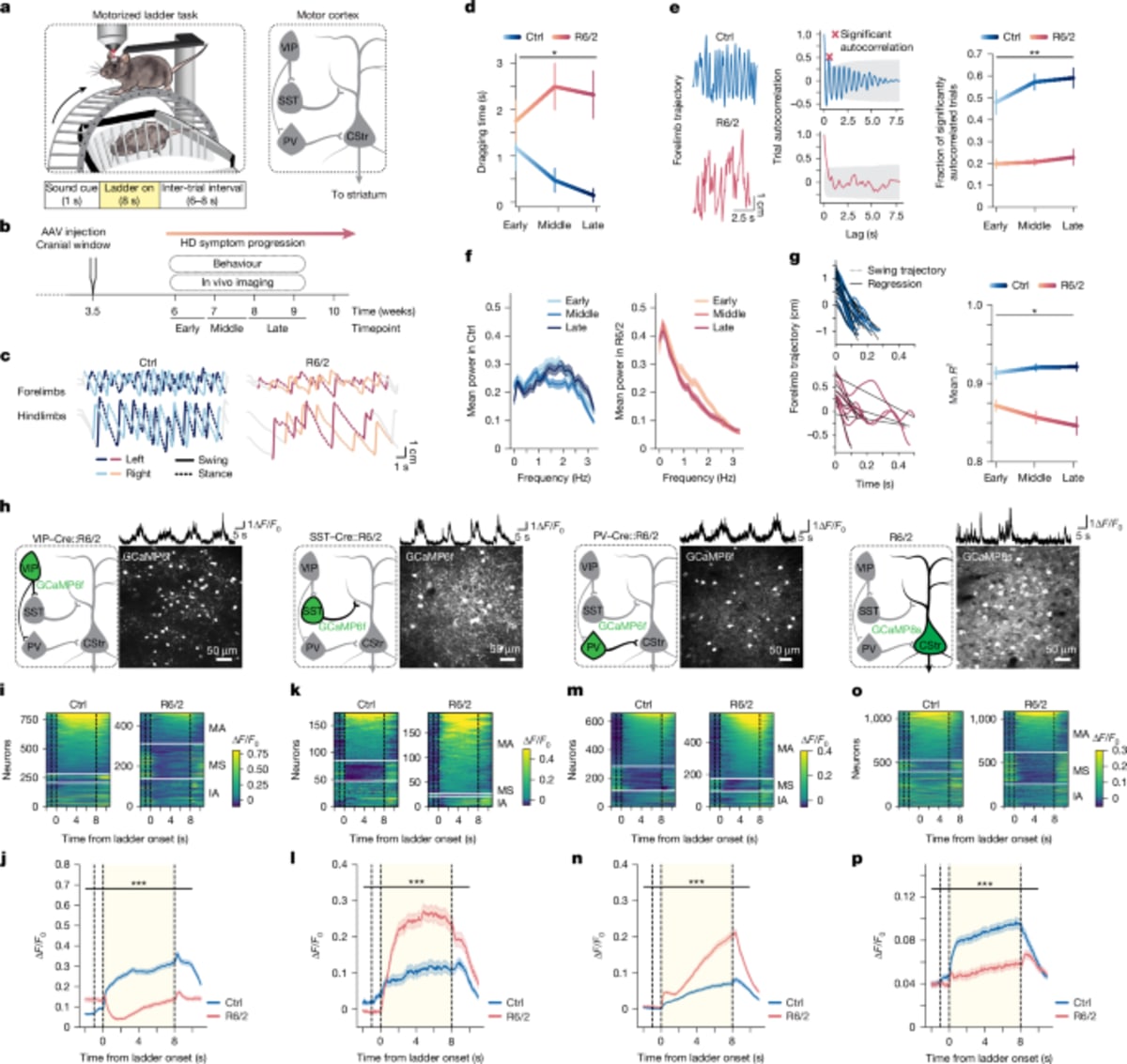
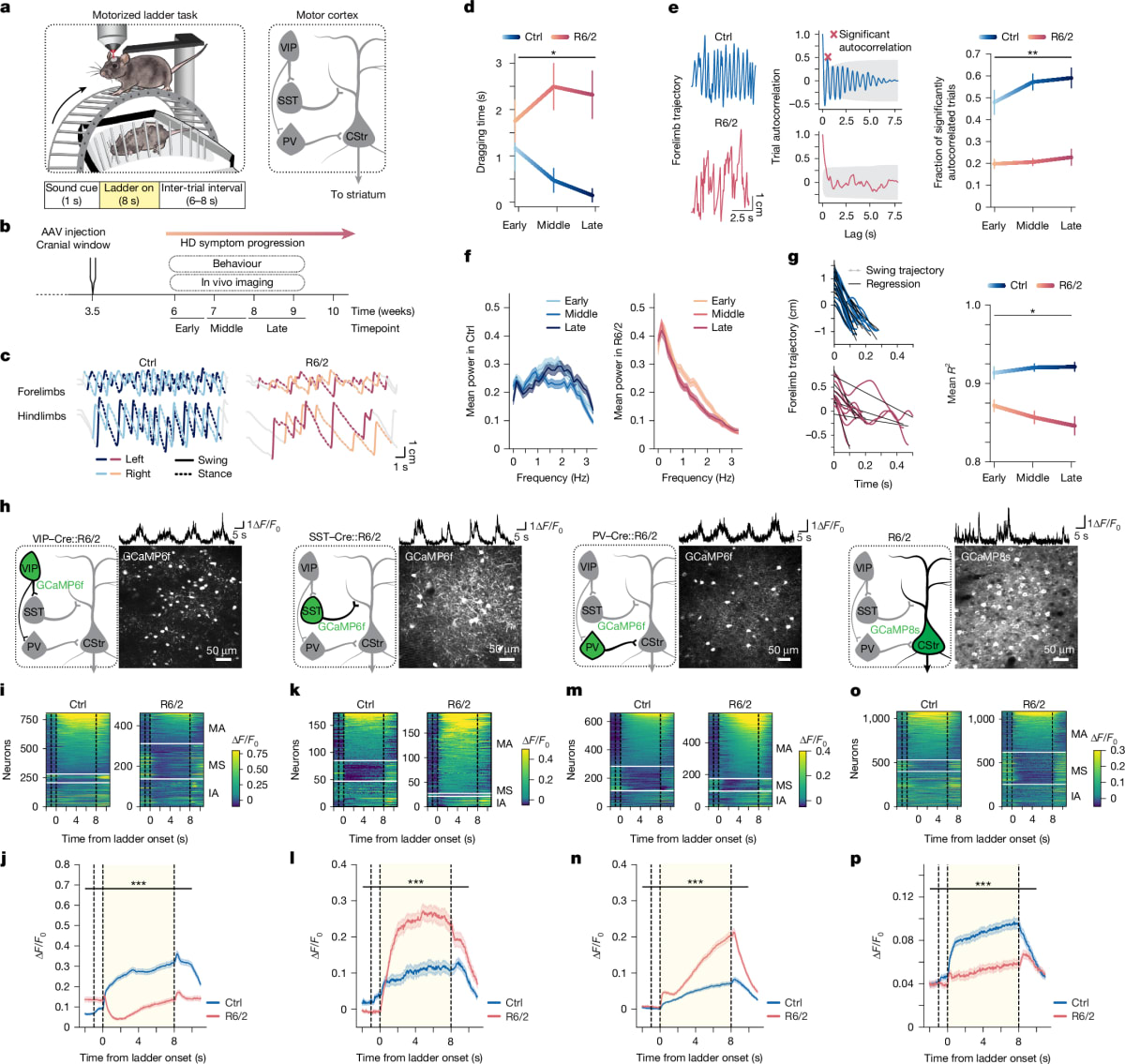
Researchers used advanced imaging to watch individual brain cells in action as mice with Huntington's tried to learn a precise walking task. They discovered something unexpected: certain inhibitory neurons called VIP cells, which normally help regulate brain activity, had gone nearly silent in the motor cortex.
These VIP cells act like dimmer switches for the brain. When they stopped working properly, the mice struggled with basic movements like walking with a regular gait and keeping up with a rotating ladder.
The team decided to test a bold idea. Using light-activated proteins, they gently stimulated the dormant VIP cells back to life. The results surprised even the researchers.
The mice's motor symptoms improved dramatically. They walked with more regular gaits, dragged their hind legs less, and moved with greater coordination. Even more exciting, these improvements persisted for days after just a single stimulation session.
The same VIP cell dysfunction appeared in two different mouse models of Huntington's, suggesting this mechanism might be a core part of how the disease works. When the researchers activated the VIP cells, downstream neurons that had also gone quiet sprang back to life, restoring more normal brain network activity.
Why This Inspires
This discovery matters because it identifies a specific, targetable mechanism rather than just describing what goes wrong in Huntington's. The brain circuits aren't dead, they're just stuck in the "off" position.
For decades, Huntington's research focused primarily on the striatum, a brain region visibly damaged by the disease. This study reveals that the cortex plays a crucial earlier role, and that fixing cortical problems can improve symptoms even when other damage remains.
The lasting effects are particularly encouraging. A single intervention produced improvements that endured for days, suggesting the brain can maintain healthier patterns once they're reestablished.
While human treatments remain years away, this research opens a new therapeutic direction. Scientists can now explore drugs or other methods to reactivate these specific inhibitory neurons in people.
The work also demonstrates how precision tools like two-photon imaging and optogenetics can reveal disease mechanisms invisible to older research methods. Understanding exactly which brain cells malfunction, and when, transforms how we think about treatment.
For families touched by Huntington's, this research offers something precious: a concrete reason for hope rooted in rigorous science.
More Images
Based on reporting by Nature News
This story was written by BrightWire based on verified news reports.
Spread the positivity!
Share this good news with someone who needs it