%2Fhttps%3A%2F%2Ftf-cmsv2-smithsonianmag-media.s3.amazonaws.com%2Ffiler_public%2F3e%2Fa0%2F3ea051ef-cb48-48ac-a477-5e4a4f0eb276%2Fregent_honeyeater.jpg)
Scientists Saved This Endangered Bird's Lost Song
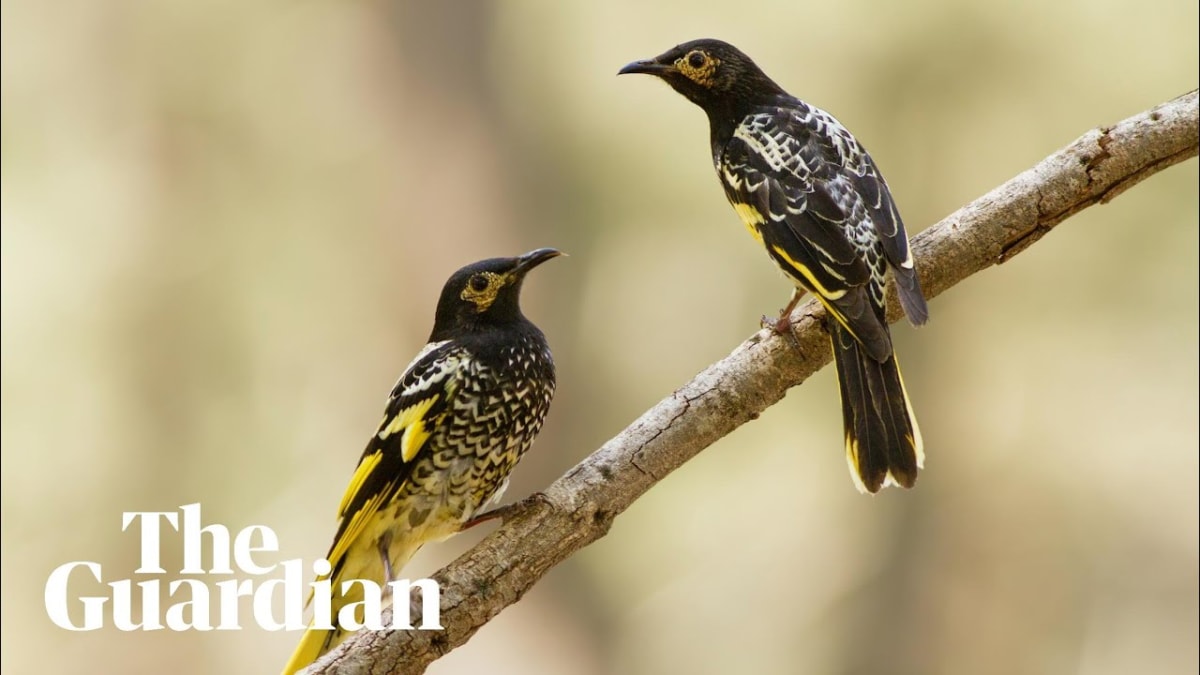
When fewer than 250 regent honeyeaters remained in the wild, their traditional song nearly disappeared forever. Two wild birds became teachers and brought the melody back to life.
The regent honeyeater once filled southeastern Australia's skies in huge flocks, but today this stunning bird teeters on the edge of extinction. As their population crashed to fewer than 250 in the wild, something precious vanished along with their numbers: the males forgot how to sing their own species' song.
Young male honeyeaters learn their melodies from older birds, but with so few left, many juveniles started mimicking other species or inventing incorrect tunes. Captive-born birds created songs never heard in nature, threatening their chances of breeding successfully when released into the wild.
Scientists at two Australian zoos knew they had to act fast. Their first attempt involved playing recorded songs to baby birds for six months straight, but the method flopped completely.
Then conservation biologist Daniel Appleby and his team tried something simpler. They brought in two wild-born male birds who still knew the correct song and placed them alongside captive chicks as living teachers.
Three months later, the researchers heard their first breakthrough: young birds singing the traditional wild melody. But they quickly learned that classroom size mattered, with too many students per teacher producing poor results.
The team capped classes at five students per tutor. Those who learned well sounded remarkably similar to wild birds, and many graduates became vocal teachers themselves the following year.
The Ripple Effect
Within three years, the proportion of young birds singing the traditional song jumped from zero to 42 percent. Today, more than half of zoo-bred males carry the melody that almost disappeared.
The timing proved critical. During the study, the full version of the traditional song vanished completely from wild populations, making the captive-born birds the only creatures on Earth preserving that cultural knowledge.
Conservation scientist Rebecca Lewis, who wasn't involved in the research, calls the method sustainable because trained birds can teach future generations without constant human intervention. The cultural knowledge can pass naturally from bird to bird, generation after generation.
As researchers release more singing graduates into the wild, they hope the population will rebound and the melody will spread across southeastern Australia once again.
More Images
%2Fhttps%3A%2F%2Ftf-cmsv2-smithsonianmag-media.s3.amazonaws.com%2Ffiler_public%2F3e%2Fa0%2F3ea051ef-cb48-48ac-a477-5e4a4f0eb276%2Fregent_honeyeater.jpg)
%3Afocal(960x640%3A961x641)%2Fhttps%3A%2F%2Ftf-cmsv2-smithsonianmag-media.s3.amazonaws.com%2Ffiler_public%2F3e%2Fa0%2F3ea051ef-cb48-48ac-a477-5e4a4f0eb276%2Fregent_honeyeater.jpg)
%2Fhttps%3A%2F%2Ftf-cmsv2-smithsonianmag-media.s3.amazonaws.com%2Faccounts%2Fheadshot%2FSara_-_Headshot_thumbnail.png)
Based on reporting by Smithsonian
This story was written by BrightWire based on verified news reports.
Spread the positivity!
Share this good news with someone who needs it