Scientists Simulate Entire Living Cell for First Time
Researchers created a virtual bacterial cell that copies its DNA and divides, just like real life. This breakthrough could unlock mysteries about how lifeless molecules become living organisms.
Scientists have achieved something remarkable: they simulated nearly every chemical reaction happening inside a living cell as it divides in two.
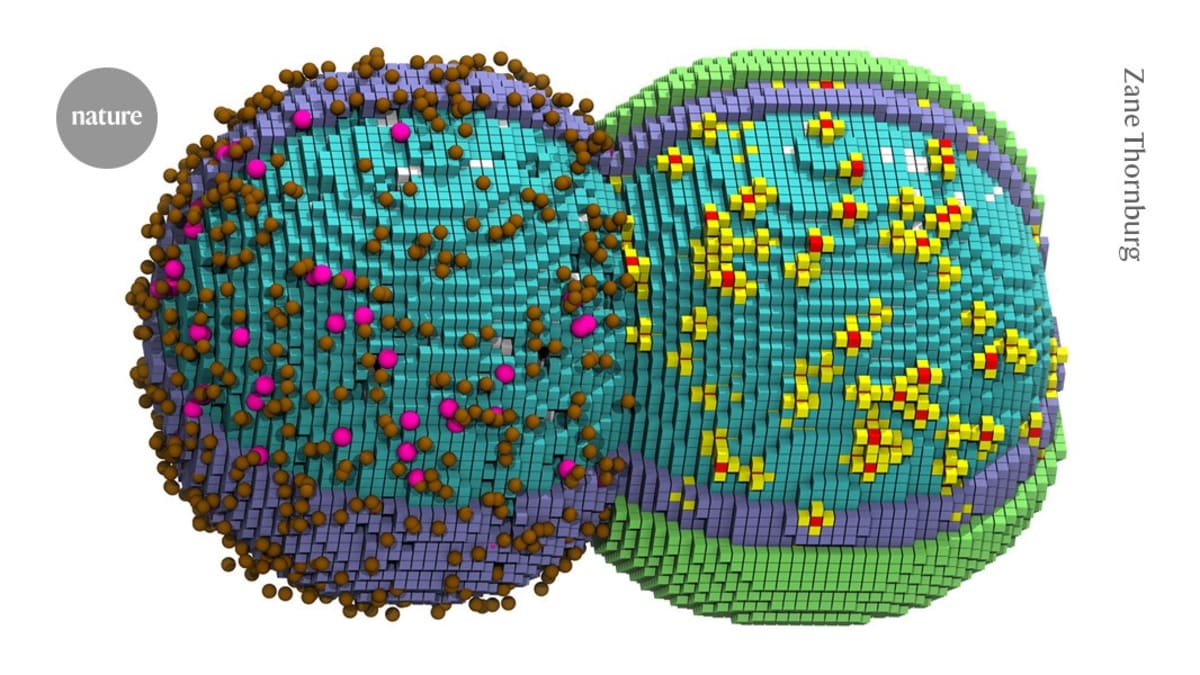
Zane Thornburg and his team at the University of Illinois created a three-dimensional computer model of one of Earth's simplest bacteria. They watched their virtual cell grow, copy its DNA, and split into two daughter cells, mirroring the most fundamental process of life.
The team chose a bacterium called JCVI-Syn3a, which has just 493 genes (humans have around 20,000). This "minimal" organism was perfect for modeling because scientists had already stripped away everything non-essential, leaving only what life absolutely needs to survive.
Creating virtual life wasn't easy. Early attempts failed spectacularly when the simulated DNA fell apart too quickly or leaked out of the cell membrane. After tweaking the model, the team let it run over Thanksgiving weekend in November.
When they returned, they found something extraordinary. Their virtual cell had completed an entire life cycle, taking 105 minutes to divide, nearly identical to the real bacterium's timing. "It was just this huge leap," Thornburg says.
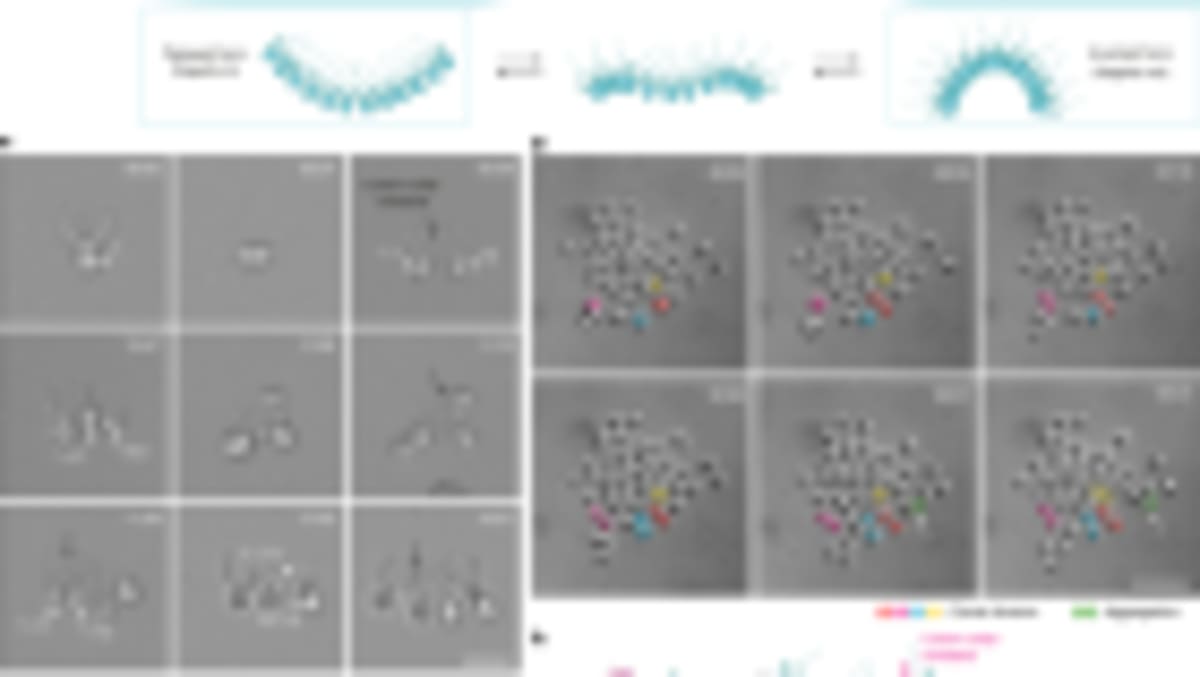
The simulation tracked proteins, DNA-copying enzymes, ribosomes, and thousands of other molecules as they bounced around inside the cell. When molecules came close enough, reactions occurred based on real-world measurements. The virtual cell even swelled and elongated during division, exactly like its living counterpart.
Why This Inspires
This breakthrough represents more than just impressive computing power (though it did require six days on a supercomputer to simulate those 105 minutes). It's a window into one of science's deepest questions: how does a mix of lifeless chemicals become something alive?
By recreating cellular life inside a computer, researchers can now test ideas about what makes organisms tick. They can experiment with virtual cells in ways impossible with real ones, potentially speeding up discoveries in medicine, biotechnology, and our understanding of life itself.
Bernhard Palsson, a bioengineer at UC San Diego, calls the achievement important because of the sheer breadth of cellular activity it captures. Getting thousands of processes to work together coherently during cell division is enormously challenging.
The model isn't perfect yet. Scientists still don't know what several dozen of the cell's genes do, so the team modeled them as inert spheres. And the simulation simplified some processes that are more complex in reality.
But imperfect doesn't mean unimportant. This virtual cell represents humanity's closest approximation yet of digital life, bringing us one step closer to understanding the miracle happening inside every living thing on Earth.
More Images
Based on reporting by Nature News
This story was written by BrightWire based on verified news reports.
Spread the positivity!
Share this good news with someone who needs it