Scientists Solve Foam Mystery, Improving Everyday Products
Researchers in Tokyo discovered why foam drains faster than expected, solving a decades-old puzzle. The breakthrough could lead to better cleaning products, medicines, and more.
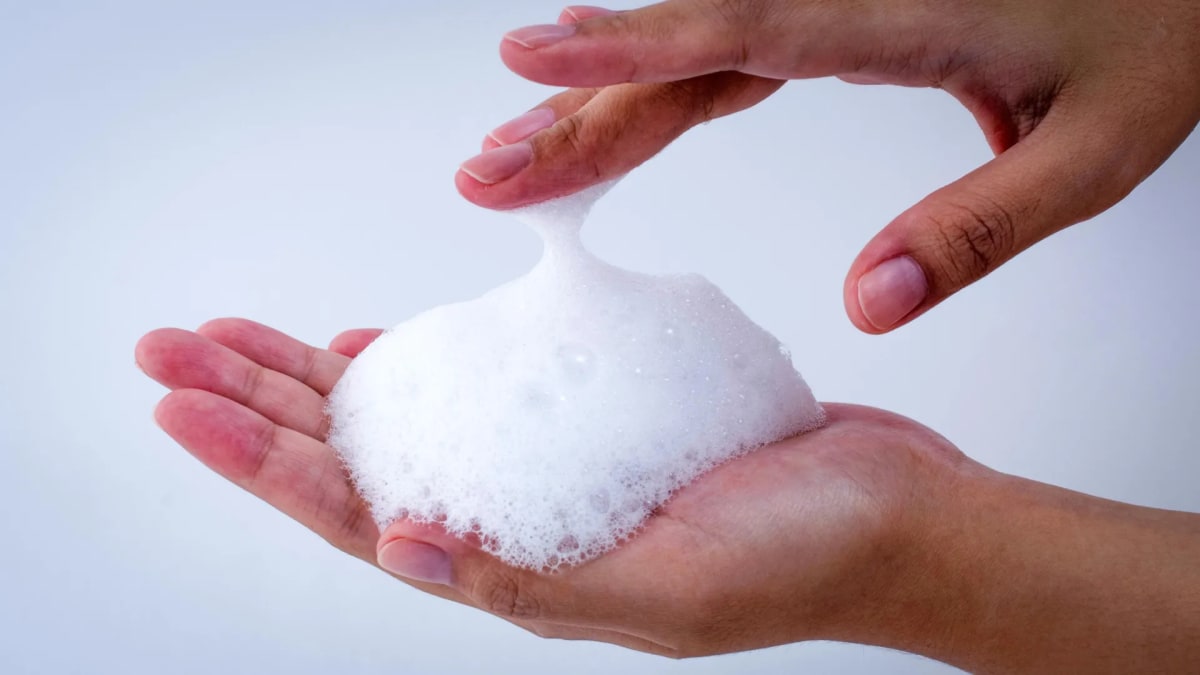
Scientists just figured out why your shaving cream drips down the sink so quickly, and the answer could transform products we use every day.
For decades, physicists have been stumped by a simple question: why does liquid drain from foam way faster than their calculations predict? Traditional models suggested foam would need to be about three feet tall before leaking, but real foam starts dripping at just a few inches.
Researchers at Tokyo Metropolitan University finally cracked the case. Professor Rei Kurita and his team discovered that foam doesn't behave like a rigid sponge with liquid trickling through tiny passages. Instead, the bubbles themselves are constantly shifting and rearranging, creating new pathways for liquid to escape.
The team placed different types of foam between transparent plates and filmed what happened inside. What they saw surprised them: at the exact moment drainage begins, the bubbles start moving and reorganizing under pressure. The liquid wasn't just flowing through static channels—it was pushing the bubbles out of the way.
This dance between bubbles turns out to be the real key. The researchers identified that "yield stress," the pressure needed to move bubbles around, controls when drainage happens. Their new model based on this insight accurately predicts foam behavior in ways old theories never could.
The Ripple Effect
This discovery reaches far beyond laboratory experiments. Foam appears in countless products we rely on daily, from dish soap and shampoo to fire suppressants and pharmaceutical creams. Understanding exactly how foam works means scientists and manufacturers can now design better versions that last longer or drain more efficiently, depending on what's needed.
The pharmaceutical industry could create more stable medical foams that deliver medication consistently. Firefighting foam could be engineered to stick to surfaces longer. Even your morning coffee's milk foam could benefit from this science.
The breakthrough also changes how scientists think about "soft materials" in general—substances like gels, pastes, and emulsions that don't behave like simple liquids or solids. Rather than treating these materials as fixed structures, researchers now understand they need to account for constant internal movement and reorganization.
For something as ordinary as foam, this discovery reminds us that everyday mysteries still hide in plain sight, waiting to improve our lives.
Based on reporting by Science Daily
This story was written by BrightWire based on verified news reports.
Spread the positivity!
Share this good news with someone who needs it