Scientists Solve Mystery Behind Whale Stranding in Scotland
Researchers discovered that 55 pilot whales beached themselves on Scotland's Isle of Lewis because they were protecting a pod member in distress. The tragedy reveals the remarkable loyalty of one of the ocean's most social species.
When 55 pilot whales stranded themselves on a Scottish beach in 2023, scientists initially suspected disease, trauma, or underwater noise pollution. Instead, they uncovered a heartbreaking story of loyalty that teaches us something profound about the ocean's most social creatures.
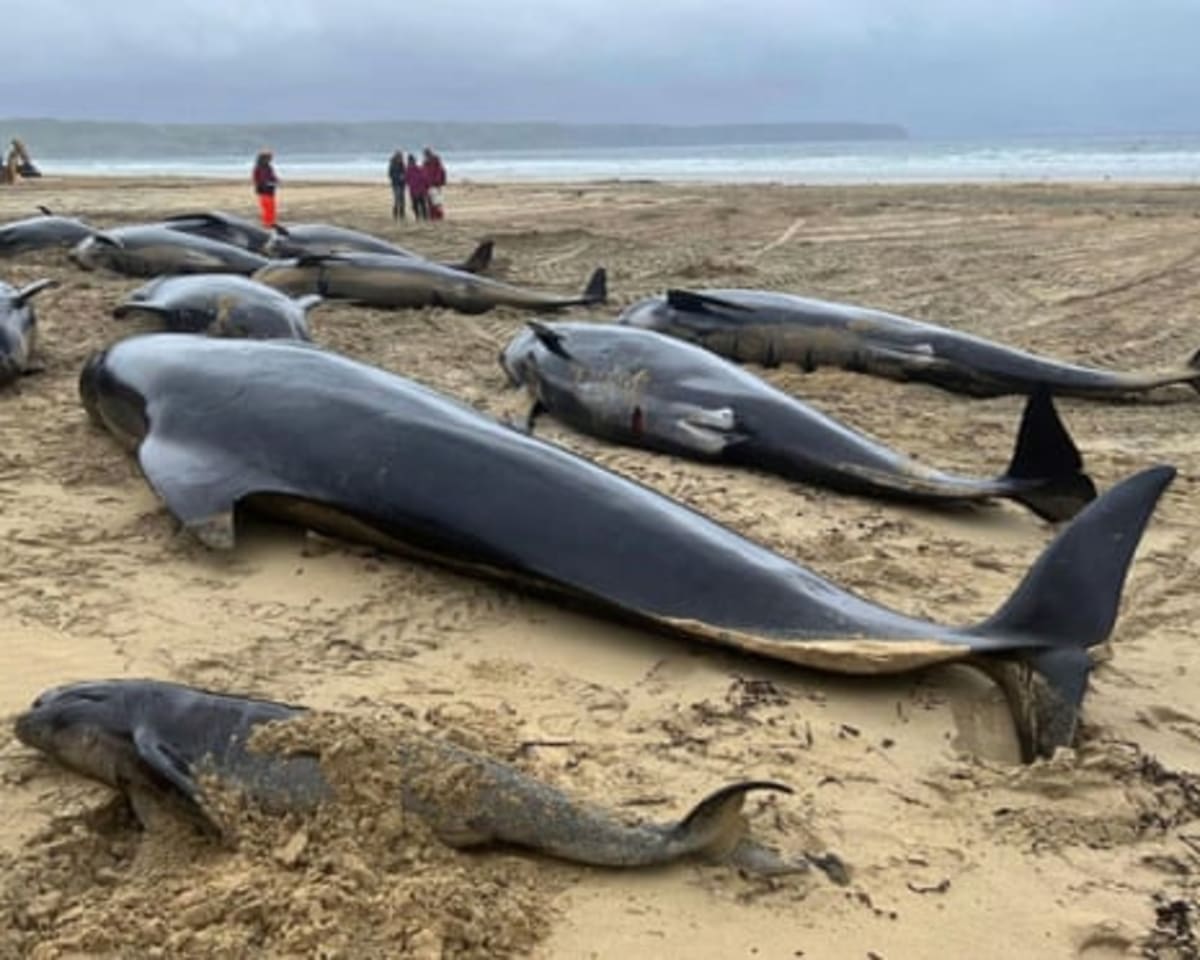
The long-finned pilot whales beached at Tràigh Mhòr on the Isle of Lewis after following a single female experiencing a difficult birth into shallow waters. Dr. Andrew Brownlow, who led the investigation for the Scottish Marine Animal Stranding Scheme, said the entire pod gathered to protect their struggling companion.
This protective instinct serves pilot whales well in deep ocean waters, where grouping together helps defend against predators. When a pod member falls ill or gets injured offshore, others rally around in support, a behavior that can mean the difference between life and death in open water.
But this time, that same life-saving loyalty led them into danger. The whales followed their distressed companion into the shallow, sandy bay where fine sediments created what researchers call an "acoustic trap." Their echolocation signals became muffled, making it nearly impossible to navigate back to safety.
Scientists found all the whales were in good health before the stranding. Post-mortem examinations confirmed the female whale had been experiencing prolonged labor, which triggered the pod's protective response.
Why This Inspires
This discovery helps scientists better understand mass strandings, which have increased by up to 300% in Scottish waters over the past 30 years. The research team ruled out human-caused noise pollution in this case, offering crucial insights as they investigate another stranding of 77 pilot whales in Orkney a year later.
Brownlow emphasized that mass strandings rarely have a single cause. Instead, they emerge where individual health, group behavior, and environmental conditions intersect. Understanding these connections helps researchers anticipate future events and potentially prevent them.
The findings also matter beyond Scotland's shores. As ocean conditions change worldwide, knowing how social bonds influence whale behavior could prove essential for protecting these intelligent mammals. Every stranding investigation adds pieces to a larger puzzle about how whales navigate their changing world.
The tragedy on that Scottish beach revealed something remarkable: these whales valued their bonds so deeply they risked everything to stay together, teaching us that the strongest survival instinct isn't always self-preservation but protecting those we care about.
More Images

Based on reporting by Guardian Environment
This story was written by BrightWire based on verified news reports.
Spread the positivity!
Share this good news with someone who needs it