Scientists Solve Mystery of How Complex Life Began on Earth
A groundbreaking study reveals how simple microscopic organisms evolved into all complex life on Earth, including humans. The discovery helps scientists understand one of biology's biggest mysteries.
Scientists just answered a question that has puzzled researchers for decades: how did complex life like plants, animals, and humans first evolve on our planet?
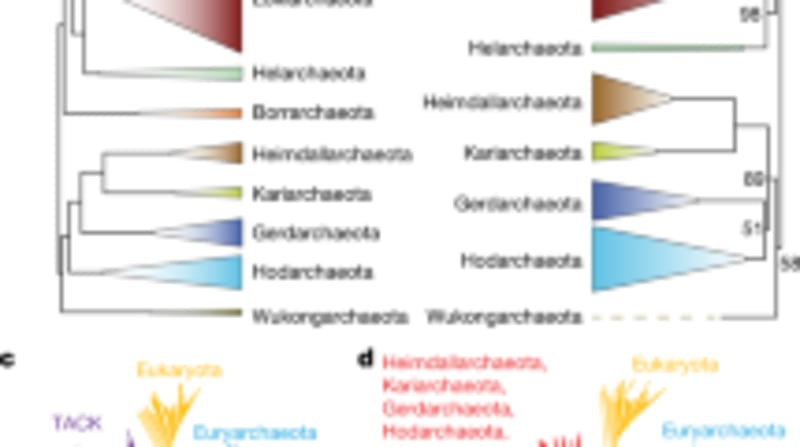
A new study published in Nature shows that ancient microorganisms called Asgard archaea played the starring role in creating the first complex cells billions of years ago. These tiny organisms gave rise to every plant, animal, and fungus alive today.
The research team analyzed thousands of genes to trace how complex life began. They discovered that most of the genetic instructions in our cells came from Asgard archaea, not from bacteria as scientists previously thought.
Think of it like building a house. The Asgard archaea provided the foundation, walls, and roof of complex life. Bacteria contributed important features like the power systems, similar to how solar panels get added to an existing structure.
The team found that Asgard archaea developed key features of complex cells first, including the internal scaffolding that gives cells their shape. Later, they captured a bacterial cell that became the mitochondria, the powerhouse that gives our cells energy.
This discovery rewrites the story of how life evolved on Earth. For years, scientists debated whether complex cells started with bacteria or archaea. Now the evidence points clearly to archaea as the main architect.
Why This Inspires
Understanding our cellular origins connects us to every living thing on Earth. The fact that all complex life shares this common ancestor shows how interconnected nature truly is.
This research also demonstrates how scientific tools keep improving. Advanced genetic analysis allowed researchers to peer back billions of years and piece together our evolutionary history with unprecedented clarity.
The findings open new doors for understanding how life might evolve on other planets. If scientists know the steps that led to complex life on Earth, they can better predict where to look for similar processes elsewhere in the universe.
The study involved researchers from multiple countries working together to solve this fundamental puzzle. Their collaboration shows how sharing knowledge across borders advances human understanding.
This breakthrough reminds us that even the biggest mysteries can be solved with persistence, teamwork, and better tools, giving us confidence that future scientific challenges can be overcome too.
More Images


Based on reporting by Google News - Science
This story was written by BrightWire based on verified news reports.
Spread the positivity! 🌟
Share this good news with someone who needs it