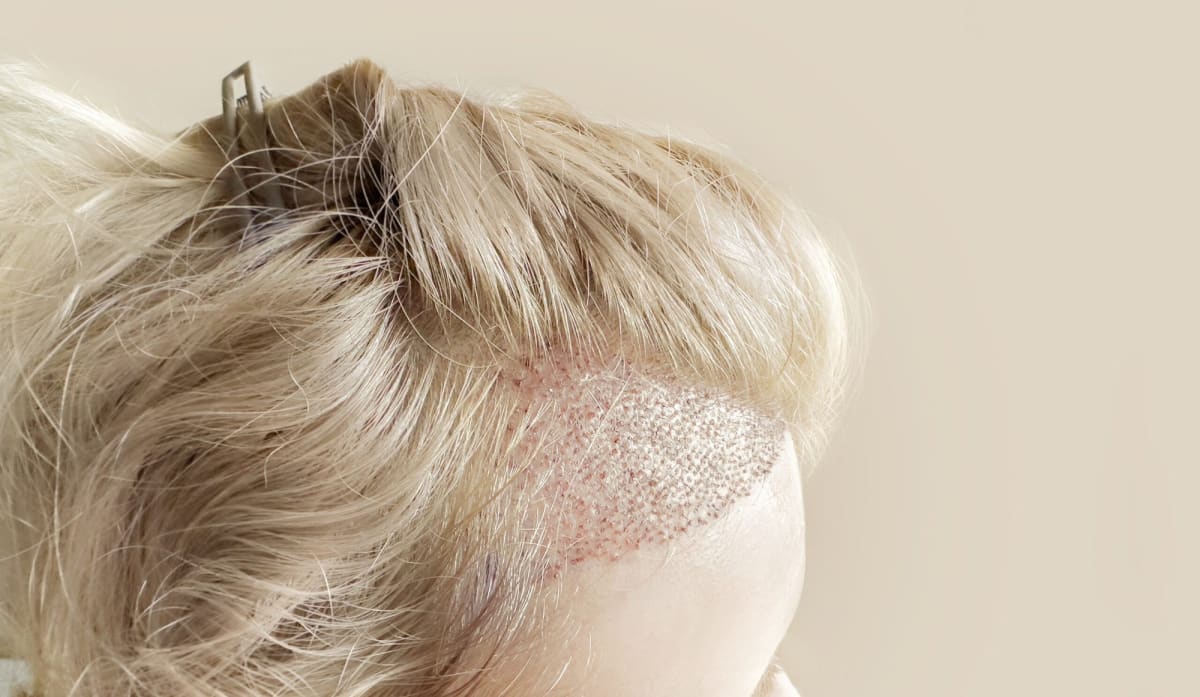
Scientists Solve Mystery of How Hair Patterns Form Naturally
Researchers at University of Geneva discovered that hair follicle patterns emerge from simple cell movements, not complex genetic blueprints. The breakthrough challenges decades of scientific thinking about how living systems build themselves.
Your body knows how to arrange millions of hair follicles into organized patterns without a single instruction manual telling each one where to go.
Scientists at the University of Geneva just figured out how this natural miracle happens. Their discovery reveals that hair patterns form through basic cell movements responding to chemical signals, completely rewriting what we thought we knew about how bodies develop.
For years, researchers believed each new hair follicle sent out a blocking signal to prevent others from forming too close. This theory seemed logical but relied on assumptions never fully proven in the lab.
The real answer turns out to be much simpler. Cells naturally move toward chemical signals produced by the skin's outer layer in a process called chemotaxis.
As these cells follow the chemical gradients, they spontaneously cluster together. These clusters become the foundation for hair follicles, creating evenly spaced patterns without any central control system.
"Our findings show that the observed patterns do not require a complex system telling each placode where to form," said researcher Muhamet Ibrahimi. "Instead, placodes emerge spontaneously from local interactions between cells and chemical signals."
The team tested their discovery on two different species with dramatically different hair patterns. Laboratory mice show irregular spacing, while spiny mice display remarkably organized rows of follicles.
The same basic process explained both patterns. Small differences in how cells move and how skin grows create the unique arrangements seen in each species.
When researchers examined cells up close, they found physical clues supporting the theory. In spiny mice, cells showed clear directional alignment with internal structures pointing the same way, preparing them to move in organized patterns.
Why This Inspires
This breakthrough shows that nature's most complex designs often emerge from surprisingly simple rules. No master plan exists for arranging your hair follicles, yet the result is perfectly organized.
The principle applies far beyond hair. Scientists believe this same process of self-organization might explain how many tissues and organs form during development.
Understanding these patterns could eventually help researchers grow artificial skin or treat conditions affecting hair growth. But the deeper inspiration lies in recognizing how elegantly living systems solve problems without needing elaborate instructions.
Simple interactions between neighboring cells, repeated millions of times, create the intricate patterns covering every living creature. Your body is constantly organizing itself through cooperation, not command.
More Images
Based on reporting by Google News - Scientists Discover
This story was written by BrightWire based on verified news reports.
Spread the positivity!
Share this good news with someone who needs it