Scientists Solve Mystery of Narwhal's Spiral Tusk
Scientists just discovered why narwhals grow perfectly straight tusks that all spiral left. The answer lies in a double helix structure invisible to the naked eye.
Scientists have finally cracked the mystery behind one of nature's most puzzling features: the narwhal's perfectly straight, spiraling tusk.
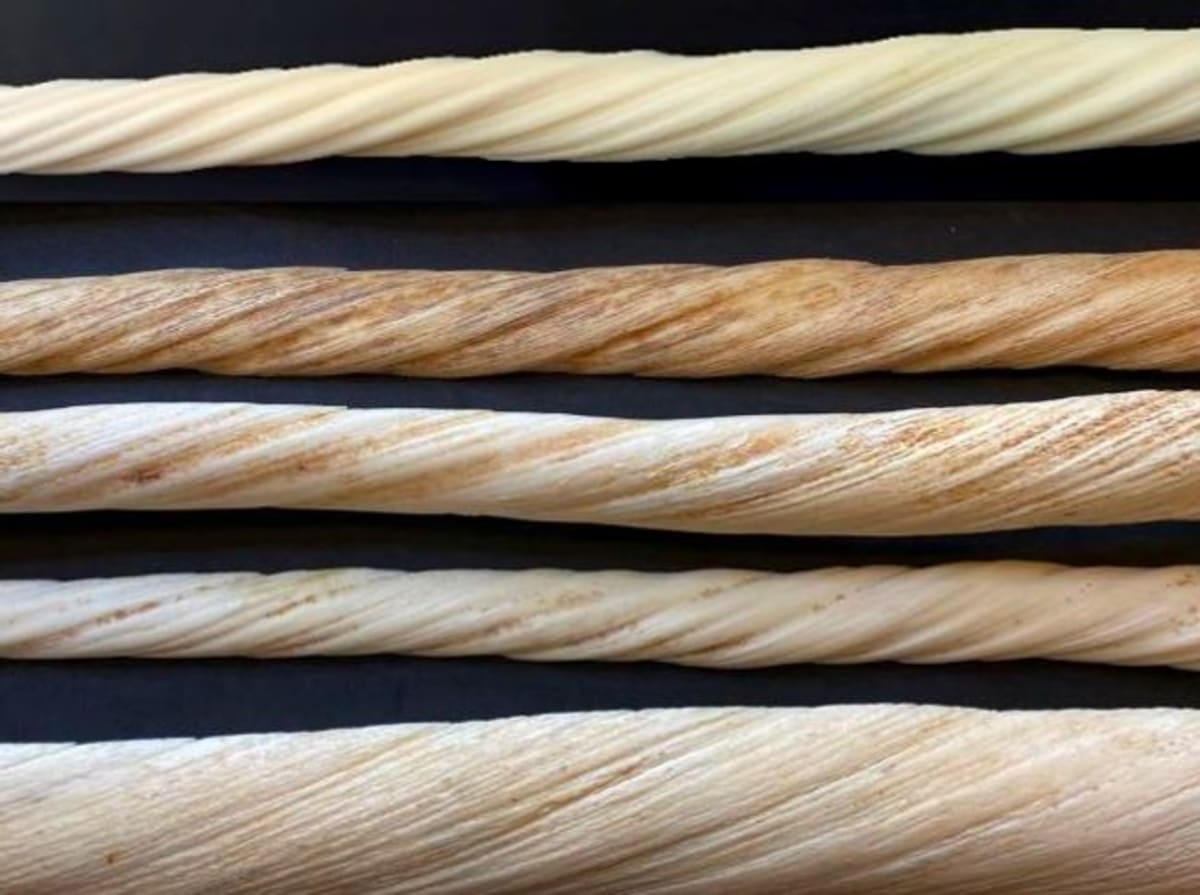
These "unicorns of the sea" sport tusks that can reach 10 feet long, and every single one spirals to the left. While plenty of animals have tusks, narwhals are the only creatures on Earth whose tusks grow in a completely straight line while spiraling in one direction.
Researchers at Aarhus University in Denmark used advanced X-ray scanners to peer inside narwhal tusks like never before. What they found was remarkable: the tusk is built from tiny threads of mineralized collagen that grow in opposing spirals.
The outer layer spirals left while the inner layer spirals right. These opposing forces balance each other out perfectly, keeping the tusk straight as it grows.
Think of it like two people pulling a rope in opposite directions with equal force. The rope stays centered because the forces cancel each other out.
Henrik Birkedal, the study's lead scientist, describes collagen as having a texture like "half-cooked spaghetti." It's firm but flexible, making it the perfect building material for a tusk that needs to stay straight while growing continuously throughout the narwhal's life.
Scientists believe the straight tusk isn't used for hunting but rather for social displays. A straight tusk might help establish dominance or attract mates while staying out of the way when narwhals suction feed on fish and squid in the deep Arctic waters.
Why This Inspires
This discovery opens new doors for understanding these mysterious creatures. Just like tree rings, narwhal tusks grow in bands that reveal their age. Scientists now think each band might contain chemical clues about where the narwhal traveled and what it experienced throughout its life.
Since narwhals live in the remote Arctic and are notoriously difficult to study, their tusks could become windows into their hidden lives. Future research will examine the chamber in the narwhal's skull where the tusk originates to understand exactly how this remarkable structure forms.
The team's findings prove that even the strangest features in nature follow elegant rules we're only beginning to understand.
More Images



Based on reporting by Scientific American
This story was written by BrightWire based on verified news reports.
Spread the positivity!
Share this good news with someone who needs it