Scientists Solve Mystery of Webb Telescope's 'Red Dots
Astronomers may have finally cracked the case of mysterious bright objects from the early universe. The James Webb Space Telescope discovered these puzzling "little red dots" in 2022, and new research shows they likely evolved into the galaxies we see today.
Scientists have solved one of space's newest mysteries, and the answer reveals how ancient galaxies grew into the cosmic structures we know today.
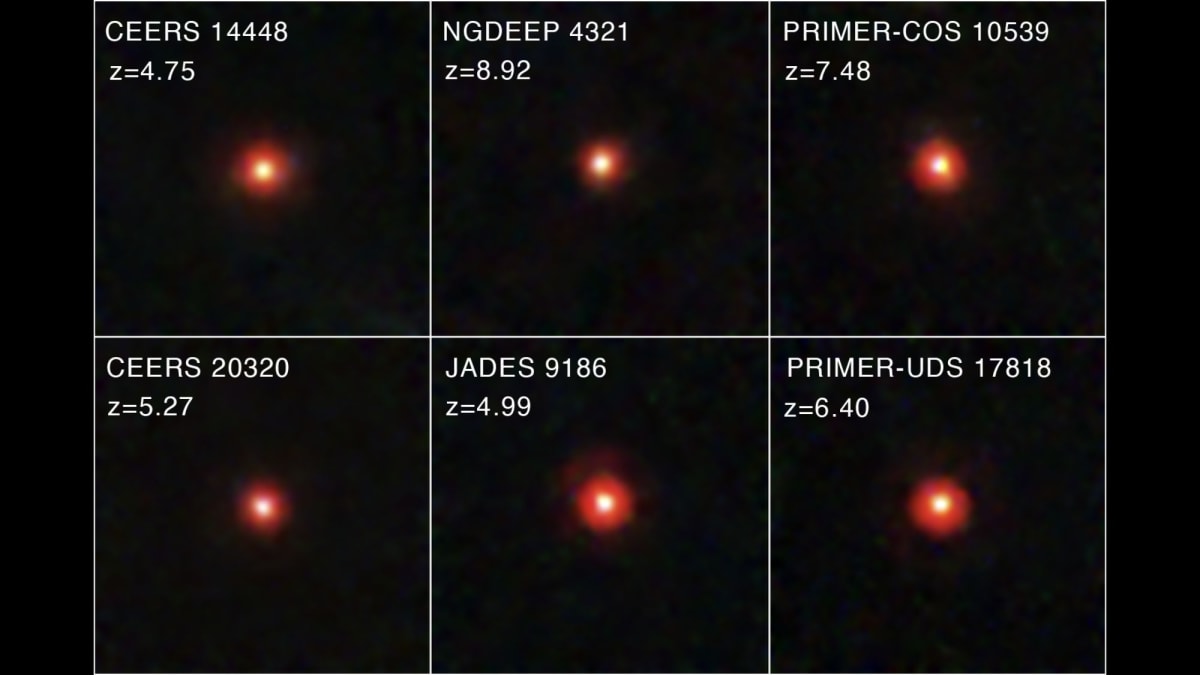
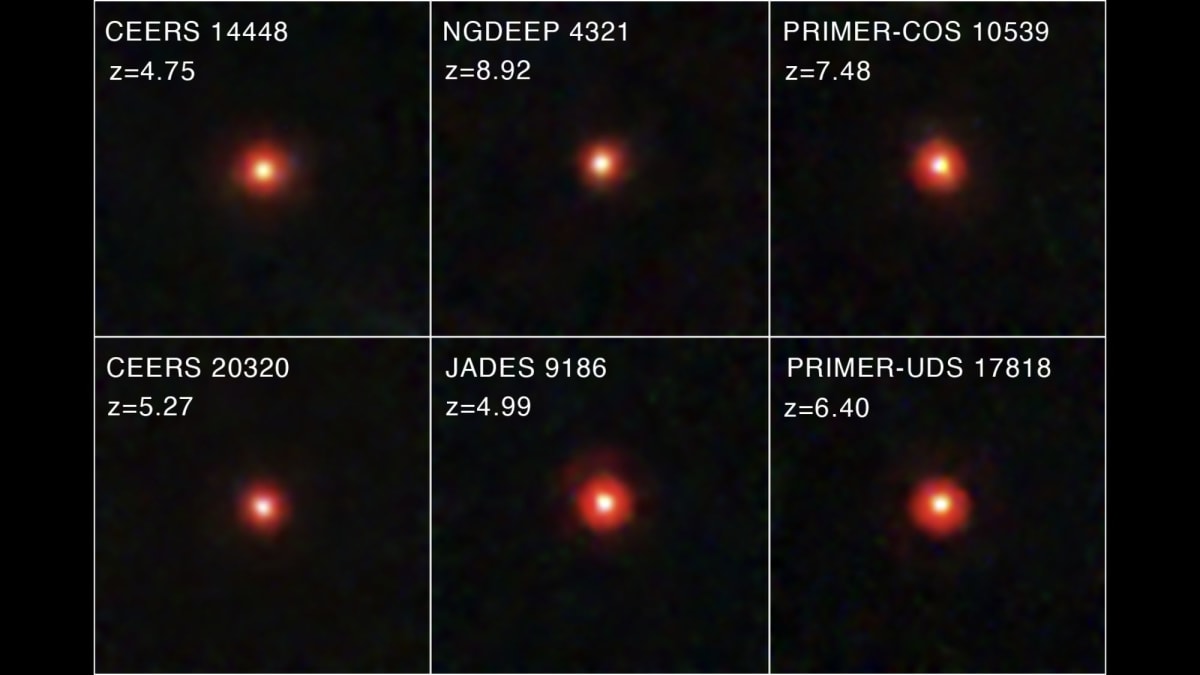
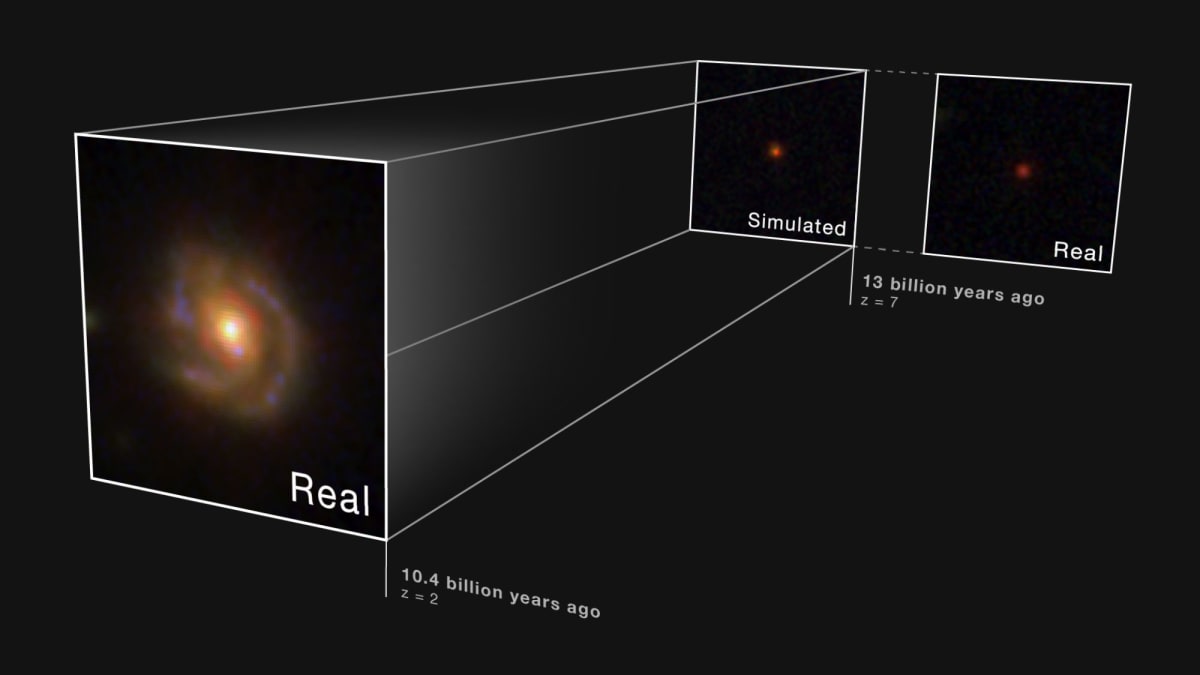
Since 2022, the James Webb Space Telescope has spotted strange objects called "little red dots" scattered across the early universe. These tiny, bright objects existed between 13.2 and 12.2 billion years ago, yet shined with surprising intensity for their size.
The dots puzzled astronomers because they behaved like nothing seen before. They glowed bright in infrared and ultraviolet light but didn't emit the X-rays typical of active black holes. Their strange light pattern suggested they might be "black hole stars," massive gas clouds heated from within by hidden, growing black holes.
The real mystery deepened when researchers noticed these dots vanished from the universe less than 12 billion years ago. Where did they go? Scientists knew they must have evolved into something familiar, but couldn't identify what.
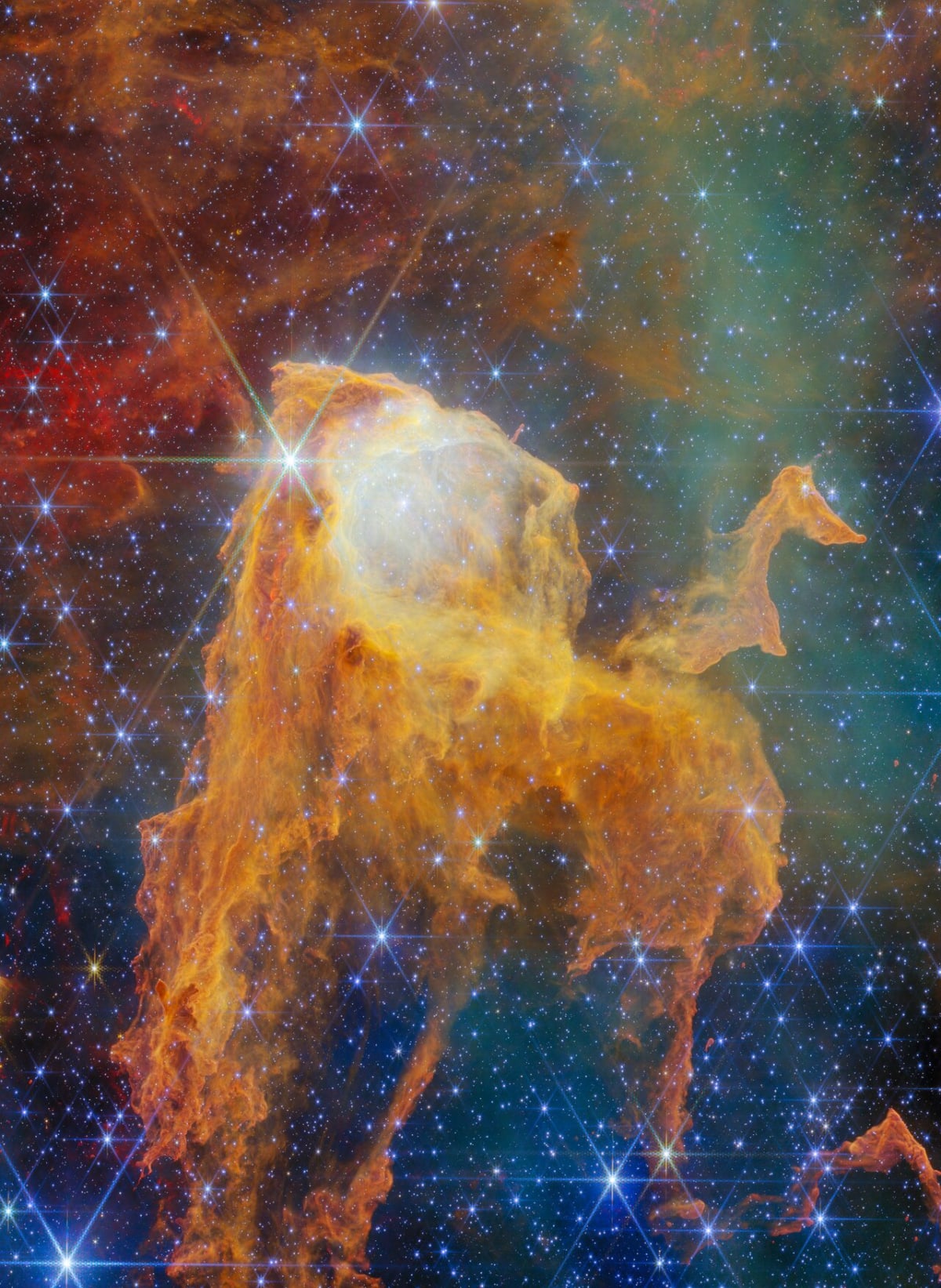
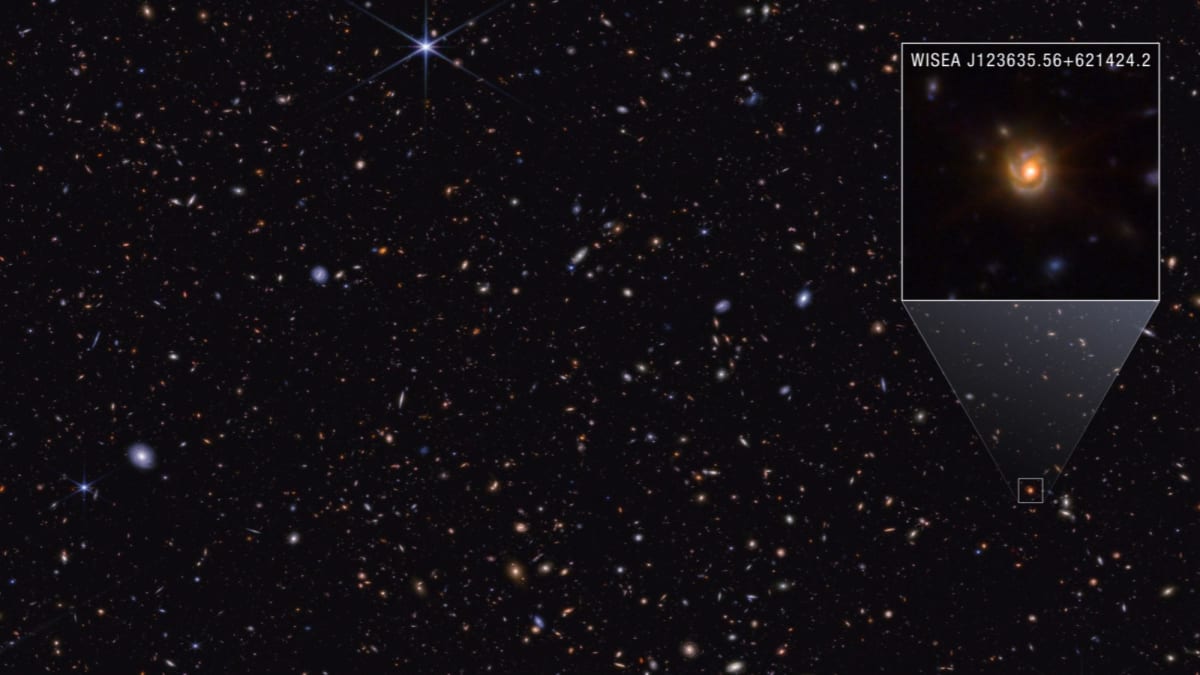
Now a team led by Pierluigi Rinaldi from the Space Telescope Science Institute has found the answer. They discovered a distant galaxy nicknamed "Saguaro" (after the desert cactus it resembles) that appears to be a grown-up version of a little red dot.
Saguaro exists 10.5 billion years in the past with neat spiral arms around a red core. That core displays all the hallmarks of a little red dot, including bright infrared light and ultraviolet emissions. But NASA's Chandra X-ray Observatory detected something new: faint X-rays breaking through.
Why This Inspires
This discovery shows us how the universe builds itself over time. Those mysterious early objects didn't disappear; they matured into the beautiful spiral galaxies that fill our night sky.
The X-ray detection proves the black hole at Saguaro's center is breaking through its surrounding gas cloud. Researcher Carys Gilbert from the University of Cape Town explains this fits perfectly with the black hole star theory, where the black hole gradually consumes its cocoon from inside, eventually carving holes that let X-rays escape.
The finding connects the dots across billions of years of cosmic history. Every mysterious object from the early universe had to become something we recognize today, and now scientists can trace that transformation.
George Rieke from the University of Arizona says these results finally show researchers how to find descendants of little red dots throughout the universe. Understanding this evolution helps scientists piece together the complete story of how galaxies form and grow across cosmic time.
The universe just became a little less mysterious and a lot more comprehensible.
More Images

Based on reporting by Space.com
This story was written by BrightWire based on verified news reports.
Spread the positivity!
Share this good news with someone who needs it