Scientists Solve Why Droughts Don't Hit the Whole Planet
New research reveals that ocean temperature patterns naturally prevent droughts from spreading globally at once, offering hope for smarter food security planning. The discovery shows nature has a built-in buffer against worldwide crop failures.
Scientists just solved a climate puzzle that's been keeping food security experts up at night: why doesn't the whole planet dry out at the same time?
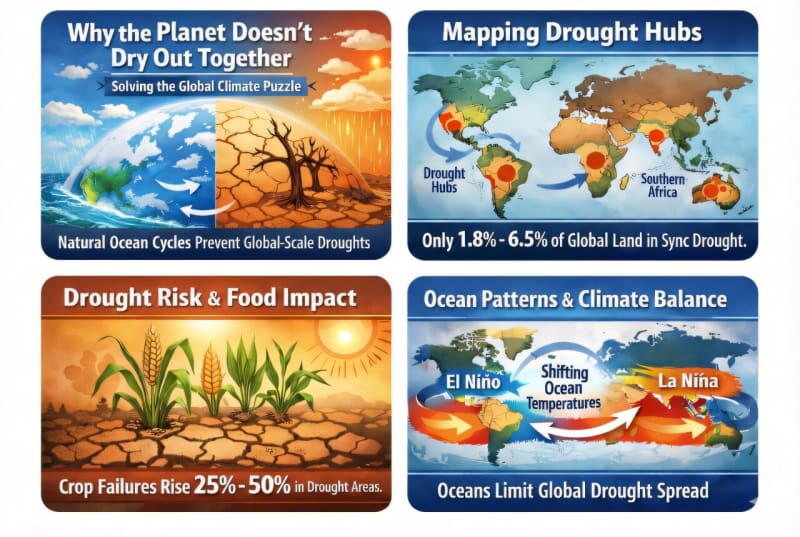
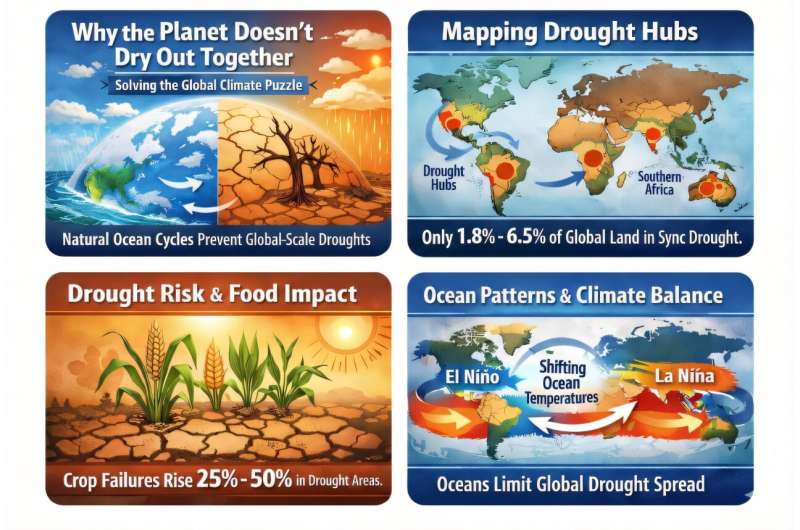
Researchers at the Indian Institute of Technology Gandhinagar discovered that ocean temperatures act like a natural brake system, stopping droughts from spreading across the globe simultaneously. Their study, published in February 2026, analyzed 120 years of climate data and found that synchronized droughts affect only 1.8% to 6.5% of Earth's land at once.
That's a lot less scary than previous estimates suggesting one-sixth of the planet could dry out together. The team treated drought patterns like a global network, mapping how dry spells in different regions align in time.
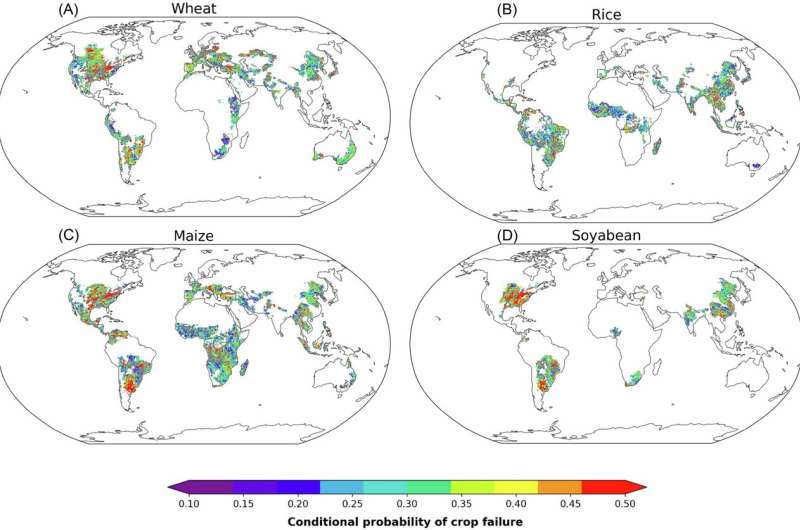
They found drought hubs in Australia, South America, southern Africa, and parts of North America. When these areas experience moderate drought, crop failure rates jump sharply, sometimes hitting 40-50% for crops like maize and soybean.
Here's where it gets interesting. The Pacific Ocean's natural El Niño-Southern Oscillation cycle reshapes rainfall patterns worldwide, creating what researchers call a "patchwork of regional responses." During El Niño years, Australia becomes a major drought hub while other regions respond differently.
When La Niña takes over, the drought patterns shift again, becoming more geographically spread out. These ocean-driven swings prevent a single, massive drought from covering multiple continents at once.
The research team also discovered that rainfall changes account for about two-thirds of long-term drought severity, with rising temperatures responsible for the remaining third. While rainfall remains the dominant factor globally, temperature's influence is clearly growing in mid-latitude regions like Europe and Asia.
The Bright Side
This isn't just academic knowledge. Understanding Earth's interconnected climate network opens doors for early-warning systems that could spot trouble before a local dry spell becomes a global crisis.
The findings point toward practical solutions: international trade agreements, strategic food storage, and flexible policies that take advantage of nature's built-in diversity. Because droughts don't hit everywhere simultaneously, smart planning can use productive regions to buffer global food supplies.
Professor Vimal Mishra, a leading water and climate expert, emphasized that this natural diversity creates opportunities for international cooperation. When one region struggles, others can step in.
Lead researcher Dr. Udit Bhatia put it simply: "We are not helpless in the face of a warming planet." By understanding how oceans, rainfall, and temperatures balance each other, policymakers can focus resources on specific drought hubs and stabilize global markets before crop failures trigger worldwide price spikes.
The research transforms how we think about climate impacts, moving beyond isolated weather reports to see Earth as one connected system where nature's own patterns offer protection we can work with, not against.
More Images


Based on reporting by Phys.org - Earth
This story was written by BrightWire based on verified news reports.
Spread the positivity!
Share this good news with someone who needs it