Scientists Spot Most Compelling Dark Matter Hint Yet
A detector hidden deep underground in South Dakota may have caught the first real glimpse of dark matter, the mysterious substance that makes up 85% of our universe. While scientists need more evidence to confirm the discovery, this single flash of energy is already being called the most exciting lead in decades.
After decades of searching for one of science's greatest mysteries, physicists may have finally caught dark matter in the act.
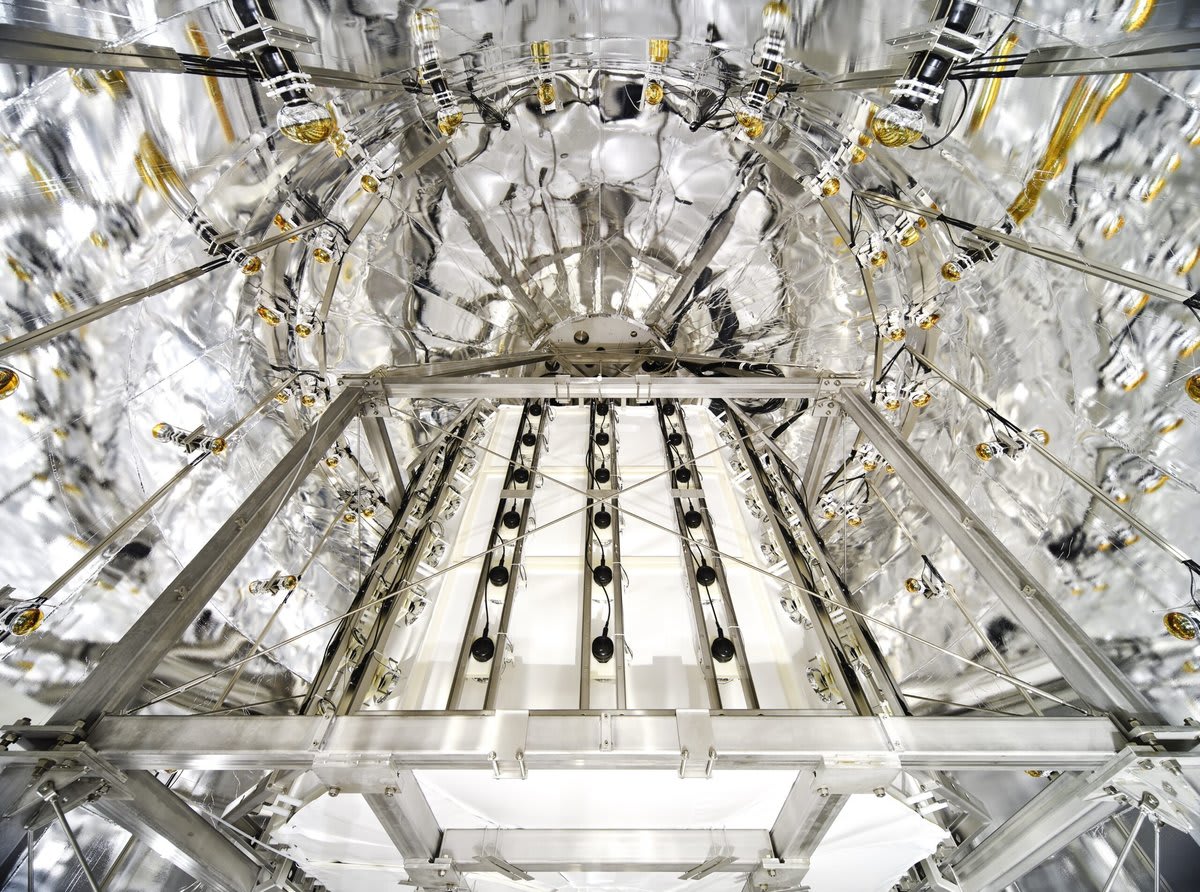
The LUX-ZEPLIN detector, buried nearly a mile underground in an old South Dakota gold mine, recorded a single flash of energy on June 16, 2023 that could be our first direct glimpse of the invisible substance that holds galaxies together. The international team presented their findings at a conference in Japan this week.
"This event just won't go away even after many, many checks," said Dr. Theresa Fruth from the University of Sydney, one of the Australian physicists on the team. "It's also kind of scary to think, 'Oh, this could be it.'"
Dark matter is everywhere, yet completely invisible. Scientists know it exists because they can watch how it pulls on galaxies with its gravity, but no one has ever observed it directly despite years of trying.
The LUX-ZEPLIN detector works like a cosmic fishing net. It uses a giant vat of super-cooled liquid xenon watched by 494 light sensors, waiting to catch tiny collisions between dark matter particles and normal atoms. The deep underground location shields the experiment from interference that might create false signals.
Until now, the detector had found nothing. Most other dark matter experiments around the world have come up empty too. Only one detector in Italy has reported any signal at all, but no one has been able to confirm those results.
This detection is different. The team calculated there's only a 0.5 percent chance the flash came from something other than dark matter. That's exciting, but not yet definitive. Scientists need what they call "5 sigma" certainty to confirm a discovery.
The energy level surprised researchers too. The flash came in at 270 keV, suggesting dark matter particles might be heavier than many theories predicted. "It's not how we would expect dark matter to have appeared," said Dr. Jaden Newstead, a physicist at the University of Melbourne who wasn't involved in the research.
Why This Inspires
This moment captures what makes science beautiful. Hundreds of researchers built an incredibly sensitive instrument, buried it underground, and waited patiently for years. Now they're sharing their data openly with competitors, inviting them to prove or disprove the finding.
Similar experiments in Italy and China will now comb through their own data looking for matching signals. The LUX-ZEPLIN team will keep collecting information until at least 2028, either building confidence in their discovery or ruling it out completely.
Either way, they're moving science forward. "It's certainly something new and exciting to investigate further," Dr. Fruth said.
The universe is slowly revealing its secrets.
More Images


Based on reporting by ABC Australia
This story was written by BrightWire based on verified news reports.
Spread the positivity!
Share this good news with someone who needs it