Scientists Spot 'Teenage' Planet System 210M Years Old
Astronomers have discovered a rare planetary system in its "adolescent" phase, offering the first real look at how planets transform from youth to maturity. The 210-million-year-old system is shedding light on a cosmic mystery scientists have never been able to study before.
For the first time in history, astronomers have caught a planetary system in its awkward teenage years, revealing secrets about how worlds grow up that we've never been able to see.
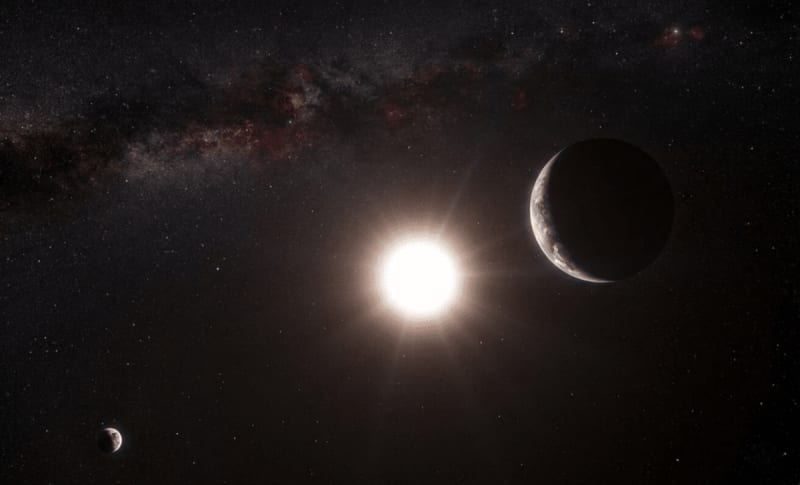
The system, called TOI-2076, orbits a distant star and sits at a cosmic age of 210 million years old. That makes it an adolescent in space terms, giving scientists their first chance to watch planets in the middle of their biggest transformation.
Until now, we've only seen planetary systems at two life stages: newborns still forming in clouds of dust, or fully mature systems like our own solar system. This discovery fills in the missing chapter of how planets evolve over hundreds of millions of years.
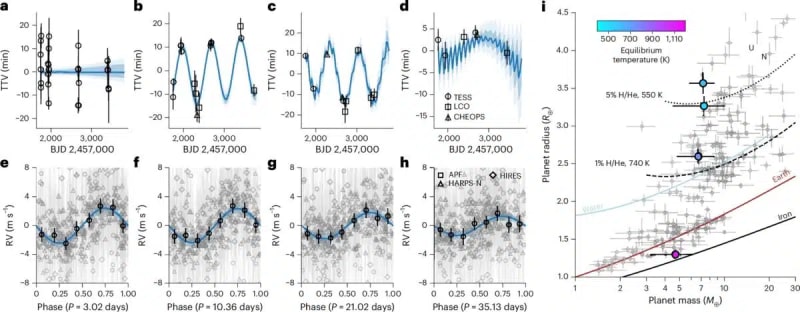
TOI-2076 contains four planets currently going through dramatic changes. The planets, once packed tightly together, are slowly drifting apart while intense radiation from their host star strips away their atmospheres layer by layer.
The innermost planet has already lost its entire atmosphere, leaving only a bare rocky core behind. The outer planets still cling to varying amounts of their original gas, depending on how far they sit from the star's scorching rays.
Howard Chen, an assistant professor at the Florida Institute of Technology, helped create computer models showing exactly how this atmospheric loss happens. His simulations proved that the process isn't random but follows predictable patterns based on each planet's distance from its star.
"The transformative period is so short compared to the entire lifespan of the system," Chen explained. "That period is really the key in determining how it turns out at its mature state."
The research shows that most of this dramatic atmospheric stripping happens within the first 100 million years of a system's life. After that intense period, things settle down and the planets stabilize into their adult configurations.
Why This Inspires
This breakthrough gives astronomers a roadmap for understanding thousands of other young planetary systems scattered across our galaxy. Scientists can now predict how newly discovered planets will look millions of years from now, helping us understand the ultimate fate of worlds beyond our own.
The models developed from studying TOI-2076 work in the real world, matching observations perfectly. That means we finally have reliable tools to peer into the future evolution of alien solar systems we're only just beginning to discover.
One day, these insights might even help us better understand our own solar system's teenage years, billions of years ago when Earth and its neighbors were still finding their places around the Sun.
More Images

Based on reporting by Google News - Scientists Discover
This story was written by BrightWire based on verified news reports.
Spread the positivity!
Share this good news with someone who needs it