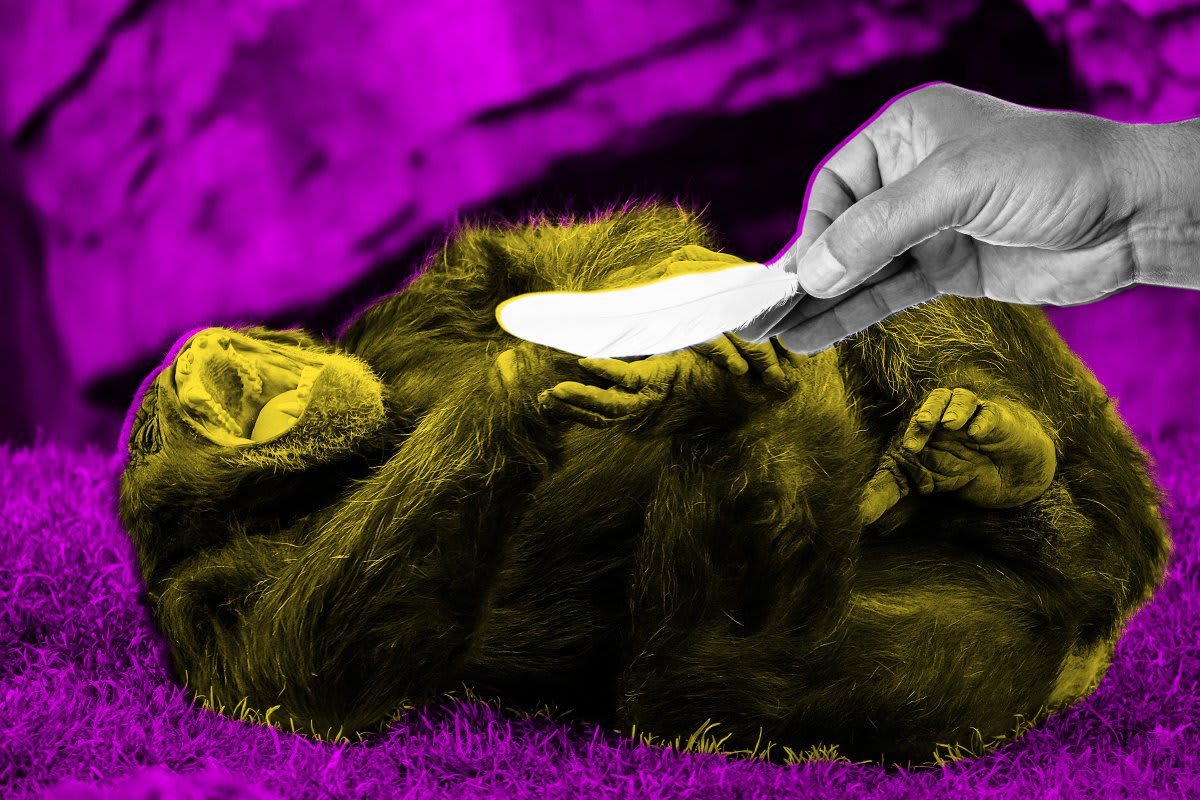
Scientists Tickle Apes to Unlock Evolution of Laughter
Researchers discovered profound differences between human and ape laughter by doing something delightfully scientific: tickling young primates. The findings reveal how our ability to change our laugh helped humans develop language.
Scientists just proved that tickling apes for research is not only adorable but genuinely groundbreaking for understanding human evolution.
A new study published in Communications Biology explored how different primates laugh, and the method was exactly as charming as it sounds. Researchers tickled 13 young apes, including orangutans, gorillas, bonobos, and chimpanzees, along with four human children, then carefully analyzed their giggles.
The results revealed something fascinating. Humans are the undisputed masters of laughter, displaying the most variety in how we chuckle, guffaw, and giggle.
We can produce a polite laugh in formal settings, then completely let loose with friends at a pub. We can even fake a laugh to politely signal that a joke wasn't actually funny.
Apes, meanwhile, stick with fixed patterns and consistent tempos. Their laughs are genuine but far less flexible than ours.
When tickled, all primates laughed at regular intervals, like keeping time to a beat. Ha ha ha, with consistent pauses between each sound.
During play, however, the rhythm became less regular as the subjects moved around more. This meant tickling laughter provided researchers with an unfiltered window into each species' natural laughing rhythm.
The findings point to clear evolutionary trends. Humans laughed at the quickest tempo and were the only species to change their laugh based on context, going faster during tickling than play.
Our closest relatives, chimps and bonobos, laughed faster than our more distant cousins, gorillas and orangutans. This pattern shows how vocal flexibility evolved over time.
Why This Inspires
This research helps explain how humans developed the complex vocal control needed for language. Laughter is universal among great apes, making it a perfect tool for tracing how our communication abilities evolved.
For social creatures, being able to switch up your laugh proves incredibly useful. It conveys important information about emotional state, intent, and mood beyond just "I'm having fun."
Study coauthor Chiara De Gregorio from the University of Warwick emphasized that laughter communicates far more than simple enjoyment. It's a crucial part of how humans connect and share meaning with each other.
The researchers acknowledge their study was small and needs more work to confirm the findings. But they've already demonstrated something wonderful: the way you laugh is no laughing matter when it comes to understanding what makes us human.
More Images
Based on reporting by Futurism
This story was written by BrightWire based on verified news reports.
Spread the positivity!
Share this good news with someone who needs it