Scientists Trace 3,000-Light-Year Jet to Black Hole Source
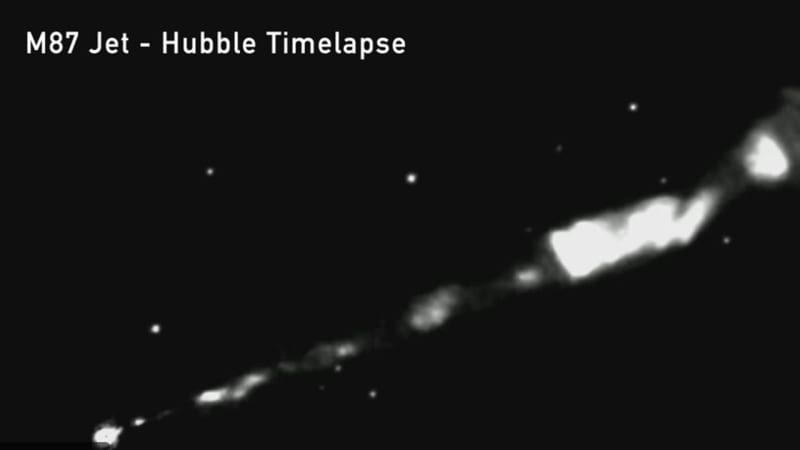
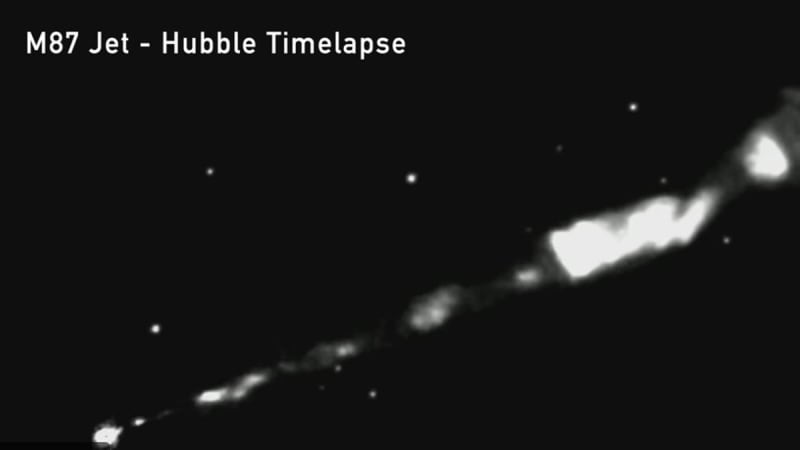
Researchers have pinpointed exactly where a massive black hole launches its incredible 3,000-light-year jet stream, solving a cosmic mystery. The discovery could finally explain how black holes create jets that travel near light speed.
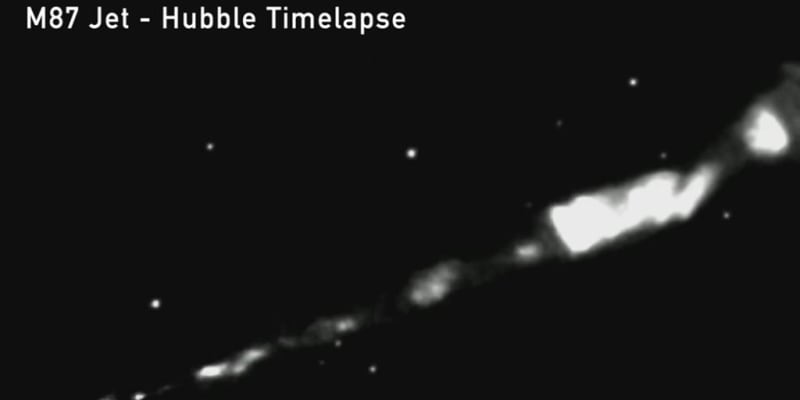
Scientists just mapped the exact starting point of a jet stream shooting from a black hole across 3,000 light years of space.
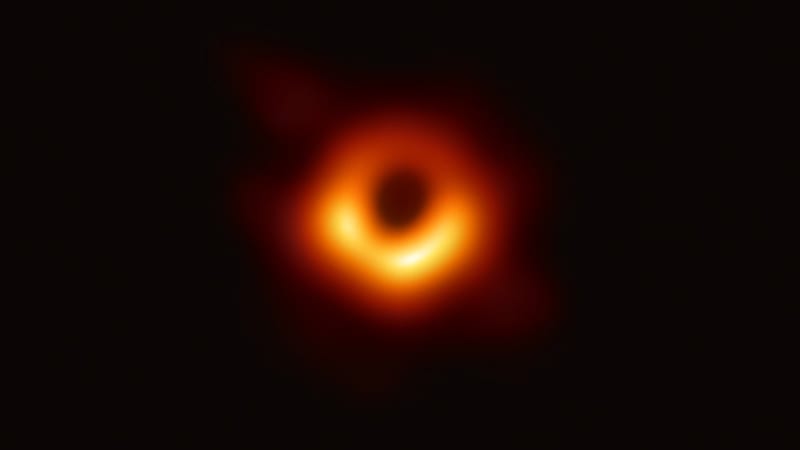
The breakthrough focuses on M87, the first black hole ever photographed back in 2019. Using an upgraded network of eight radio telescopes spanning the globe, researchers traced the powerful jet of charged particles back to its launch point near the black hole's edge.
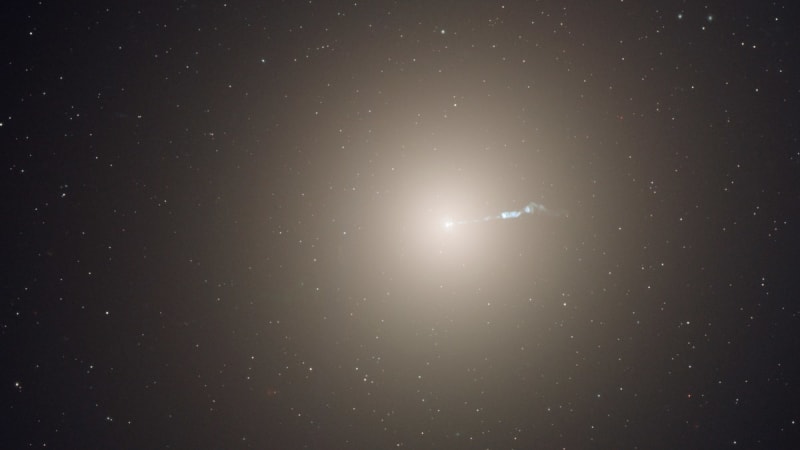
M87 sits in the Messier 87 Galaxy about 55 million light years from Earth. This supermassive black hole weighs 6.5 billion times more than our sun, making it one of the cosmic giants.
What makes this black hole special is that it's active. Only a few percent of black holes turn on at any given time, and scientists aren't sure why. When they do activate, they create spectacular displays of cosmic power.
Dr. Padi Boyd from NASA explains that strong magnetic fields around the black hole launch these jets. The new images provide the first direct evidence connecting these jets to the black hole itself.
M87 does two things at once. It pulls in surrounding gas and dust while simultaneously shooting out powerful streams of charged particles from its poles at nearly the speed of light.
The research team analyzed data from 2021 using the Event Horizon Telescope, a global network that combines observations from radio observatories worldwide. Together, these observatories create a virtual telescope as large as Earth itself.
The Ripple Effect
This discovery opens doors scientists have been trying to unlock for decades. Understanding how black holes launch these massive jets helps explain some of the universe's most powerful forces.
The research connects theoretical ideas about jet formation with actual observations for the first time. Future observations with more sensitive equipment and additional telescope stations will refine these findings even further.
The M87 galaxy houses several trillion stars, the supermassive black hole, and roughly 15,000 globular star clusters. Now scientists can see how all these pieces work together in ways never before possible.
Every new detail about black holes brings us closer to understanding the engines that shape galaxies and drive cosmic evolution across billions of years.
More Images
Based on reporting by Fox News Latest Headlines (all sections)
This story was written by BrightWire based on verified news reports.
Spread the positivity!
Share this good news with someone who needs it
%2Fhttps%3A%2F%2Ftf-cmsv2-smithsonianmag-media.s3.amazonaws.com%2Ffiler_public%2F3f%2F55%2F3f5579c8-c4a7-43a5-bb54-6498478792fd%2Fhelix1940__fitmaxwzk3mcw2ntbd.jpg)