Scientists Track Death Cap Mushroom Evolution in Real Time
Researchers are watching one of nature's deadliest mushrooms rapidly evolve in California, revealing how species adapt to new homes. The discovery gives scientists a rare window into evolution happening right now.
Scientists at the University of Wisconsin-Madison are witnessing evolution in action, and their subject is one of nature's most notorious organisms: the death cap mushroom.
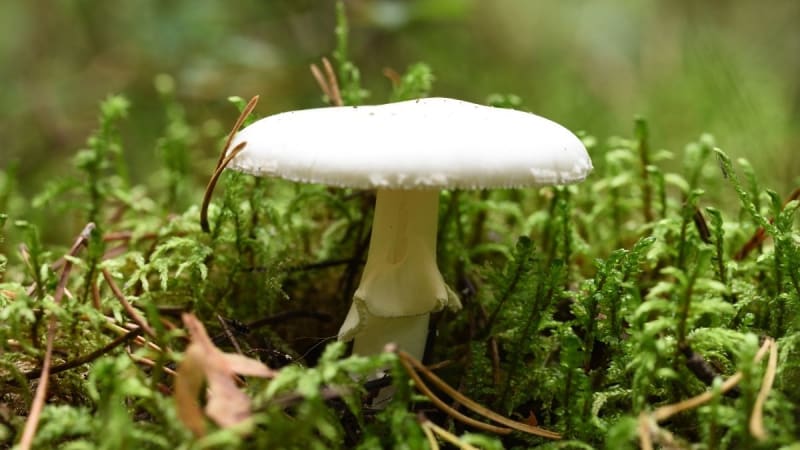
The ghostly white fungus, responsible for 90 percent of fatal mushroom poisonings worldwide, arrived in California from Europe in the 1930s. Now researchers have discovered something remarkable: the invasive mushrooms are producing entirely new chemical compounds that their European relatives don't make.
This isn't just about a dangerous mushroom getting more dangerous. It's about scientists catching evolution in the act, watching a species adapt and change in less than a century.
Mycologist Anne Pringle's team found that California's death caps are creating compounds without a specific protein sequence that scientists thought was always required. These new peptides are being produced at levels "several orders of magnitude" higher than anything in the mushroom's European homeland.
The mushrooms are thriving in their new environment too. Researcher Cecelia Stokes notes that you can find more than 40 death caps under a single tree in California forests, which is abnormal compared to native mushroom species.
The death cap's "secret recipe" for poison lies in genes called MSDIN genes, which have diversified since the fungus crossed the Atlantic. Think of it like the mushroom rewriting its own cookbook after moving to a new kitchen.
Why This Inspires
This discovery showcases the power of modern science to observe processes that once seemed invisible. Evolution typically takes thousands or millions of years, but researchers are now documenting genetic changes happening within human lifetimes.
The research also demonstrates how dedicated scientists are working to understand invasive species and their impacts on native ecosystems. Every discovery brings us closer to predicting how organisms will respond to new environments, which becomes increasingly important as climate change reshuffles species across the globe.
Understanding how the death cap adapts could help scientists protect native mushroom populations and forest ecosystems. Knowledge is the first step toward conservation.
While the death cap itself remains dangerous (please don't touch these mushrooms if you see them), the scientific insights it provides are helping us understand the fundamental processes that shape life on Earth. That's evolution we can actually watch unfold.
More Images


Based on reporting by Google News - Scientists Discover
This story was written by BrightWire based on verified news reports.
Spread the positivity!
Share this good news with someone who needs it