Scientists Track Fresh Water Shift in Indian Ocean
Researchers have discovered ocean currents are channeling fresh water to a new region off Australia, revealing how our planet adapts to changing climate patterns. The finding helps scientists better understand the ocean's global circulation system.
Scientists at the University of Colorado Boulder have mapped a remarkable transformation happening in the southern Indian Ocean, where changing wind patterns are reshaping how fresh water flows across the planet.
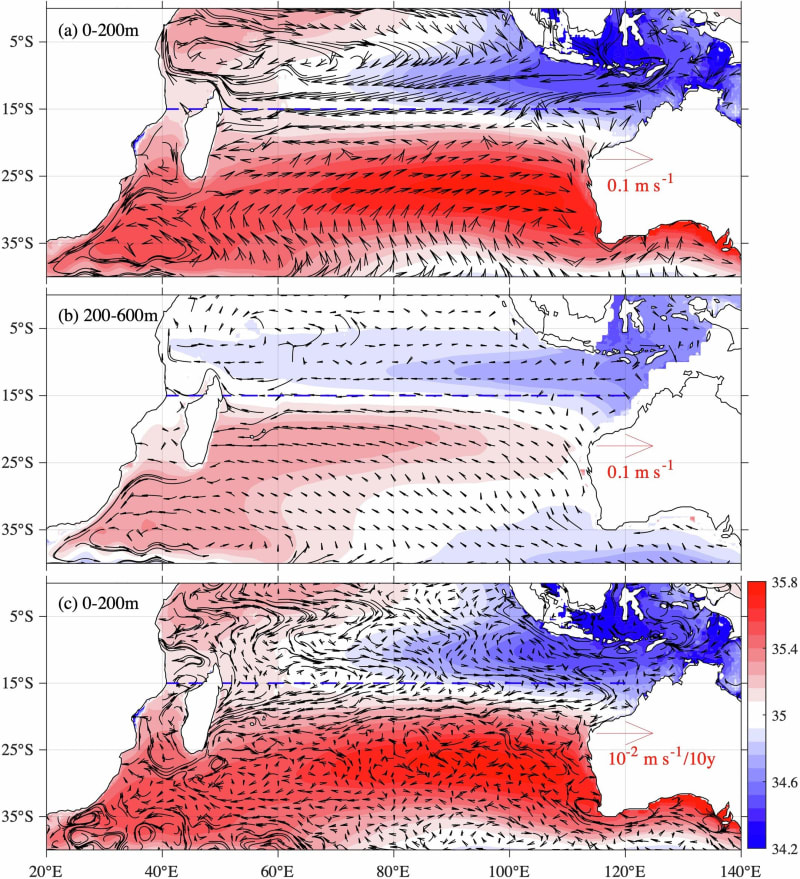
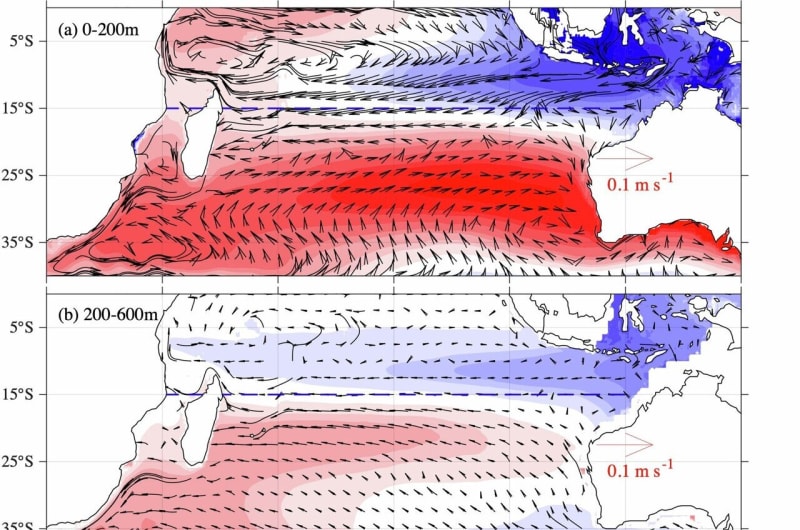
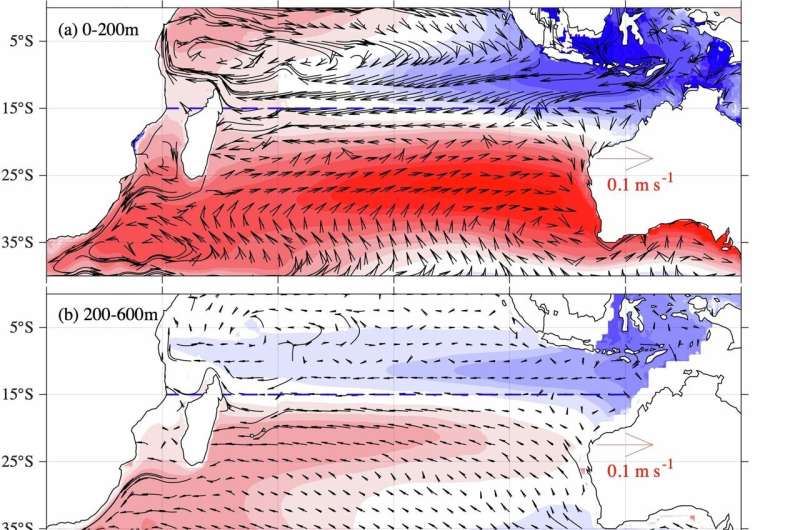
Over the past 60 years, a naturally salty region off western Australia has become 30% less salty. Fresh water from tropical rains in the Indo-Pacific region is now flowing south in greater volumes, carried by shifting ocean currents driven by changing global wind patterns.
The discovery represents a breakthrough in understanding Earth's ocean circulation system. Think of it as a giant conveyor belt that moves heat, salt, and fresh water around the world, helping regulate climates from Europe to Asia.
"We're seeing a large-scale shift of how freshwater moves through the ocean," said Weiqing Han, professor of atmospheric and oceanic sciences. The research team used six decades of ocean data combined with computer simulations to track the changes.
The numbers tell a striking story. Every year, enough fresh water now enters this ocean region to supply drinking water to the entire U.S. population for more than 380 years. That's equivalent to adding 60% of Lake Tahoe's water volume annually.
The freshening happens because warmer global temperatures are altering wind patterns across the Indian and Pacific oceans. These new wind patterns push currents to carry more water from the naturally fresh Indo-Pacific region southward.
Why This Inspires
This research shows scientists developing increasingly sophisticated tools to understand how Earth's systems respond to change. The team's work reveals nature's interconnectedness on a grand scale, tracking how shifts in one region ripple across entire ocean basins.
Understanding these patterns helps researchers predict future changes and gives coastal communities better information for planning. The study also demonstrates how international scientific collaboration produces insights no single country could achieve alone.
When fresh water and salt water layers become more separated, it affects how nutrients move through ocean depths. Scientists can now study these patterns to help marine biologists understand ecosystem changes and develop conservation strategies.
The research team published their findings in Nature Climate Change, adding crucial data to humanity's growing understanding of ocean systems. Their work provides a clearer picture of how water moves across our blue planet, knowledge that helps everyone from fishermen to city planners make better decisions.
This discovery reminds us that Earth's systems are constantly adapting, and scientists are getting better at reading the signals.
More Images
Based on reporting by Phys.org - Earth
This story was written by BrightWire based on verified news reports.
Spread the positivity!
Share this good news with someone who needs it