
Scientists Trap Antimatter in Quest to Solve Universe Mystery
Physicists successfully trapped and cooled a single positron to its lowest energy state, opening new possibilities to understand why our universe exists. The breakthrough could reveal why matter triumphed over antimatter after the Big Bang.
Scientists just achieved something extraordinary: they suspended a single particle of antimatter in mid-air and cooled it to the coldest possible state, unlocking new ways to solve one of physics' greatest mysteries.
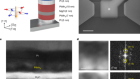
Gerald Gabrielse and his team at Northwestern University captured a positron, the antimatter twin of an electron, in a specially designed trap. This seemingly simple feat required years of work and could finally answer why our universe exists at all.
Here's the puzzle that keeps physicists up at night. The Big Bang should have created equal amounts of matter and antimatter. When these twins meet, they destroy each other in a flash of energy. If the amounts were truly equal, the universe would have annihilated itself instantly, leaving nothing behind.
Yet here we are, living in a universe made almost entirely of matter. Something tipped the balance, and scientists don't know what.
Capturing the positron was incredibly difficult. The team started with fast-moving positrons from radioactive decay and slowed them by bouncing them off tungsten atoms. Most were destroyed on contact with regular matter, but the researchers skimmed off the slowest survivors and guided them into their trap.
Now comes the exciting part. The setup lets researchers measure the positron's magnetic moment with 10,000 times greater precision than previous experiments. If they find even tiny differences between how electrons and positrons behave, it could revolutionize physics.
Why This Inspires
This breakthrough represents years of persistent problem-solving by scientists who refused to give up on understanding our existence. Their work tackles fundamental questions about reality itself: Why are we here? Why does anything exist?
The standard model of physics has accurately predicted countless experiments, yet scientists know it's incomplete. It can't explain dark matter or the universe's matter-antimatter imbalance. Finding discrepancies between matter and antimatter could point toward new physics beyond our current understanding.
Barbara Maria Latacz, an antimatter physicist at CERN, called the achievement "remarkable" and a "powerful probe for physics beyond the standard model." Stefan Ulmer at Heinrich Heine University says he can't wait to see the first precision measurements.
Since the 1960s, physicists have searched for differences between matter and antimatter with increasing precision. They've found slight preferences for matter in some particles, but nothing close to explaining why our universe survived.
The team's ability to trap and measure a single positron with unprecedented accuracy brings us closer than ever to solving this cosmic riddle.
More Images


Based on reporting by Google News - Science
This story was written by BrightWire based on verified news reports.
Building Something New? Try the BrightWire Tech Stack Advisor
Compare modern frameworks, cloud hosting, and AI tools tailored to your project budget and scale.
Spread the positivity!
Share this good news with someone who needs it


