Scientists Turn Factory Emissions Into Jet Fuel Ingredients
Australian researchers have developed a system that converts industrial carbon dioxide into building blocks for sustainable jet fuel, potentially helping solve aviation's toughest climate challenge. The technology works with impure exhaust gases and could be industry-ready within six years.
Scientists at RMIT University have cracked a major piece of the aviation emissions puzzle by turning factory waste into ingredients for cleaner jet fuel.
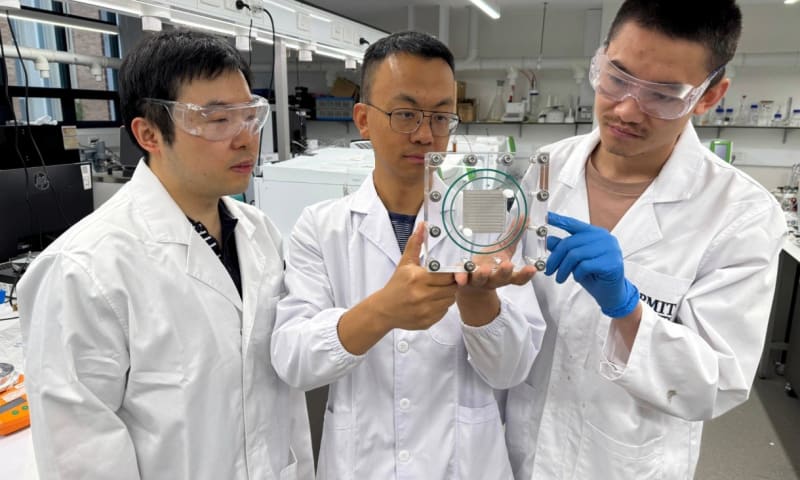
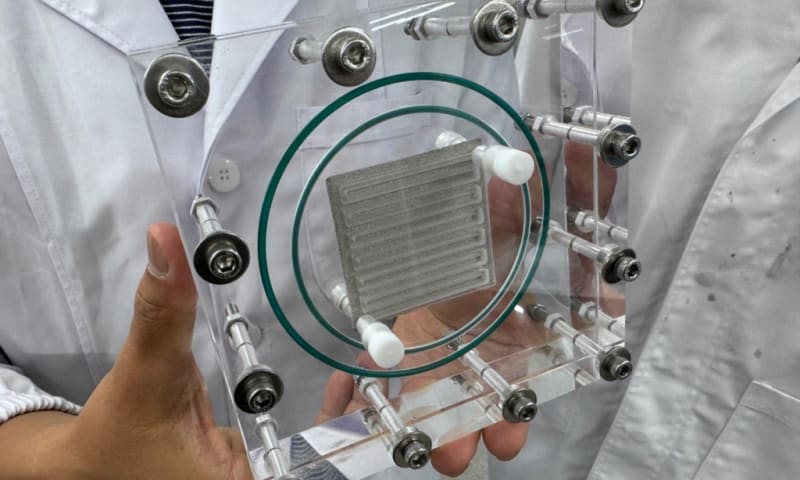
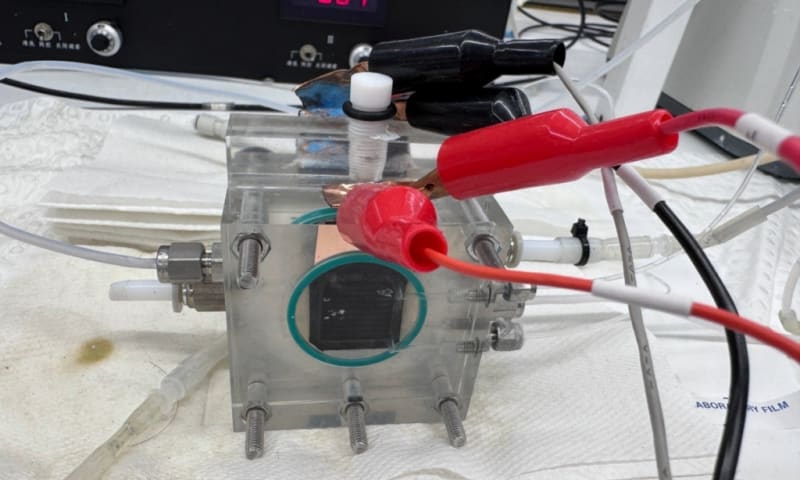
The breakthrough combines carbon capture and conversion into one streamlined process, turning industrial CO₂ into chemical building blocks that can be upgraded into sustainable aviation fuel. Unlike other experimental systems, this technology works with impure exhaust gases straight from factory smokestacks, making it practical for real-world use.
"Carbon conversion has often been treated as separate steps, which increases cost and slows progress," said Professor Tianyi Ma from RMIT's School of Science. "By bringing the steps of conversion together, we have been able to simplify the process and reduce unnecessary energy losses."
The system doesn't produce jet fuel directly. Instead, it creates basic chemical ingredients that existing facilities can already upgrade into fuel using established processes, meaning less new infrastructure is needed.
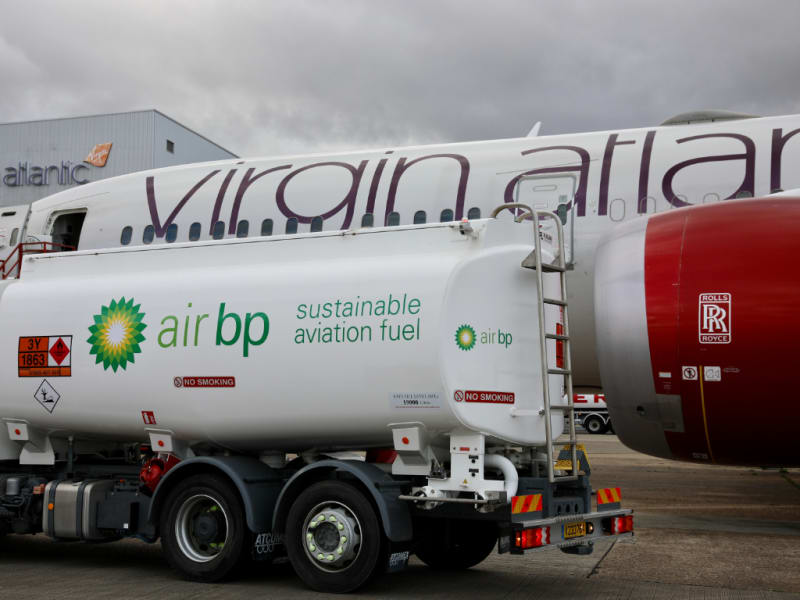
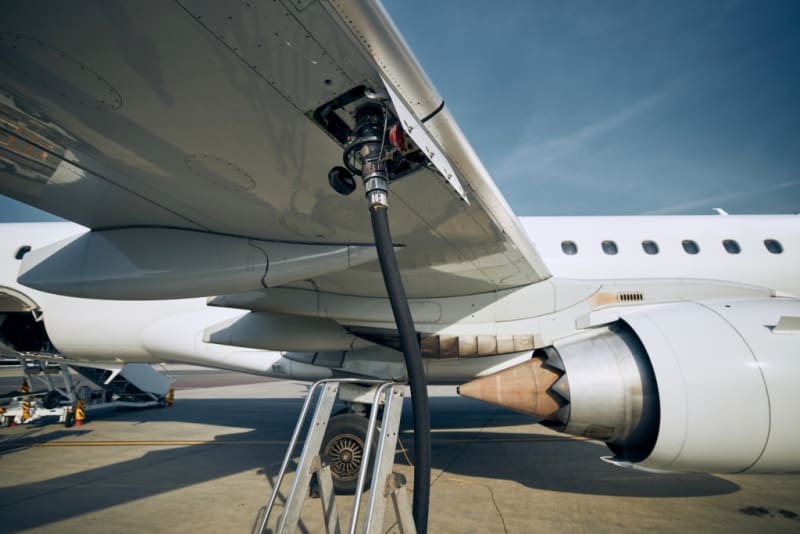
For aviation, this matters enormously. Long-haul flights can't run on batteries, hydrogen infrastructure remains decades away, and sustainable aviation fuel demand far exceeds supply. Every new pathway to produce SAF ingredients helps close that gap.
The RMIT team has already moved beyond lab experiments. They've built and tested a three-kilowatt prototype and are now developing a 20-kilowatt pilot system to validate performance under industrial conditions.
The researchers are partnering with companies including Viva Energy, Hart Bioenergy, and T-Power to ensure the technology integrates smoothly with existing operations. Hart Bioenergy chief executive Doug Hartmann praised the balance between environmental impact and economic viability, noting it "points to production processes that can benefit the environment without ignoring economic realities."
The team expects a 100-kilowatt demonstration system within five years and commercial-scale readiness around six years from now. RMIT is also planning a spin-off company to explore deployment models.
The Ripple Effect
This technology could create a circular system where emissions from one industry become fuel for another. Steel mills, cement plants, and chemical factories produce massive amounts of CO₂ that currently escapes into the atmosphere. By capturing and converting those emissions, the RMIT system offers those hard-to-decarbonize sectors a way to contribute to aviation's clean energy transition.
Independent expert Dr Federico Dattila from the Polytechnic University of Turin highlighted in Nature Energy how the work brings industry closer to fully integrated, low-energy carbon conversion systems that can actually scale.
Professor Ma emphasized the technology is one tool among many needed for aviation decarbonization, not a complete solution on its own. But in a sector desperate for viable alternatives to fossil jet fuel, every practical option counts. The staged, industry-focused approach suggests this innovation might actually make it from promising research to airport tarmacs.
More Images
Based on reporting by Google News - Emissions Reduction
This story was written by BrightWire based on verified news reports.
Spread the positivity!
Share this good news with someone who needs it