Scientists Turn Factory Smoke Into Plastic Building Blocks
Researchers at the University of Stuttgart are perfecting a process that transforms harmful carbon dioxide emissions into valuable materials using bacteria. The breakthrough could help industries like steel and cement turn their biggest environmental problem into profit.
📺 Watch the full story above
Scientists have figured out how to make pollution pay by feeding factory exhaust fumes to hungry bacteria that turn them into useful chemicals.
The technology is called gas fermentation, and it works like tiny recycling plants inside microorganisms. Instead of releasing carbon dioxide and other waste gases into the atmosphere, factories can now capture them and let specialized bacteria convert them into alcohols and acids that the chemical industry needs.
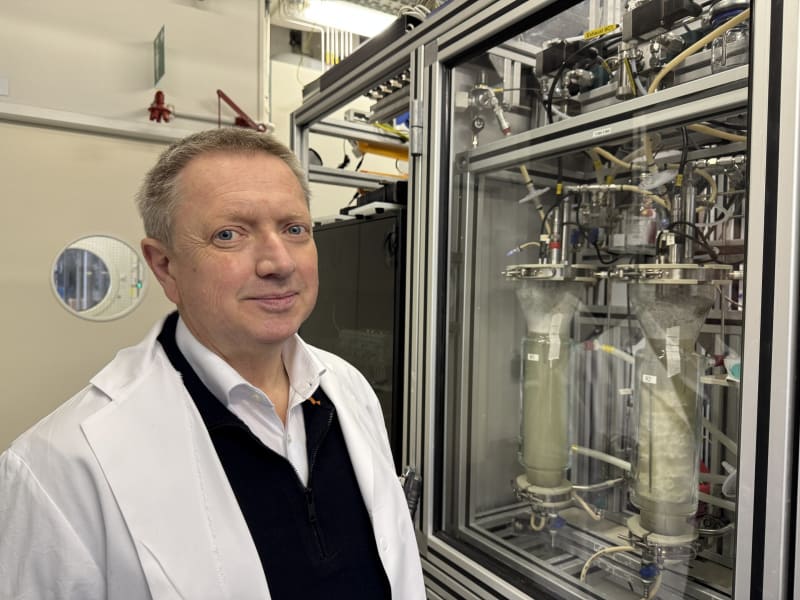
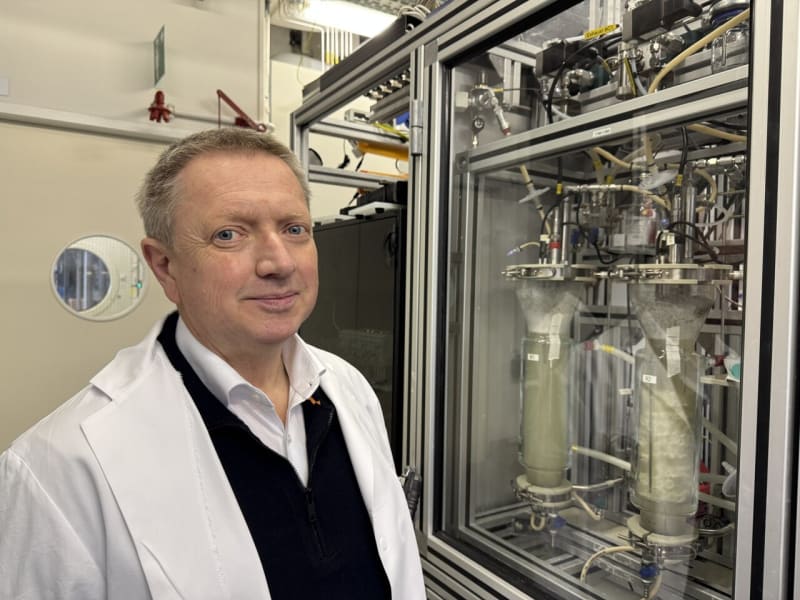
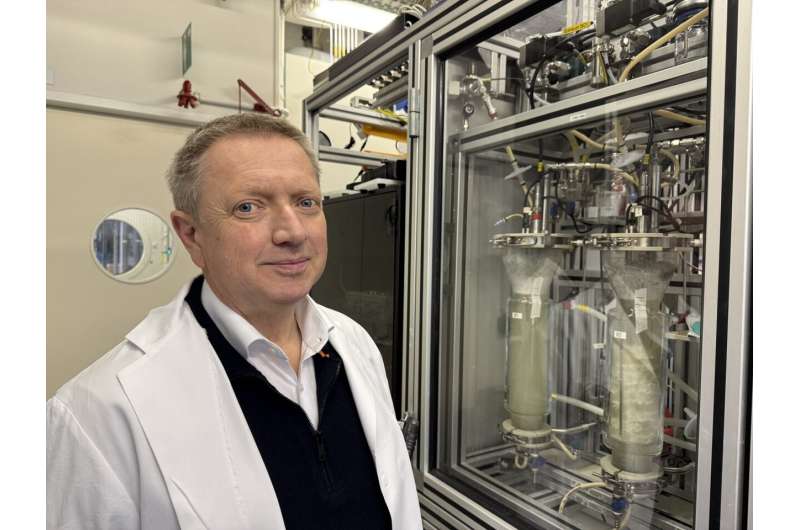
Professor Ralf Takors leads the research team at the University of Stuttgart's Institute for Biochemical Engineering. His team has already proven the process works with plastic waste that's too mixed up to recycle normally.
Here's how it works: First, difficult-to-recycle plastics get heated into a gas mixture containing carbon monoxide, carbon dioxide, and hydrogen. Then anaerobic bacteria (microbes that don't need oxygen) eat those gases and produce short-chain organic acids and alcohols as waste products. Those "waste" products become building blocks for making new plastics and chemicals without drilling for oil.
The steel industry is already putting this technology to work commercially. Some steel plants now capture their waste gases and use gas fermentation to produce ethanol for the chemical industry instead of venting emissions into the sky.
The cement industry is paying close attention too. Cement production ranks among the world's biggest sources of carbon dioxide emissions, making it a prime candidate for gas fermentation. Takors's team is working with a cement company to turn their CO2 into acetate and ethanol, which can then become plastics that would otherwise require fossil fuels.
The Ripple Effect
This technology flips the script on industrial emissions. Companies with high pollution levels suddenly have an economic incentive to capture their waste gases instead of releasing them. The environmental problem becomes a business opportunity.
The breakthrough also reduces Europe's dependence on fossil fuels at a time when wars and crises make access to oil and gas increasingly uncertain. By transforming local waste into valuable materials, industries can strengthen their supply chains while cleaning up their emissions.
The research team is working on the final hurdles before widespread adoption. One challenge is that gases don't dissolve easily in liquids, making it harder for bacteria to access their food. Another is scaling the process from laboratory beakers to factory-size reactors.
Takors sees his team as pioneers identifying the best applications for this technology and as engineers solving the practical problems of industrial scaling. They're working with companies to demonstrate that gas fermentation isn't just good for the planet but also makes good business sense.
The vision is a true circular economy where yesterday's emissions become tomorrow's products, keeping materials cycling through the system instead of polluting the air or sitting in landfills.
More Images


Based on reporting by Phys.org
This story was written by BrightWire based on verified news reports.
Spread the positivity!
Share this good news with someone who needs it