Scientists Turn Thunder Into X-Rays for Earth's Secrets
Researchers discovered that thunderstorms create underground vibrations called "thunderquakes" that can reveal hidden caves, sinkholes, and water beneath our feet. Using fiber-optic cables already buried in cities, they're turning everyday storms into free underground scanners.
Scientists just figured out how to use thunderstorms as free X-ray machines for the Earth, revealing hidden dangers lurking beneath our cities without drilling a single hole.
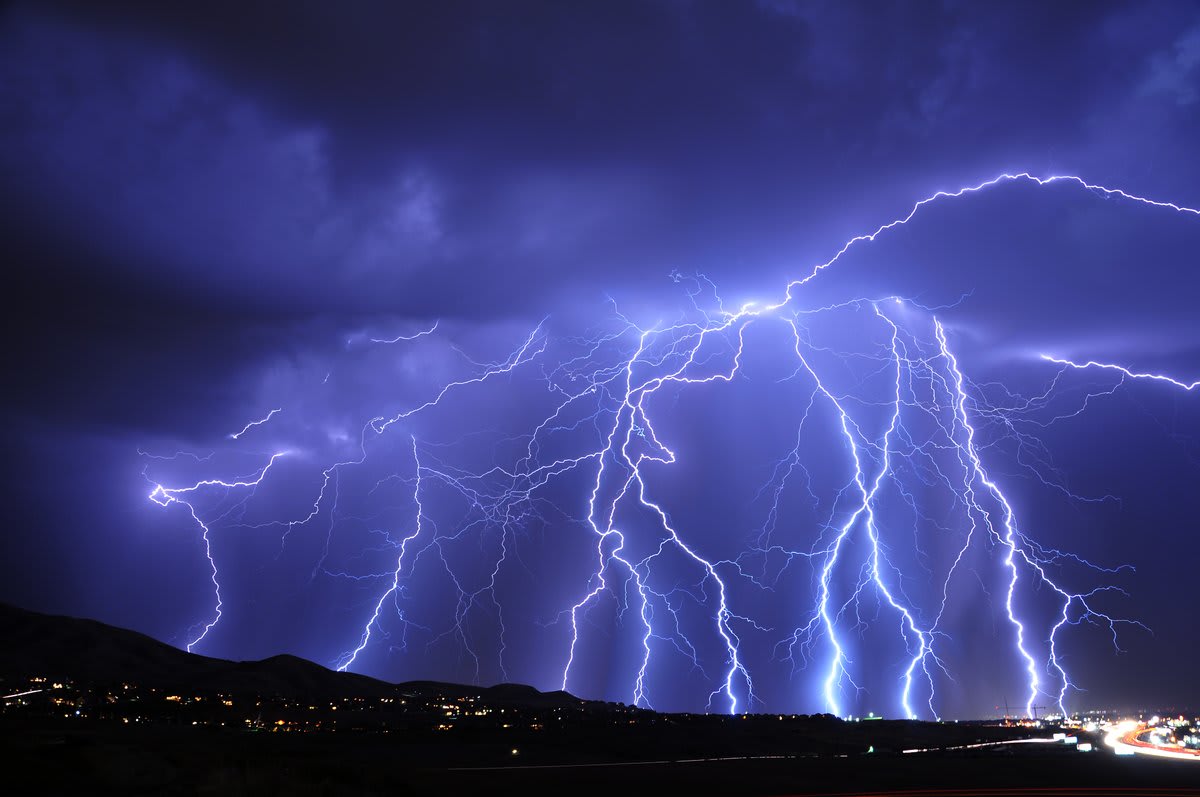
When lightning strikes, it creates thunder that doesn't just travel through the air to our ears. That energy also converts into seismic waves called "thunderquakes" that ripple through soil and rock underground, and researchers at Penn State discovered these vibrations can map what's hidden up to 300 feet below the surface.
The breakthrough came from using something unexpected: regular fiber-optic cables, the same kind that brings internet to homes. By turning a 2-mile cable into more than 2,100 vibration sensors, the team recorded 458 clear thunderquakes over two years in State College, Pennsylvania.
The technique works because different sound frequencies travel at different depths underground. By measuring how thunderquake wave speeds changed, researchers could reconstruct what's beneath the surface, layer by layer, just like an X-ray reveals bones inside the human body.
In their Pennsylvania test site, the team found four "weak zones" where seismic waves traveled much slower than surrounding rock. Two of these areas matched locations where the ground is actively sinking, and all four depths aligned with known fractures and voids nearby, potentially revealing sinkholes before they collapse.
The Ripple Effect
This discovery matters for the 25 percent of the global population living above karst landscapes, where underground caves and sinkholes threaten buildings and public safety. Instead of expensive truck-mounted equipment and specialized surveys, cities can now use fiber-optic cables already buried beneath streets to monitor what's happening underground continuously.
The applications extend far beyond finding sinkholes. The same approach could track groundwater movement, detect environmental contamination, and evaluate building sites, all using storms that already pass overhead and infrastructure already in the ground.
Scientists believe the concept isn't limited to thunder either. Sonic booms, volcanic eruptions, and meteor airbursts create similar atmospheric shock waves that could serve as natural seismic sources.
The idea might even work on other worlds. NASA's upcoming Dragonfly mission to Titan, Saturn's largest moon, could potentially use this technique if lightning and thunder occur there as models predict, offering a way to investigate the subsurface of distant worlds.
Back on Earth, communities around the world now have a powerful new tool that turns every thunderstorm into an opportunity to see what's hidden beneath their feet.
More Images



Based on reporting by Scientific American
This story was written by BrightWire based on verified news reports.
Spread the positivity!
Share this good news with someone who needs it