Scientists Unlock Aluminum's Power as Green Catalyst
Researchers have isolated a new form of super-abundant aluminum that could replace expensive, hard-to-mine precious metals in chemical production. The breakthrough creates cleaner, cheaper reactions while discovering molecular structures never seen before.
Scientists at King's College London just cracked a chemistry puzzle that could make industrial production 20,000 times cheaper and far more sustainable.
Dr. Clare Bakewell and her team isolated a groundbreaking form of aluminum with unprecedented reactive power. Their discovery could replace expensive precious metals like platinum and palladium, which cost a fortune and damage the environment during extraction.
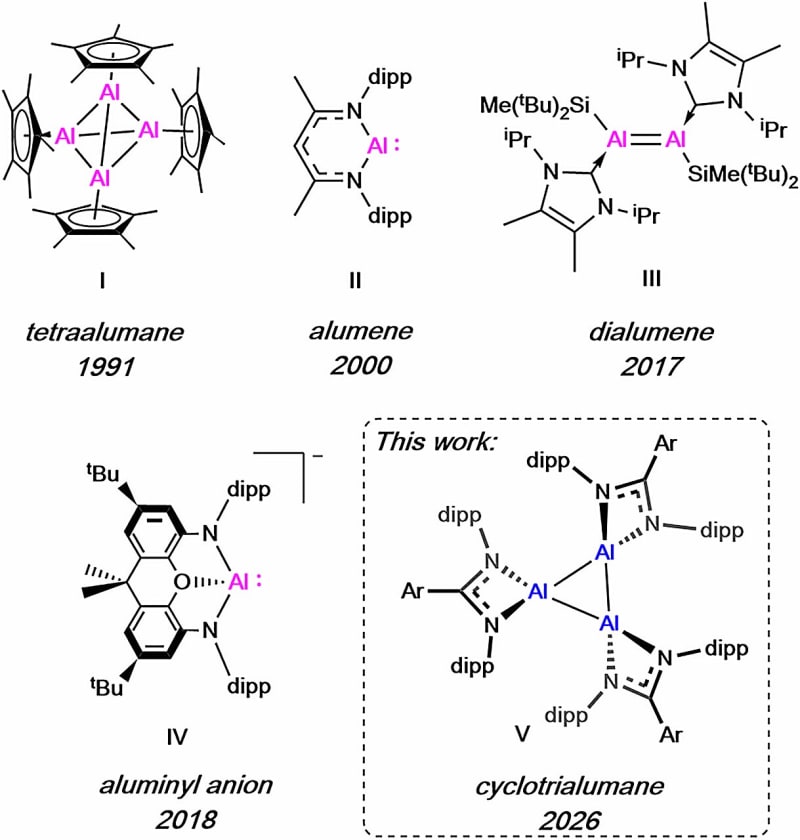
The breakthrough centers on something called a cyclotrialumane, the first ever observed. This molecule features three aluminum atoms arranged in a triangle, creating a structure so stable it can work across different chemical reactions.
What makes this aluminum special is its ability to break apart tough chemical bonds, a job usually reserved for rare earth metals. The team successfully demonstrated it can split hydrogen molecules and work with ethene, a common industrial hydrocarbon.
"Transition metals are the workhorses of chemical synthesis, but many are becoming increasingly difficult to access," Dr. Bakewell explained. These metals often come from politically unstable regions, driving up both demand and price.
Aluminum offered the perfect alternative. It's super abundant, making it roughly 20,000 times less expensive than platinum and palladium.
The discovery goes beyond just replacing expensive metals. The research team created completely new molecular structures, including 5- and 7-membered aluminum and carbon rings that have never existed before.
These new compounds show levels of reactivity that surpass the transition metals researchers originally hoped to mimic. The team published their findings in Nature Communications, marking a significant milestone in chemical research.
The Ripple Effect
This chemistry could transform how we manufacture everyday products. From pharmaceuticals to plastics, countless industries rely on chemical catalysts to create their goods.
Switching to aluminum-based catalysts could slash production costs while reducing environmental damage from mining operations. The discovery also opens doors to entirely new types of chemical reactions and materials that don't exist yet.
Dr. Bakewell's team sees massive potential ahead. They're exploring how these aluminum compounds could build larger molecular structures with unique properties for new materials and products.
The timing couldn't be better. As supply chains face pressure and sustainability becomes crucial, finding abundant alternatives to rare materials matters more than ever.
The research team emphasizes they're still in early exploration stages. But what they've discovered already points toward cleaner, greener chemical production that could benefit manufacturers and consumers worldwide.
This breakthrough proves that sometimes the solutions to our biggest challenges hide in the most common elements right under our noses.
More Images


Based on reporting by Phys.org
This story was written by BrightWire based on verified news reports.
Spread the positivity!
Share this good news with someone who needs it