Scientists Unlock New Way to Study Galaxy Evolution
Ohio State researchers discovered chemical signals that could reveal how galaxies formed billions of years ago, opening a new window into the universe's history. Their groundbreaking work included contributions from a Gaza professor working from a tent during wartime.
Scientists just found a new way to peer into the universe's past and understand how galaxies evolved over billions of years.
A research team led by Ohio State professors Sultana Nahar and Anil Pradhan identified manganese emission lines that telescopes can detect in distant galaxies. These chemical signals act like cosmic fingerprints, revealing when and how stars and galaxies formed throughout the universe's 13.8 billion year history.
The breakthrough centers on manganese, an element whose abundance changes over time as the universe evolves. By comparing manganese levels with other elements like iron, astronomers can determine the age and chemical history of galaxies billions of light years away.
"Manganese and iron, these are important elements in astronomy," Pradhan said. "Their relative proportion is a tracer of the evolution of the universe itself."
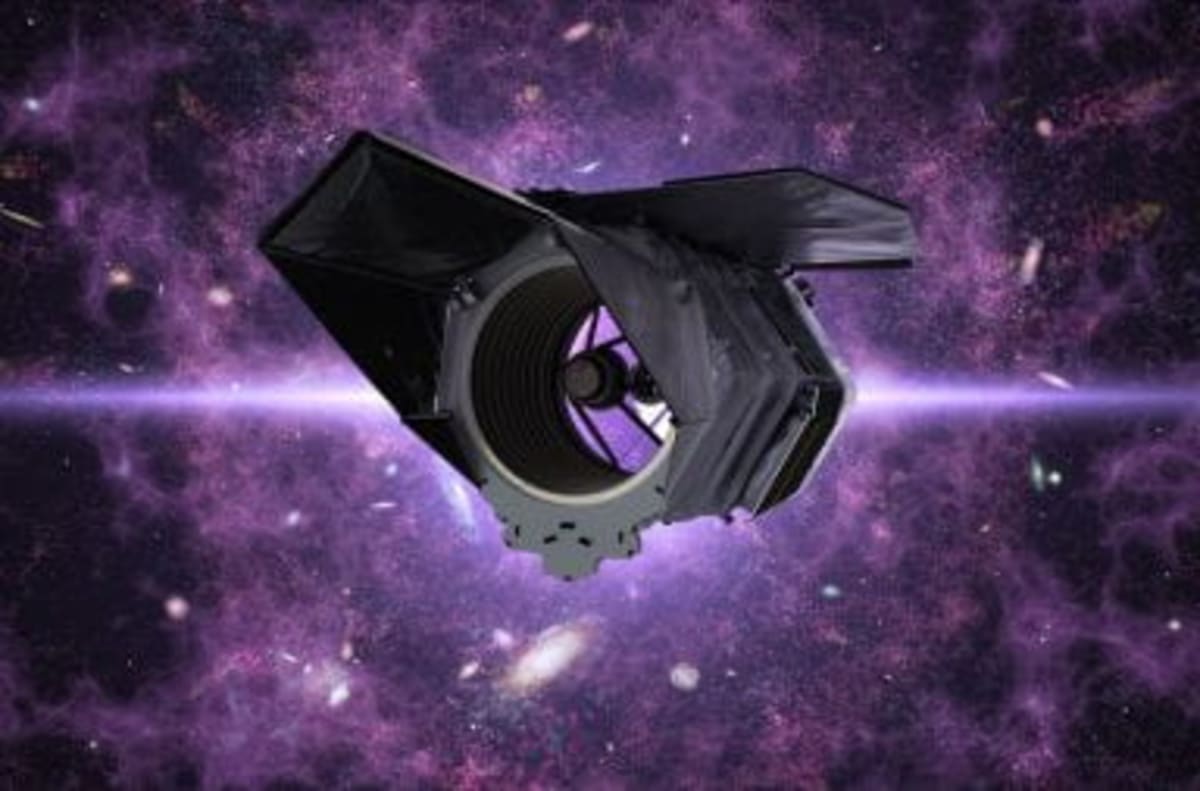
The team created over 700 models to predict which manganese signals NASA's James Webb Space Telescope could detect. The powerful space telescope uses infrared light to observe objects as they appeared billions of years ago, essentially functioning as a time machine into the early universe.
The Ripple Effect
This discovery represents more than just scientific progress. The study's first author, Professor Zher Samak from Al-Aqsa University in Gaza, completed her calculations under extraordinary circumstances during wartime.
Samak's home was destroyed, forcing her to live in a tent with about 20 people. She walked a mile each way just to charge her laptop battery. Despite these challenges, she produced world-class research using the Ohio Supercomputer Center.
"All the educational institutions and research institutions in Gaza have been destroyed," Pradhan said. "So it's remarkable that something can come out of this at the highest intellectual, scientific level."
Nahar, who first met Samak as her student at Cairo University in 2015, helped her obtain a laptop to continue the work. Their collaboration demonstrates how scientific pursuit transcends borders and circumstances.
The team now waits for astronomical observations to confirm whether their predicted manganese signals can actually be detected in space. If successful, astronomers worldwide will gain a powerful new tool for studying the chemical makeup of distant galaxies and understanding how our universe evolved.
The research is part of a broader effort to map chemical signals across the periodic table, with iron and oxygen studies already underway.
Sometimes the most profound discoveries about our vast universe come from the most unlikely places on Earth.
More Images


Based on reporting by Google News - Researchers Find
This story was written by BrightWire based on verified news reports.
Spread the positivity!
Share this good news with someone who needs it