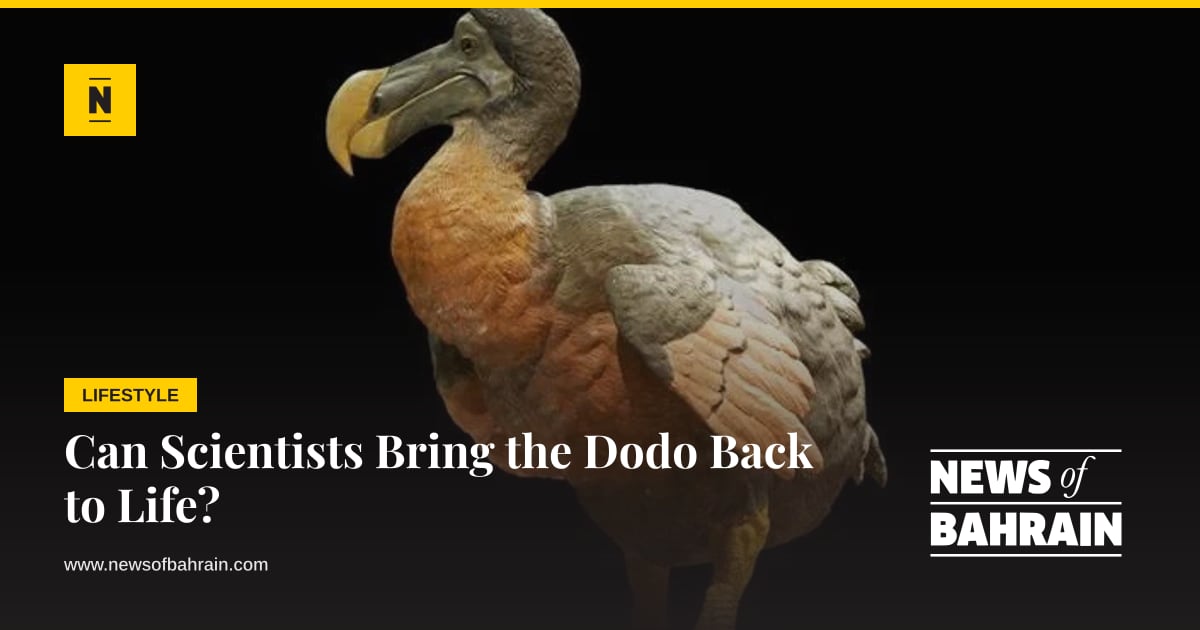
Scientists Use AI to Bring Back Dodos From Extinction
A biotech company has reached 95% completion on reconstructing the dodo's genome, using AI to identify over 2,300 genetic elements that could recreate the extinct bird. Though still experimental, the breakthrough raises an extraordinary question: can extinction become reversible?
More than 300 years after the dodo disappeared forever, scientists are making real progress toward bringing the legendary flightless bird back to life.
American biotechnology company Colossal Biosciences announced a major milestone in its ambitious de-extinction project. The team has successfully reconstructed 95% of the dodo's genome, the genetic blueprint needed to potentially recreate the species that vanished from Mauritius in the 1600s.
The breakthrough came through a new artificial intelligence platform called GenoMorph. This AI system analyzed the dodo's genetic code to identify roughly 2,300 genetic elements responsible for the bird's most distinctive feature: its large, curved beak.
Here's how the science works. Researchers plan to genetically modify cells from the Nicobar pigeon, the dodo's closest living relative still on Earth today. By editing specific genes, they hope to reproduce the extinct bird's unique characteristics in a new generation of modified pigeons.
The team is also developing reproductive techniques that could eventually allow these genetically engineered birds to hatch. If successful, baby dodos could emerge from eggs for the first time in over three centuries.
Why This Inspires
This isn't just about one quirky extinct bird. The dodo project represents humanity's growing ability to correct past environmental mistakes.
The dodo went extinct entirely because of human activity: overhunting and invasive species we introduced to its island home. For generations, that loss felt permanent and irreversible.
Now, cutting-edge AI and genetic engineering are opening doors once considered permanently locked. While some scientists debate whether a genetically modified bird can truly be called a "real" dodo, the progress demonstrates something powerful: extinction might not always mean forever.
The project still faces enormous challenges. No living dodo exists yet, and Colossal hasn't announced when the first bird might hatch. Even if scientists succeed in the lab, Mauritius would need restored habitats suitable for the species to actually survive in the wild.
But the possibility alone shifts how we think about conservation. Technologies advancing today could help protect endangered species tomorrow, or even bring back those we've already lost.
What seemed like science fiction just decades ago is becoming science fact, one genome at a time.
More Images

Based on reporting by Innovation Desk
This story was written by BrightWire based on verified news reports.
Building Something New? Try the BrightWire Tech Stack Advisor
Compare modern frameworks, cloud hosting, and AI tools tailored to your project budget and scale.
Spread the positivity!
Share this good news with someone who needs it


