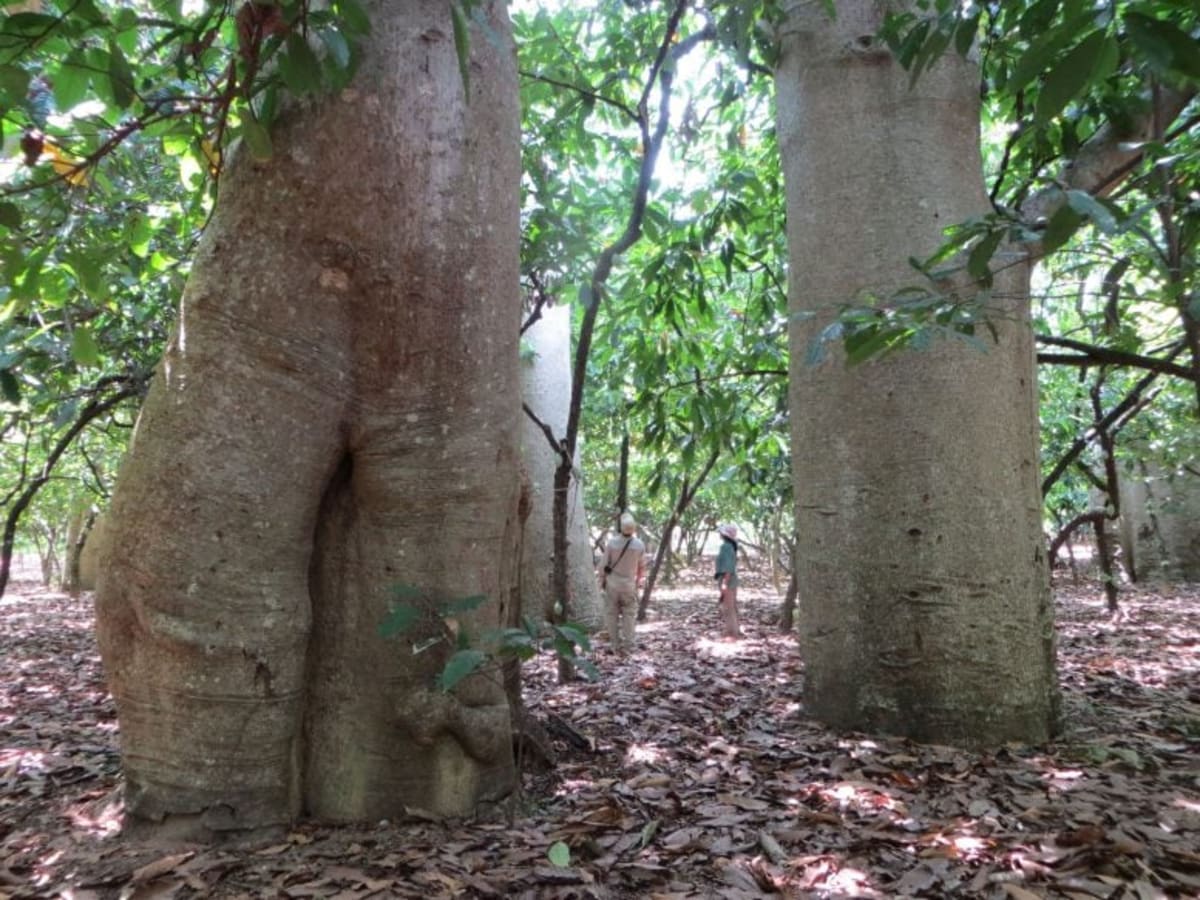
Scientists Use DNA to Fast-Track American Chestnut Revival
After a century of trying to restore the once-mighty American chestnut, Virginia Tech researchers can now use DNA to predict which young trees will survive blight, potentially bringing back a forest giant within a generation. The breakthrough means restoration efforts can move years faster than traditional breeding methods.
For the first time in over 100 years, scientists have a real shot at bringing back one of America's most beloved forest trees.
Virginia Tech researchers have cracked the code on restoring the American chestnut using DNA analysis, a breakthrough that could return the towering species to eastern forests within decades. The new genomic tools let scientists predict which young trees will survive the deadly blight that wiped out billions of chestnuts in the early 1900s, all before the trees even reach maturity.
"This work changes how fast we can move," said Jason Holliday, professor at Virginia Tech and study co-author. "Instead of waiting years to see how a tree performs, we can use its DNA to predict resistance and make better decisions much earlier in the breeding process."
The American chestnut once dominated forests from Maine to Mississippi, growing tall and fast while providing food for wildlife and rot-resistant wood for communities. Then an Asian fungus arrived in the early 1900s and devastated the population, leaving the species functionally extinct in the wild within decades.
Since then, restoration efforts have focused on breeding American chestnuts with disease-resistant Asian relatives. The challenge has been preserving the American chestnut's height and competitive forest growth while adding Asian resistance to the blight.
The Bright Side
The new research, published in Science, analyzed thousands of chestnut trees that had undergone years of traditional breeding and field testing by The American Chestnut Foundation. By sequencing their genomes and comparing genetic patterns with real-world disease outcomes, the team proved that resistance can be predicted using DNA data alone.
"Each American chestnut hybrid tree is a roll of the genetic dice," said Jared Westbrook, director of science at The American Chestnut Foundation. "With DNA sequencing, we can quickly predict which individual seedlings are likely to inherit the greatest blight resistance while also retaining the competitive growth form of American chestnuts."
The results are promising. The next generation of trees is expected to have twice the average blight resistance of current populations while maintaining 75 percent American chestnut ancestry. That percentage preserves the species' characteristic height and growth, meaning these trees could actually compete in modern forests the way their ancestors did.
The team also examined rare wild American chestnuts that have somehow survived decades of infection. While these trees showed some natural resistance, the effect was too limited and inconsistent to solve the problem alone. The real answer lies in combining the best traits from both American and Asian species through smart, DNA-guided breeding.
The researchers produced some of the most complete chestnut genomes to date and discovered that resistance isn't controlled by a single gene. Instead, many genes work together across the genome to strengthen cell walls, trigger chemical defenses, and slow the fungus. This complexity explains why traditional breeding has been so difficult and why genomic selection is such a game changer.
Large-scale seed production for forest restoration could begin within the next decade. The tools are now in place to make meaningful progress within a generation, giving restoration efforts a real chance at success after more than a century of setbacks.
"We're not just learning why the chestnut was lost," Holliday said. "We're learning how to bring it back."
More Images



Based on reporting by Google News - Researchers Find
This story was written by BrightWire based on verified news reports.
Spread the positivity!
Share this good news with someone who needs it