Scientists Use Fingerprints to Catch Wildlife Poachers
A new forensic technique reveals human fingerprints on smuggled ivory and turtle shells, leading to arrests across Africa and Asia. More than 200 countries now use this breakthrough technology to stop wildlife traffickers.
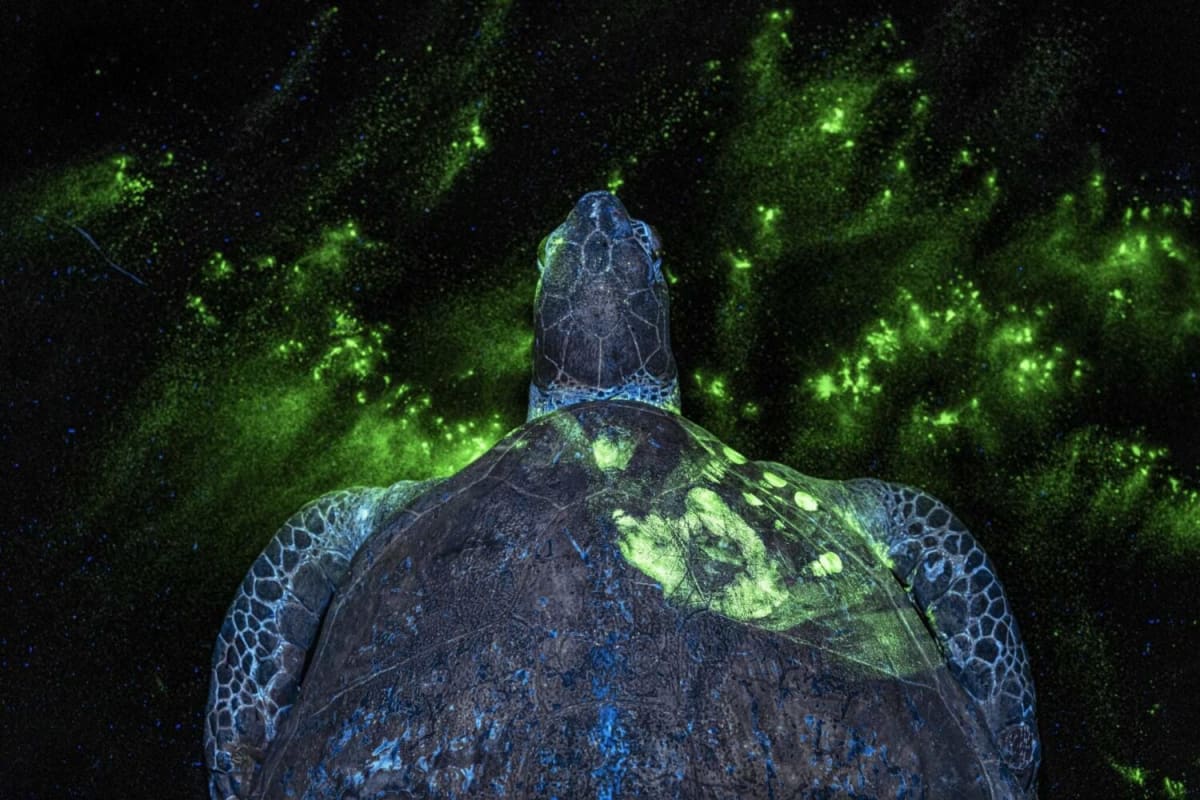
A glowing green turtle floating in water looks like art, but the handprint on its shell tells a crime story.
Scientists in the UK developed a forensic powder that reveals fingerprints, blood, and gunpowder on animals and ivory using ultraviolet light. For the first time, investigators can connect poachers directly to their crimes.
The breakthrough came when forensic expert Mark Moseley created a magnetic powder that detects human fingerprints on elephant tusks. His team at London's Metropolitan Police tested it on ivory seized at Heathrow Airport, and it worked.
More than 200 fingerprinting kits now protect borders in 40 countries across Africa and Asia. The impact arrived fast and strong.
In Kenya alone, evidence from one kit led to 15 arrests, including five police officers. Authorities seized 11 elephant tusks and finally had proof of who handled them, not just that a crime occurred.
Scientists adapted the technique with white powder that works on rhino horn and pangolin scales. These animals face some of the worst poaching pressure in the world, with pangolins being the most trafficked mammals on Earth.
The Ripple Effect
The low cost and simple design mean wildlife rangers can use the kits anywhere, even in remote areas without DNA labs. Countries that once struggled to prosecute smugglers now build cases that hold up in court.
Photographer Britta Jaschinski captured the technique in action for her award-winning series at the Royal Geographical Society's Earth Photo 2026 competition. Her images show both the beauty of wildlife and the human fingerprints we leave behind.
"I created this image to expose the traces we leave behind and to demonstrate how science is becoming a vital tool in protecting wildlife from exploitation," Jaschinski explains. Her work now tours the UK, spreading awareness of how forensic science fights wildlife crime.
Wildlife trafficking networks operate across continents, making prosecutions difficult when evidence stops at borders. These fingerprint kits create connections between seizures in different countries, helping investigators map entire criminal networks.
Justice for elephants, rhinos, and turtles now comes with names and faces attached.
More Images


Based on reporting by Positive News
This story was written by BrightWire based on verified news reports.
Spread the positivity!
Share this good news with someone who needs it