Scientists Use Magnets to Fight Alzheimer's and Parkinson's
Canadian researchers discovered a groundbreaking way to stabilize damaged brain proteins using weak magnetic fields, opening new doors for treating diseases affecting over a million Canadians. The quantum biology breakthrough could revolutionize how we approach neurodegenerative disease treatment.
Scientists at the University of Waterloo just achieved something that sounds like science fiction: using weak magnetic fields to repair the cellular damage that causes Alzheimer's and Parkinson's disease.
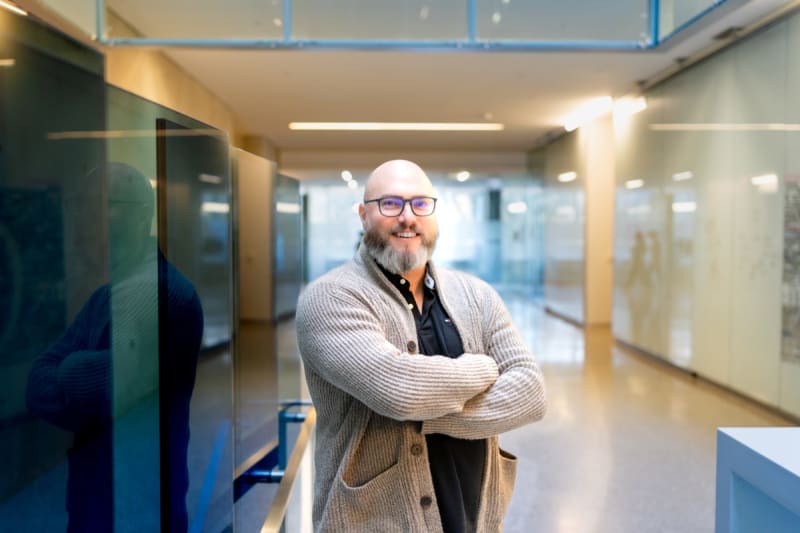
Dr. Travis Craddock and his team became the first researchers to successfully manipulate the inner structure of cells using magnetic fields and isotopes. Their discovery bridges quantum physics and biology in a way that could transform treatment for diseases affecting more than a million Canadians by 2030.
The breakthrough challenges everything scientists thought they knew about biology. "Biology is often thought to be too warm, wet and noisy to make use of interactions on the scale of atoms and subatomic particles," Craddock explained. But his team proved that quantum principles actually work inside living cells.
Here's why that matters: the protein structures they learned to manipulate are exactly the ones that fall apart in neurodegenerative diseases. Think of it like finding a way to glue together something doctors previously couldn't touch without damaging it further.
Current treatments for Alzheimer's and Parkinson's only slow symptoms and often come with brutal side effects ranging from nausea to brain swelling. There's still no cure. This new approach targets the root problem at the cellular level instead of just managing symptoms.
The research team observed magnetic field effects in protein assays, marking the first time anyone has demonstrated both weak magnetic field and isotope effects in a biologically relevant system. Their findings, published in Science Advances, open entirely new pathways for medical research.
The Ripple Effect
This discovery reaches far beyond just two diseases. The technique could apply to any condition involving protein structure damage, potentially helping millions of people worldwide who face neurodegenerative illness.
The implications span multiple scientific fields: structural biology, biophysics, quantum biology, neurobiology, bioengineering, and medical applications. Craddock's work as Canada Research Chair in Quantum Neurobiology positions the country at the forefront of this emerging field.
The personal and economic toll of these diseases is staggering. Families watch loved ones disappear behind conditions that strip away memory and motor function. The Alzheimer Society of Canada predicts the crisis will only grow as our population ages.
Next, the research team will test their approach directly on human brain cells in the lab. If successful, they could develop treatments that stabilize brain proteins before irreversible damage occurs, rather than trying to manage symptoms after the fact.
The collaboration between Dr. Craddock, Dr. Robert P. Smith from Nova Southeastern University, and Dr. Christoph Simon from the University of Calgary demonstrates how international scientific cooperation drives breakthrough discoveries.
What started as a surprising observation about magnetic fields affecting biology has become a potential game changer for millions facing the most feared diagnoses of our time.
Based on reporting by Google News - Disease Cure
This story was written by BrightWire based on verified news reports.
Spread the positivity!
Share this good news with someone who needs it