
Scientists Use Satellites to Monitor and Combat Algae Blooms in South African Reservoir
Researchers are harnessing cutting-edge satellite technology to track and understand algae blooms in South Africa's Hartbeespoort reservoir, paving the way for better water management solutions. This innovative approach demonstrates how space-based monitoring can help protect freshwater ecosystems and communities worldwide.
High above South Africa's scenic Hartbeespoort reservoir, satellites are quietly revolutionizing how scientists protect our precious water resources. Using advanced imaging technology, researchers have gained unprecedented insights into algae blooms, bringing hope for better water quality management in the region and beyond.
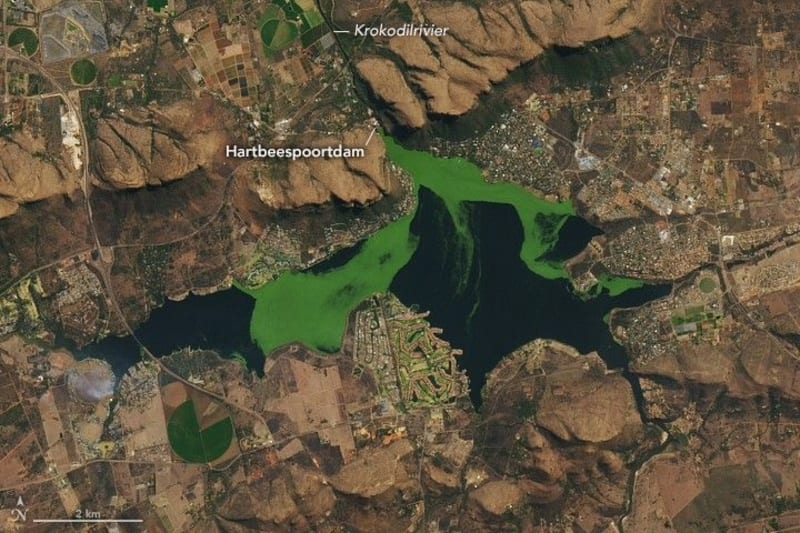
The Hartbeespoort reservoir, nestled just 25 kilometers west of Pretoria, has become an unexpected showcase for how modern technology can help us understand and address environmental challenges. Between June 2022 and July 2023, NASA's Earth Observatory captured a mesmerizing dance of vivid green algae patches drifting across the deep blue waters, creating a natural time-lapse that reveals the rhythm of aquatic life.
This breakthrough monitoring combines imagery from multiple satellites—NASA's Landsat 8 and 9, along with the European Space Agency's Sentinel-2 spacecraft—to create the Harmonized Landsat and Sentinel-2 product. It's a beautiful example of international collaboration working to solve real-world problems.
What makes this research particularly exciting is its practical impact. Scientists have discovered that by analyzing water color and measuring different wavelengths of light from space, they can track algae concentrations across entire reservoirs over extended periods—something that would be prohibitively expensive and time-consuming to do from the ground alone.
"It's like having a garden," explains NASA scientist Bridget Seegers, who studies freshwater ecosystems. "If you add a lot of nutrients, you're going to have a lot of growth." Understanding this relationship between nutrients and algae growth is key to developing effective management strategies.
The research team, led by Adam Ali, analyzed an impressive 40 years of Landsat data and made significant discoveries. They identified that water temperature and phosphorus content from runoff were the primary drivers of algal growth, with blooms typically expanding during warm summer months. Importantly, they documented how a bioremediation program in the late 1980s successfully limited algae growth, proving that targeted interventions can work.
"This is a reservoir that has always been monitored heavily by the local department of water resources," Ali notes, highlighting the ongoing commitment to protecting this vital water source used for recreation and irrigation.
The future looks even brighter. NASA's PACE mission, launched in 2024, collects data across hundreds of precise wavelength bands, enabling scientists to identify specific types of algae in blooms—crucial information for determining potential risks and appropriate responses. The next Landsat satellite will feature wavelengths specifically designed to detect harmful algal blooms, further enhancing monitoring capabilities.
This space-based approach represents a powerful tool for water resource managers worldwide, especially in remote regions where regular monitoring is challenging. By providing a comprehensive view of conditions across entire water bodies over time, satellites help communities make informed decisions about water use and conservation.
The work at Hartbeespoort demonstrates that with the right tools and international cooperation, we can better understand and protect our freshwater ecosystems, ensuring healthy water resources for generations to come.
More Images



Based on reporting by NASA
This story was written by BrightWire based on verified news reports.
Spread the positivity! 🌟
Share this good news with someone who needs it
More Good News
 🌍 Planet Wins
Breakthrough Strategy Could Help 200+ Million People While Reversing Desertification
 🌍 Planet Wins
NASA Satellites Help Scientists Protect South African Water Quality
 🌍 Planet Wins
Arizona Takes Bold Steps to Protect Desert Water for Future Generations
Joke of the Day
Why don't scientists trust atoms?
Explore Categories
Quote of the Day
"The only way to do great work is to love what you do."
— Steve Jobs