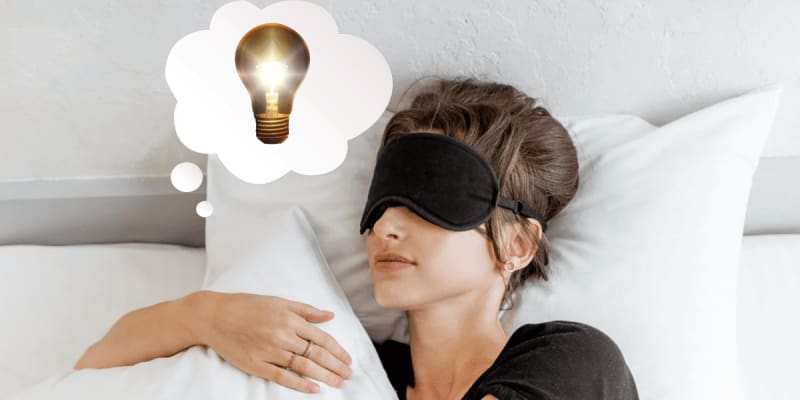
Scientists Use Sound to Plant Dream Ideas, Boost Problem-Solving
Northwestern University researchers successfully planted puzzle-solving ideas into people's dreams using sound cues during REM sleep. Participants doubled their puzzle-solving abilities after just one night of "dream engineering." ##
Your brain might soon tackle your toughest problems while you sleep, thanks to a breakthrough that sounds like science fiction.
Neuroscientists at Northwestern University have discovered how to guide dreams in specific directions using sound cues during REM sleep. The technique helped people solve complex puzzles they couldn't crack while awake.
The experiment worked like this: Twenty participants tried solving difficult brain teasers in three minutes while researchers played unique soundtracks for each puzzle. Most people failed to solve them in time.
But something remarkable happened when participants slept in the lab that night. Researchers played half of the unsolved puzzle soundtracks during REM sleep, the stage when lucid dreaming happens.
The next morning, twelve participants reported dreaming about the specific puzzles. Those same people doubled their success rate, jumping from 20% to 40% accuracy on the cued puzzles.
"Even without lucidity, one dreamer asked a dream character for help solving the puzzle we were cuing," said Karen Konkoly, lead author and postdoctoral researcher in Northwestern's Cognitive Neuroscience Laboratory. Another participant was cued with a puzzle about trees and woke from a dream of walking through a forest.
The technique is called targeted memory reactivation, or TMR. It essentially plants ideas in your mind while you rest, letting your brain work on problems during your off hours.
The Ripple Effect
This discovery could transform how we approach creativity and critical thinking. Ken Paller, senior author and director of Northwestern's cognitive neuroscience program, sees massive potential.
"Many problems in the world today require creative solutions," Paller said. "By learning more about how our brains are able to think creatively, we could be closer to solving the problems we want to solve, and sleep engineering could help."
The implications stretch beyond puzzle solving. Students could study material before bed and reinforce learning through sound cues during sleep. Scientists could work on complex equations. Engineers could design breakthrough technologies.
The brain continued working even in non-lucid dreams. One participant dreamed of fishing in a jungle after hearing cues for a jungle puzzle. The subconscious mind was actively processing the problem.
The research needs more testing before becoming standard practice, but the initial results are promising. You're already getting the brain-rebooting benefits of sleep. Imagine adding productive problem-solving to those same hours.
If you're stuck on something tough right now, the old advice to "sleep on it" just got a scientific upgrade.
##
More Images




Based on reporting by Google: scientific discovery
This story was written by BrightWire based on verified news reports.
Spread the positivity!
Share this good news with someone who needs it