Scientists Use Sound Waves to 3D Print Microscopic Devices
Researchers at Concordia University created a breakthrough 3D printing method that uses ultrasound instead of heat or light to build tiny medical devices. The technique prints structures 10 times smaller than previous methods, opening doors for faster medical diagnostics and wearable health tech.
📺 Watch the full story above
Scientists just figured out how to use sound waves to build microscopic devices that could revolutionize medical testing and health monitoring.
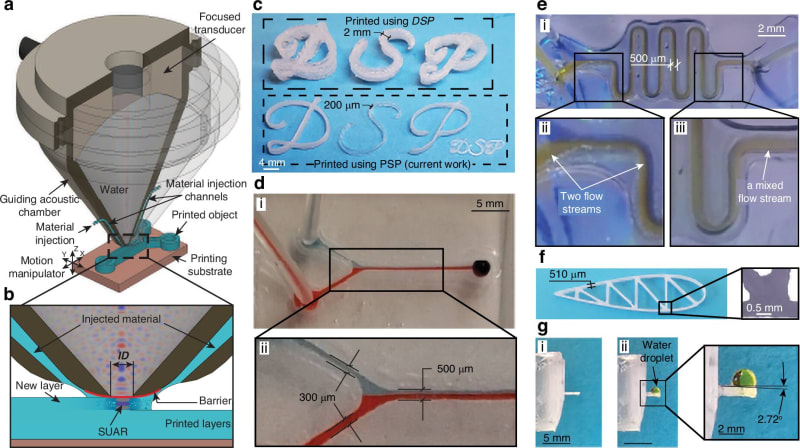
Researchers at Concordia University developed a new 3D printing technique called proximal sound printing that uses focused ultrasound to create incredibly tiny structures on soft materials like silicone. The method triggers chemical reactions that solidify liquid polymers exactly where needed, no heat or light required.
This breakthrough solves a major manufacturing problem. Traditional 3D printing struggles with the soft, flexible materials needed for medical devices like lab-on-a-chip systems and wearable sensors. Sound waves work beautifully with these tricky materials, making it possible to build things that were previously too difficult to manufacture at small scales.
The new approach represents a major leap forward from the team's earlier sound printing work. By placing the ultrasound source much closer to the printing surface, they achieved features up to 10 times smaller than before while using significantly less power. The method also produces more consistent results, which matters enormously when manufacturing medical devices that need to work reliably every time.
The improved precision allows manufacturers to print complex microfluidic channels, flexible sensors, and multi-material structures in a single process. Instead of assembling tiny components separately, everything can be built together seamlessly.
The Ripple Effect
This innovation could accelerate the development of medical diagnostic tools that detect diseases earlier and more accurately. Faster prototyping means researchers can test new designs quickly, bringing life-saving devices to patients sooner.
The technique also opens possibilities for advanced wearable technologies that monitor health in real time. Imagine sensors woven into clothing that track vital signs or environmental monitors small enough to place anywhere. The technology could even improve soft robotic components used in minimally invasive surgery.
The research team published their findings in Microsystems & Nanoengineering, a peer-reviewed journal. Their work demonstrates how creative thinking about manufacturing processes can unlock solutions that seemed impossible just years ago.
By making microscale manufacturing simpler and more versatile, sound-based printing gives scientists and engineers a powerful new tool. The same approach that struggled with limited resolution now produces intricate structures with remarkable precision.
The future of tiny tech just got a whole lot brighter, one sound wave at a time.
More Images


Based on reporting by Phys.org - Technology
This story was written by BrightWire based on verified news reports.
Spread the positivity!
Share this good news with someone who needs it