Scientists Watch Cancer Drugs Work in Real-Time
Japanese researchers have captured the first real-time footage of lung cancer drugs physically reshaping disease-causing proteins, revealing why some treatments eventually stop working. The breakthrough could help doctors design better therapies that overcome drug resistance.
Scientists just filmed cancer drugs in action for the first time, watching molecule by molecule as the medications physically change the shape of proteins that drive lung cancer.
Researchers at Kanazawa University in Japan used a specialized microscope to observe individual cancer proteins moving and clustering in real time. What they discovered challenges how we think cancer drugs work.
The team focused on EML4-ALK, a mutated protein responsible for a common form of lung cancer. Current drugs targeting this protein help many patients, but tumors often become resistant over time. Until now, doctors couldn't explain why at a molecular level.
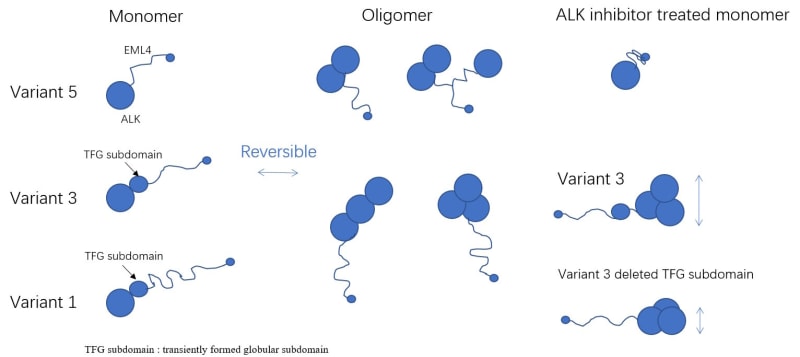
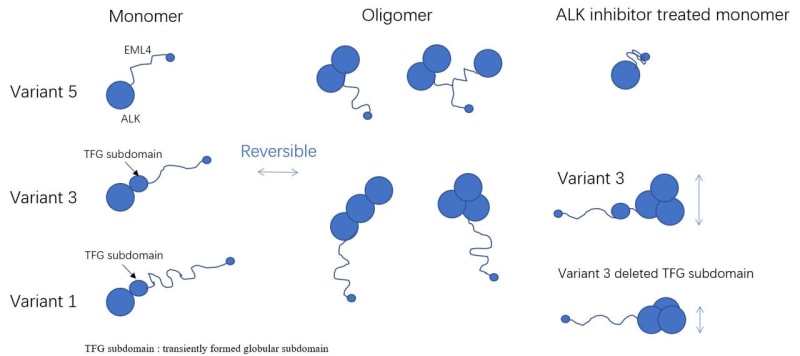
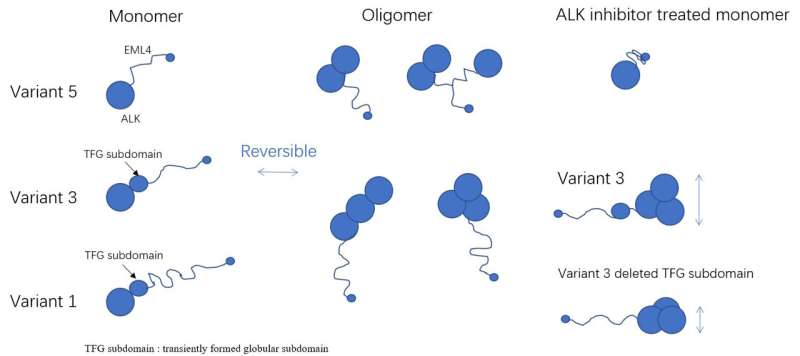
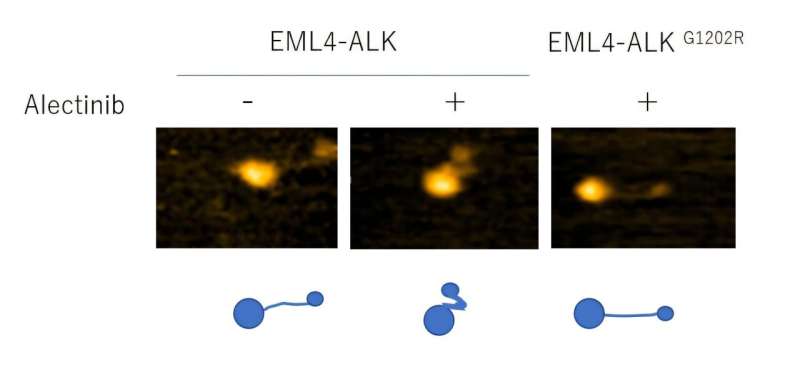
Using high-speed atomic force microscopy, the scientists watched as these proteins constantly assembled and broke apart into small clusters. When they added cancer drugs to the mix, something unexpected happened. The medications didn't just block the protein's activity—they physically reshaped it.
"Our results show that ALK inhibitors work not only by blocking kinase activity, but also by altering the overall structure of the cancer-causing protein," says Seijo Yano, who led the study published in ACS Nano. The drugs compacted flexible regions of the protein, preventing it from forming the clusters that fuel cancer growth.
But here's the crucial finding: when the team tested proteins with a known resistance mutation, the drugs lost their ability to reshape the protein. This directly explains why certain tumors stop responding to treatment.
The Bright Side
This discovery opens new doors for fighting cancer more effectively. Instead of designing drugs that only block protein activity, scientists can now target the protein's shape-shifting abilities too.
The research team identified a previously unknown structural feature in one protein variant that responds poorly to treatment in patients. Understanding these structural differences could help doctors predict which patients will benefit most from specific therapies.
The breakthrough demonstrates the power of watching biological processes unfold in real time rather than taking static snapshots. This microscopy technique reveals molecular behaviors that conventional methods miss entirely.
For the estimated 5% of lung cancer patients whose tumors contain ALK mutations, this research brings hope for more durable treatments. Drug resistance remains one of the biggest challenges in cancer care, affecting countless patients who initially respond well to therapy.
The findings suggest future medications could be designed to maintain their structural effects even when resistance mutations emerge, potentially extending how long treatments remain effective.
This work transforms our understanding of how cancer drugs function at the most fundamental level, paving the way for smarter therapies that stay one step ahead of the disease.
More Images
Based on reporting by Phys.org
This story was written by BrightWire based on verified news reports.
Spread the positivity!
Share this good news with someone who needs it