Scientists Weigh Black Hole 10 Billion Light-Years Away
Astronomers just measured the mass of a dormant black hole from when the universe was young, using the James Webb Space Telescope and a cosmic magnifying glass. The breakthrough could help us understand how the first galaxies formed.
Scientists have weighed a black hole that's been sitting dormant for 10 billion years, opening a window into the earliest days of our universe.
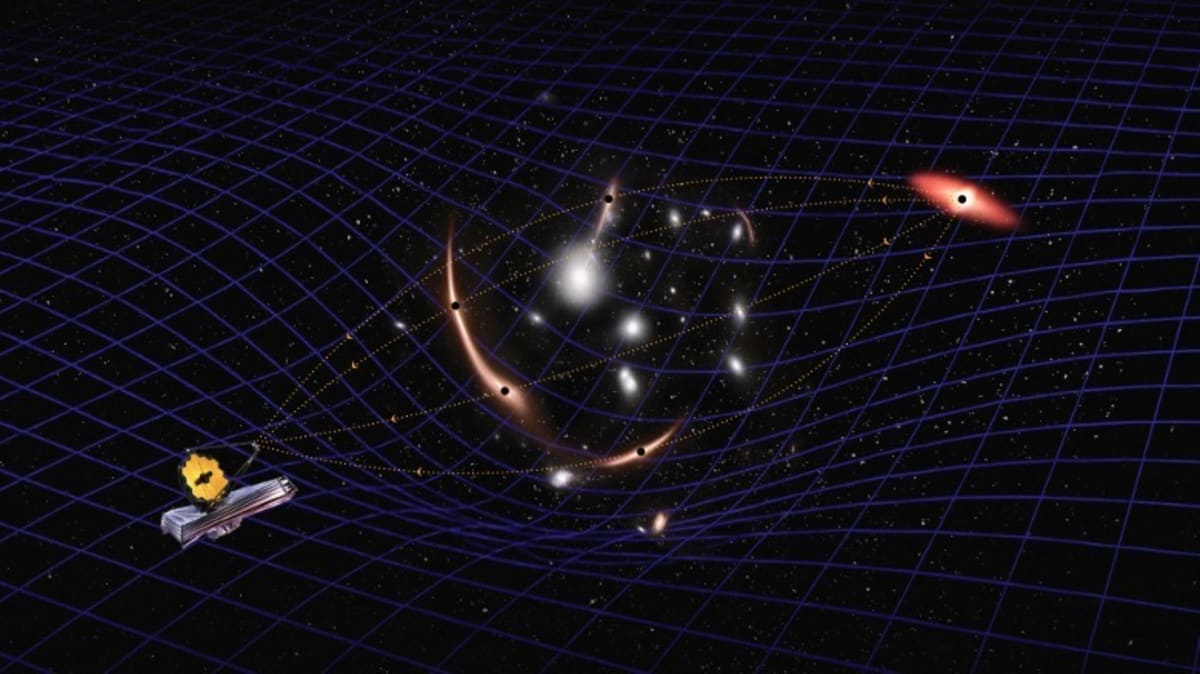
Using the James Webb Space Telescope, researchers measured the mass of a black hole at the center of galaxy MRG-M0138. This black hole has been dormant since the universe was young, making it incredibly difficult to spot since it's not surrounded by the bright glow of hot gas and dust that active black holes produce.
The team pulled off this cosmic feat by combining JWST's sharp vision with gravitational lensing. That's when a massive object's gravity bends light passing around it, creating a natural magnifying effect.
"By combining JWST data with gravitational lensing, we could peer inside the black hole's sphere of influence, where its gravity boosts the speeds of stars," said lead author Andrew Newman from Carnegie Science. The technique let them measure how fast stars were moving near the black hole, revealing its mass.
It's the farthest dormant black hole astronomers have directly measured to date. The discovery marks a major step forward in studying black holes that aren't actively feeding.
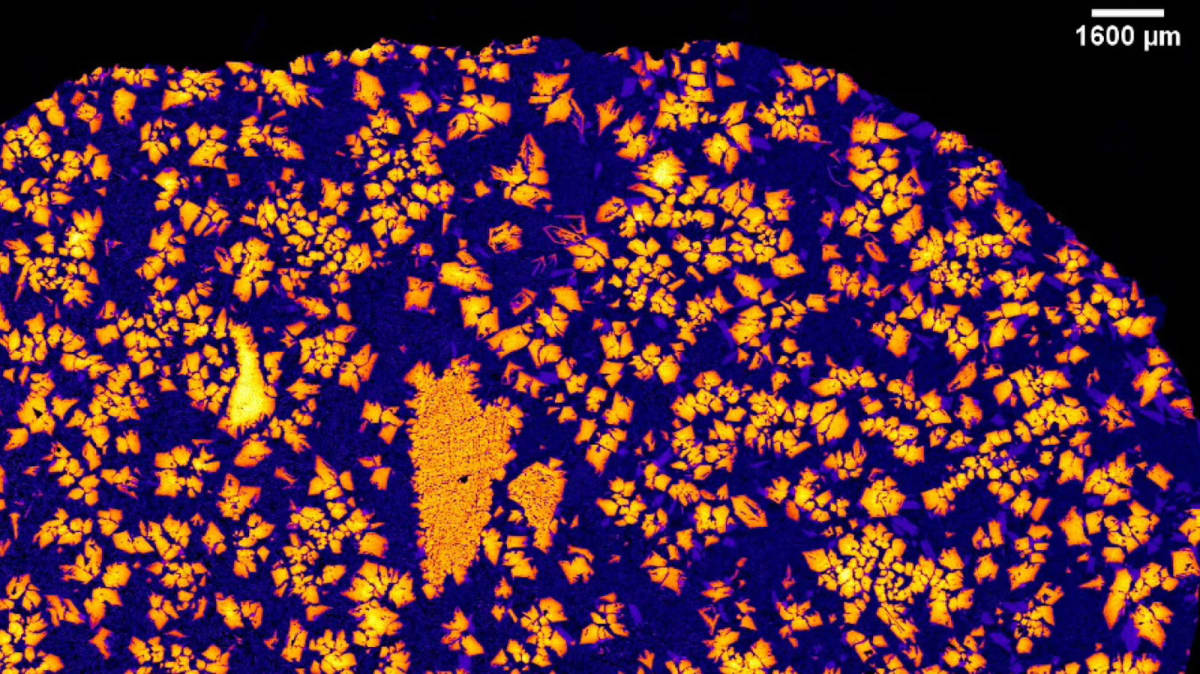
Meanwhile, a meteorite found in Africa's Sahara Desert revealed another cosmic secret. Scientists say the rare space rock holds evidence of a protoplanet that orbited our sun 4.5 billion years ago, then disappeared.
The meteorite, nicknamed NWA 12774, contained aluminum-rich crystals that could only form under intense pressure. The team calculated it needed at least 17.5 kilobars of pressure, suggesting the parent body was huge, possibly as large as Mars or our moon.
"We only know it existed because a few fragments of it happened to land on Earth," said Aaron Bell from the University of Colorado Boulder. "These meteorites preserved evidence of a completely different pathway through which early planets developed."
Why This Inspires
These discoveries show how far our cosmic detective work has come. We can now weigh invisible black holes billions of light-years away and piece together the story of vanished worlds from ancient rocks. Each finding helps us understand not just where the universe came from, but how planets and galaxies like ours came to exist.
The black hole findings appear in the journal Science, while the meteorite research was published in Earth and Planetary Science Letters.
Both breakthroughs remind us that the universe still holds countless secrets waiting to be uncovered, and we're getting better at finding them every day.
More Images


Based on reporting by Engadget
This story was written by BrightWire based on verified news reports.
Spread the positivity!
Share this good news with someone who needs it