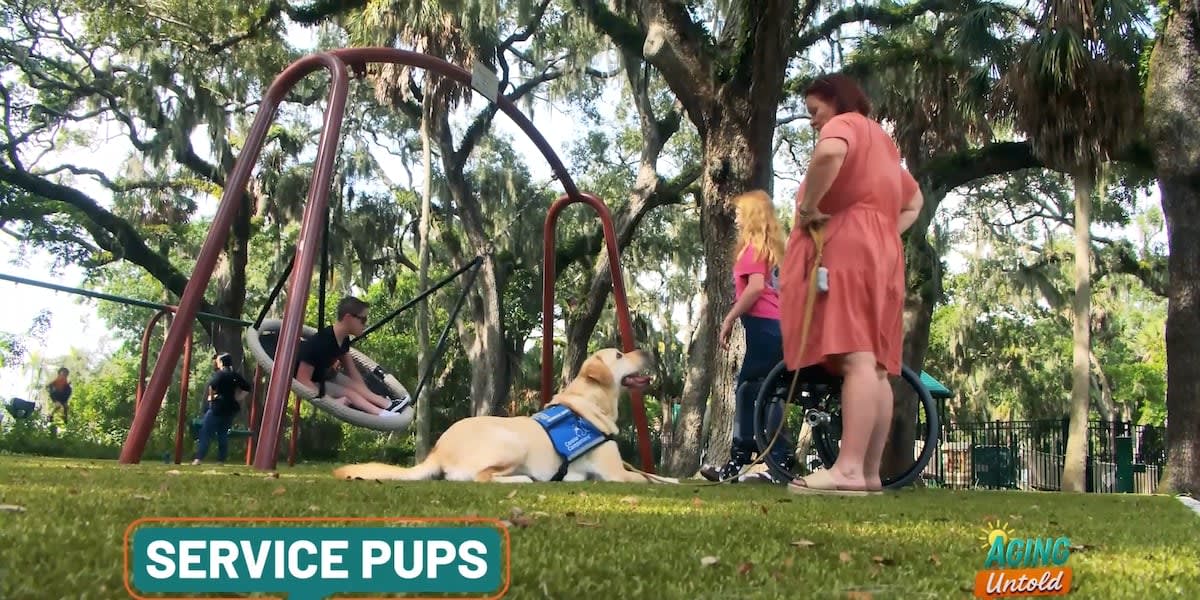
Scientists Work to Triple Service Dogs for Disabled Americans
Only 1% of the 61 million Americans with disabilities have access to life-changing service dogs. Researchers are partnering with Canine Companions to solve the genetics puzzle and train more dogs for those waiting.
Imagine dropping your phone and not being able to pick it up, or struggling to put on socks every morning without help.
For millions of Americans with disabilities, these simple tasks feel impossible. Service dogs change everything by opening doors, retrieving dropped items, and helping with daily activities that most of us never think twice about.
But here's the challenge: Of 61 million Americans living with disabilities, fewer than 1% are matched with service dogs. That's roughly 600,000 people who could benefit from a trained companion, but can't get one.
The bottleneck isn't demand or funding alone. Genetics determines whether a dog can successfully complete service training, dramatically limiting the available pool of candidates. Not every puppy has the temperament, focus, and trainability required for this specialized work.
Now researchers are teaming up with Canine Companions, a leading service dog organization, to crack the code. They're studying which genetic markers predict success in service training, hoping to identify promising puppies earlier and breed more dogs with the right traits.
The goal is simple but ambitious: get more dogs to people who desperately need them. Every successful match means someone gains independence, confidence, and the ability to navigate daily life with dignity.
The Ripple Effect
This research could transform how service dog organizations operate nationwide. Instead of training dozens of puppies only to see half wash out of the program, they could focus resources on dogs genetically predisposed to succeed.
That means shorter wait times for people with disabilities, lower costs per trained dog, and more matches overall. Families currently waiting years for a service dog might wait months instead.
The impact extends beyond individual matches too. When someone with a disability gains a service dog, they often return to work, engage more with their community, and experience improved mental health. Independence ripples outward, touching families, workplaces, and neighborhoods.
One trained service dog can work for eight to ten years, changing their handler's life every single day. Now imagine tripling or quadrupling the number of these partnerships across America.
The future looks brighter for both the dogs born with the right skills and the people waiting for their perfect match.
Based on reporting by Google News - Researchers Find
This story was written by BrightWire based on verified news reports.
Spread the positivity!
Share this good news with someone who needs it
%2Ffile%2Fattachments%2Forphans%2FMark-ParkRun-Sept20261_245392.jpg)