Scotland Installs Carbon Tower on Largest Saltmarsh
Scotland just set up its first saltmarsh carbon tracking tower at Caerlaverock, marking a breakthrough in understanding how these coastal habitats fight climate change. The technology will measure in real time how much carbon dioxide the marsh pulls from the air.
A new tower standing on Scotland's largest saltmarsh could help unlock the secrets of one of nature's most powerful carbon fighters.
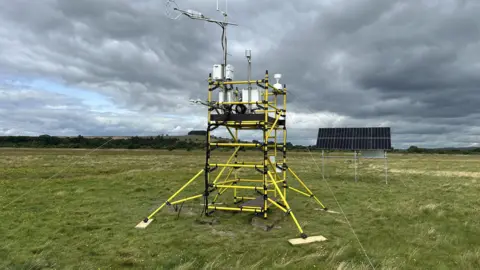
Scientists just installed the country's first saltmarsh flux tower at Caerlaverock on the Solway Firth. The cutting-edge technology will track exactly how much carbon dioxide the marsh removes from the atmosphere, giving researchers data they've never had before.
The timing couldn't be better. About 85% of UK saltmarshes have vanished since the mid-1800s, lost to farming, development, and rising seas. These disappearing habitats are finally getting the attention they deserve.
Corallie Hunt from NatureScot calls the tower an "important milestone" for understanding what we're losing when saltmarshes disappear. By measuring carbon exchange in real time, scientists can prove just how valuable protecting and restoring these habitats really is.
The technology works by monitoring how marsh plants pull carbon dioxide from the air through photosynthesis. These plants also trap carbon-rich sediments in their roots and stems when the tide rolls in, locking away greenhouse gases that would otherwise warm our planet.
Annette Burden, a wetland scientist at UK Centre for Ecology and Hydrology, explains this is the most northern tower in a growing network around the UK coast. The data will help saltmarshes earn their rightful place in the UK Greenhouse Gas Inventory, strengthening the case to protect them.
The Solway saltmarsh does more than fight climate change. Thousands of migratory birds depend on these wetlands for survival. The rare natterjack toad calls this place home. The marsh also acts as a natural shield, absorbing wave energy and softening the blow of floods and storm surges that threaten nearby communities.
The Ripple Effect
This single tower represents a shift in how we value coastal habitats. For too long, saltmarshes were seen as wasteland to be drained and developed. Now science can put hard numbers on their climate benefits.
The data flowing from Caerlaverock will inform conservation efforts across the UK. When policymakers see proof that saltmarshes are carbon powerhouses, restoration projects get funding and protection laws get teeth.
Tom Brook from WWF calls the Solway "an extraordinary place for nature" that's "working hard for people too." He's right. Every measurement the tower takes builds the case that protecting nature and fighting climate change aren't separate goals but the same mission.
The partnership behind this project brings together government agencies, conservation groups, and research institutions. That kind of collaboration signals these coastal habitats are finally getting serious recognition.
Scotland's first carbon tracking tower is more than a research tool—it's proof we're learning to see the hidden value in the wild places we once took for granted.
More Images

Based on reporting by BBC Science
This story was written by BrightWire based on verified news reports.
Play Today’s BrightWire Positive Mini Crossword & Word Game
Keep your mind sharp with our free 5-minute uplifting daily crossword and positivity word puzzle.
Spread the positivity!
Share this good news with someone who needs it