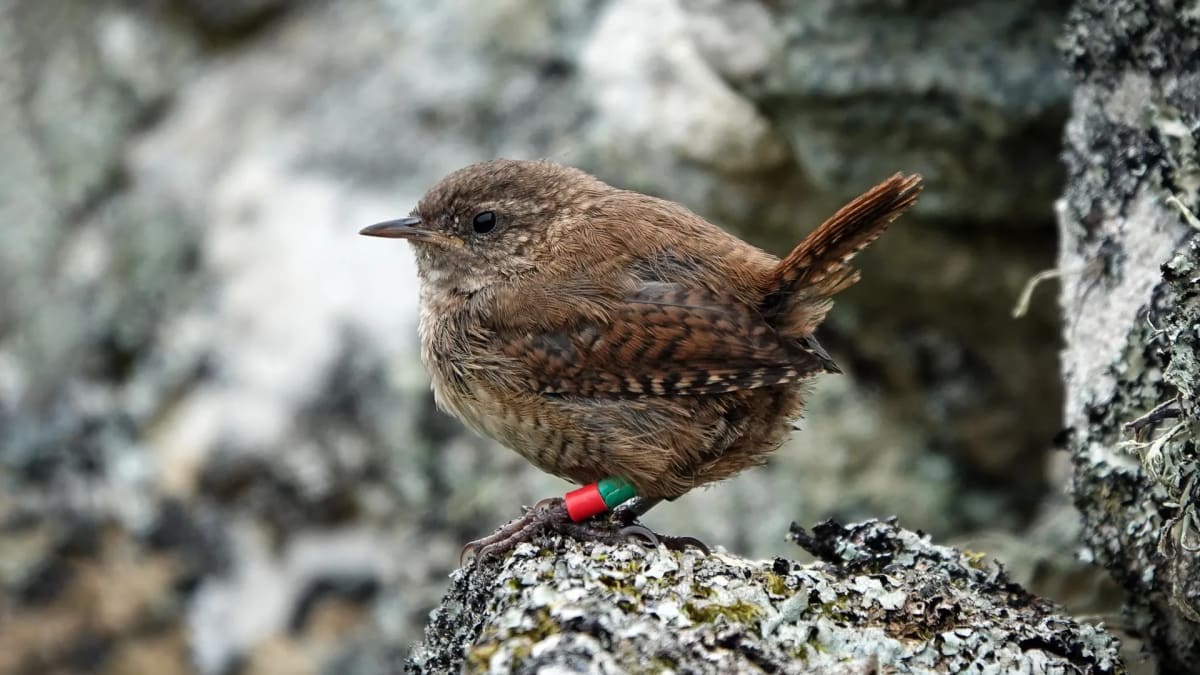
Scottish Island Wrens Evolving Into Giants Before Our Eyes
Tiny wrens on remote Scottish islands are transforming into giants, doubling in size and developing unique songs as scientists watch evolution unfold in real time. Some may become entirely new species within our lifetime.
Scientists are witnessing evolution happen right now on remote Scottish islands, where tiny wrens are becoming giants.
Researchers from the University of Birmingham discovered that wrens living on four isolated Scottish islands have embarked on dramatically different evolutionary paths from their mainland cousins. The most striking change? Some island birds have grown to more than twice the size of their mainland relatives.
This phenomenon, called island gigantism, has transformed humble wrens on St Kilda and Shetland into heavyweights of their species. Mainland British wrens typically weigh between 7 and 10 grams, about as light as three pennies. St Kilda wrens now tip the scales at 13 to 16 grams, making them among the top 25% of known cases of island gigantism in birds worldwide.
The research team studied wrens from St Kilda, Shetland, Fair Isle, and the Outer Hebrides using body measurements, song recordings, and complete genome sequencing. What they found surprised them: each island population is evolving independently, developing its own unique physical traits, songs, and genetic makeup.
Dr. Michał Jezierski, who led the study published in the Evolutionary Journal of the Linnean Society, explained that the genetic differences are so significant that St Kilda and Shetland wrens are likely becoming entirely new species. Their songs have changed so much that mainland birds might not even recognize them anymore.
The most fascinating discovery came from comparing the giant wrens of Shetland and St Kilda. Despite looking remarkably similar, their genome analysis revealed they evolved their large size through completely different genetic pathways. This parallel evolution shows how similar island conditions can push life in the same direction using different biological tools.
Islands create natural laboratories for evolution. With fewer predators, less competition, and isolated populations, these environments allow dramatic changes to happen relatively quickly. The same forces that created Galapagos giant tortoises and Komodo dragons are now sculpting Scottish wrens into something new.
Why This Inspires
Evolution usually unfolds over timescales too vast for humans to observe. Watching these wrens transform in real time gives us a front-row seat to one of nature's most fundamental processes. It reminds us that life constantly adapts and innovates, even on the windswept rocks of Scotland.
The wrens of Fair Isle and the Outer Hebrides remain closer to their mainland ancestors, showing that even neighboring islands can produce wildly different outcomes. Each population writes its own evolutionary story based on the unique challenges and opportunities of its home.
These remarkable birds prove that evolution isn't just ancient history but an ongoing adventure happening all around us.
Based on reporting by Science Daily
This story was written by BrightWire based on verified news reports.
Spread the positivity!
Share this good news with someone who needs it


