Seabirds Help Atoll Islands Survive Rising Seas
Scientists discovered that seabirds and native forests can help low-lying atoll islands keep pace with rising sea levels through the end of the century. The surprising solution involves removing invasive rats and replanting native vegetation.
Tiny tropical islands threatened by rising seas might have an unexpected lifeline: seabird poop and native trees working together to literally build resilience from the ground up.
Scientists studying 28 atoll islands across the Indian and Pacific oceans found something remarkable. Islands with thriving seabird populations and native forests are growing fast enough to keep up with sea level rise projected through 2100, assuming warming stays under 2 degrees Celsius.
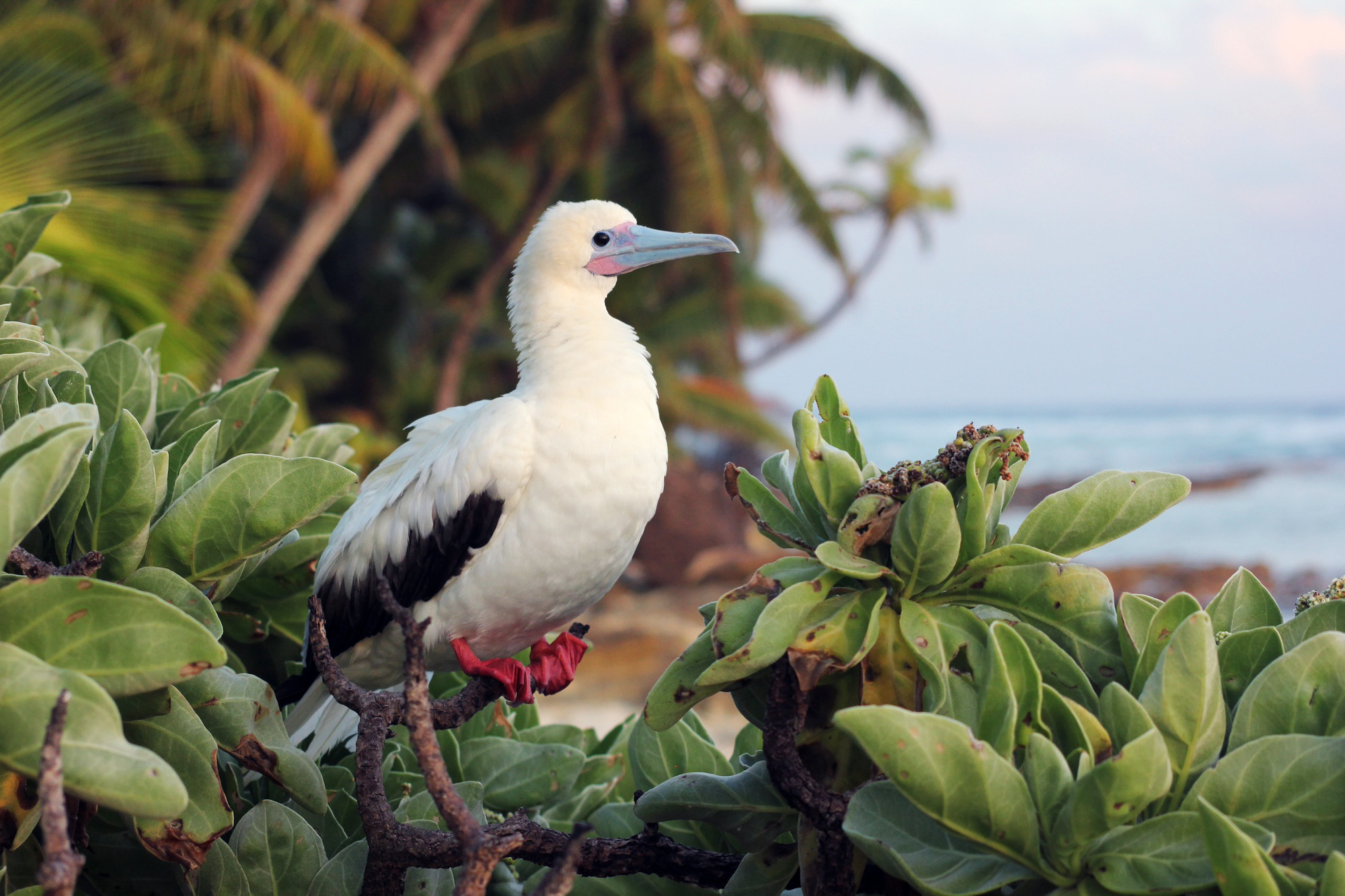
The secret lies in how seabirds act as biological delivery trucks. They feed in the open ocean, then return to nest on islands, depositing nutrient-rich guano that supercharges the entire ecosystem.
Lead researcher Nicholas Graham from Lancaster University noticed the pattern during expeditions to the Chagos Archipelago. Some islands were silent except for rustling palm trees, while others buzzed with thousands of seabirds roosting in lush native forests.
The difference? Rats introduced by passing sailors had wiped out seabirds on some islands while others remained rat-free sanctuaries.
Graham's team spent nearly a decade tracking how seabird nutrients ripple through atoll ecosystems. They found the effects reach all the way from land to where reefs meet the open ocean.
On islands with abundant seabirds, coral reefs grow faster and fish populations boom. The nutrient boost strengthens three critical island-building processes: reef growth, sediment production, and vegetation that binds everything together.
Atoll islands are completely biogenic, meaning living organisms build and maintain them. Corals and algae create protective reef structures, fish transform those structures into sand and sediment, and plants hold it all in place.
The Ripple Effect: This discovery flips the narrative around vulnerable island nations facing climate catastrophe. Instead of helpless victims, these communities have a nature-based solution within reach.
Rewilding efforts through rat eradication and native plant restoration create what researcher Cassandra Benkwitt calls a "win-win-win" for land, sea, and climate resilience. The same actions that help seabirds return also strengthen the islands themselves against rising waters.
Many atolls currently feature coconut palm plantations rather than native forests, having lost their seabird populations decades or centuries ago. Restoration projects can reverse this damage while boosting biodiversity.
The multidisciplinary research team included marine biologists, terrestrial ecologists, and reef geomorphologists working together to map these connections. Their findings, published in Science Advances, offer hope that nature itself provides tools for climate adaptation.
Islands that seemed destined to disappear beneath the waves now have a fighting chance, thanks to the humble seabird.
More Images


Based on reporting by Mongabay
This story was written by BrightWire based on verified news reports.
Play Today’s BrightWire Positive Mini Crossword & Word Game
Keep your mind sharp with our free 5-minute uplifting daily crossword and positivity word puzzle.
Spread the positivity!
Share this good news with someone who needs it