Seattle Opens World's First Light Rail on Floating Bridge
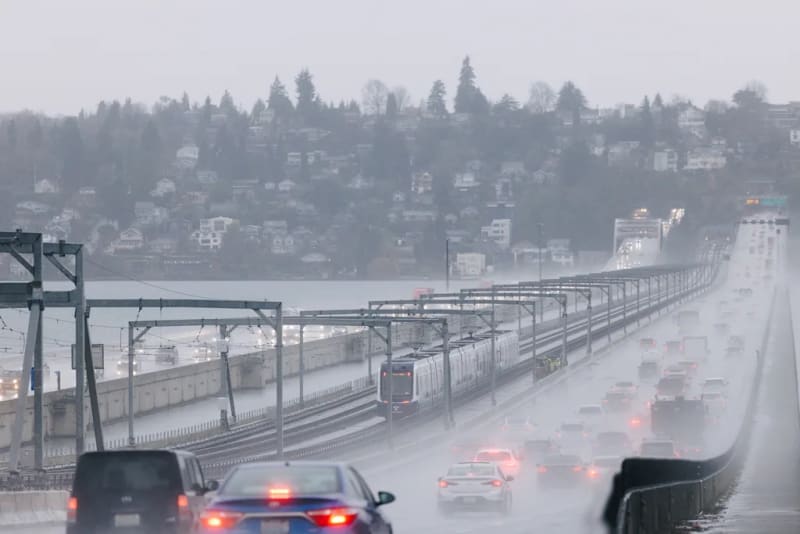
Seattle just solved an engineering puzzle no one has tackled before: running light rail trains on a bridge that floats on water. Starting next month, commuters can ride across Lake Washington without sitting in traffic.
Imagine building a train track on a bridge that moves like a ship anchored to a lake floor. Seattle's engineers just pulled it off.
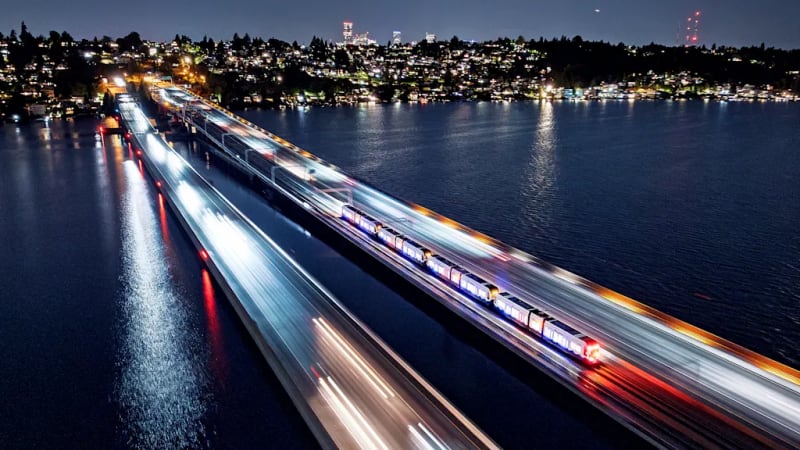
By the end of next month, Seattle commuters will board light rail trains to cross Lake Washington to Bellevue, home to Amazon and Meta offices. The trip will run on the world's first light rail line built on a floating bridge, turning what seemed impossible into a daily reality.
Lake Washington is too deep and wide for conventional bridges, so engineers built floating bridges on pontoons decades ago. Adding train tracks meant solving problems no transit agency had faced before.
The biggest challenge? Floating bridges move. Water levels change, wind creates waves, and the structure shifts constantly. "It's like a ship that's been anchored to the floor of the lake," says Brian Holloway, deputy director of engineering oversight at Sound Transit.
Cars handle these movements just fine. Trains don't. Even tiny shifts in the bridge would derail trains or damage tracks.
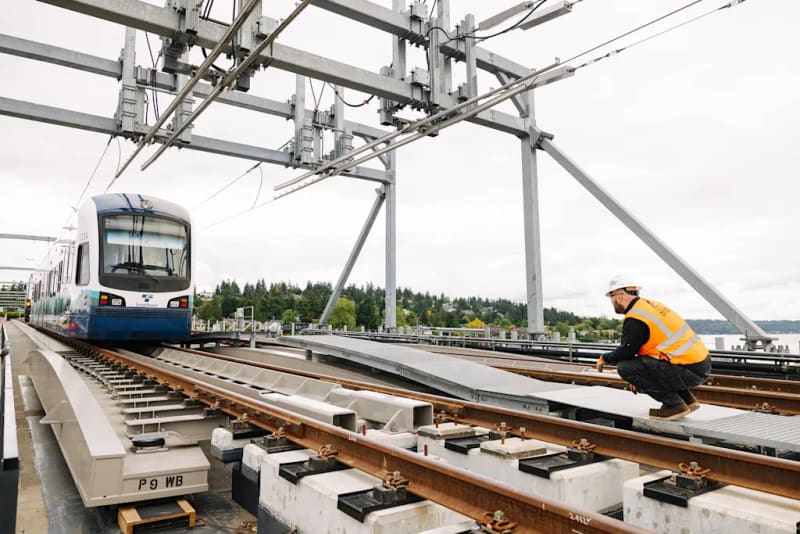
The solution came from thinking creatively about existing technology. Engineers designed special "track bridges" that let the floating bridge move freely underneath while keeping the rails perfectly steady above. The rails bend smoothly as the bridge shifts, using bearings normally found in earthquake-proof buildings.
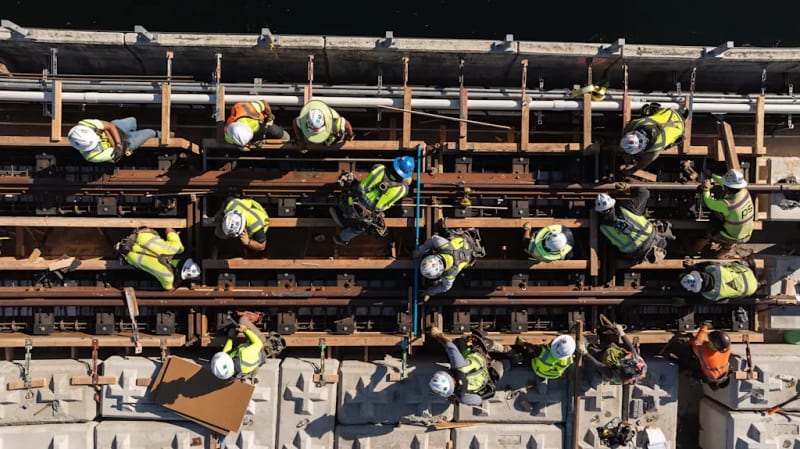
Weight posed another major obstacle. The pontoons weren't designed to hold trains. Engineers developed ultra-lightweight concrete blocks with help from the University of Washington to support shorter, lighter rails. They replaced a heavy concrete barrier from the old carpool lane to balance out the new weight.
Instead of drilling into the pontoons and risking leaks, the team used high-strength adhesive to attach everything. They also built multiple backup systems to protect the bridge from electrical currents that power the trains.
The Ripple Effect
This breakthrough opens possibilities for cities worldwide facing similar geography challenges. Coastal cities with deep harbors or wide waterways now have a proven model for expanding public transit without building massive conventional bridges.
The project shows how innovation happens when teams refuse to accept "that's never been done before" as a final answer.
Soon, thousands of Seattle commuters will glide across Lake Washington on trains, cutting traffic and emissions while riding on a piece of engineering history they might not even notice is floating beneath them.
More Images

Based on reporting by Fast Company
This story was written by BrightWire based on verified news reports.
Spread the positivity!
Share this good news with someone who needs it